

Why Is a Stainless Steel Pressure Tank the Smartest Upgrade for Modern Water Systems?
2026-02-28
When I first began working closely with Jianyun Zhishui (Qingdao) Industrial Technology Co., Ltd., I noticed a consistent challenge among industrial and commercial clients: unstable pressure, short equipment lifespan, and high maintenance costs. As the company gradually expanded its system solutions, one product kept proving its value in real-world installations — the Stainless Steel Pressure Tank. Instead of treating it as a simple accessory, I now see it as the backbone of a reliable water supply system.
In this article, I want to share why choosing a Stainless Steel Pressure Tank is not just about durability, but about long-term system efficiency, water quality protection, and operational stability.
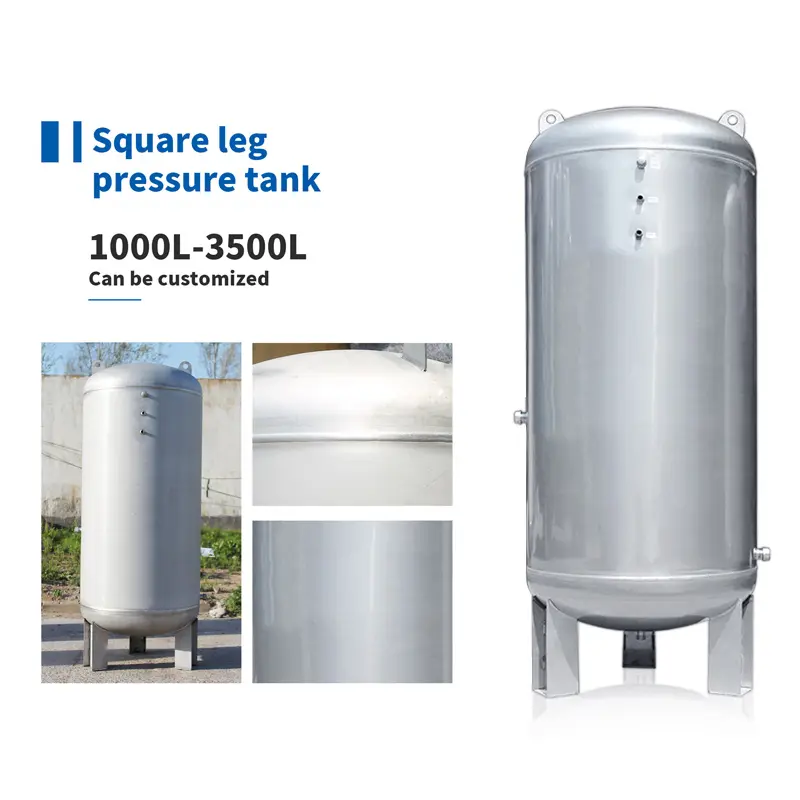
Why Do Traditional Pressure Tanks Often Fail Under Real Operating Conditions?
Many customers come to me after experiencing issues with carbon steel or composite tanks. They report internal corrosion, fluctuating pressure, or even membrane rupture within just a few years. These issues usually stem from:
- Internal rust caused by moisture and oxygen exposure
- Weak weld structures under high-pressure cycling
- Unstable diaphragm performance in temperature variations
- Contamination risks affecting potable water systems
When I analyze these cases, I often find that the initial investment savings were quickly offset by repair and replacement costs. That is where a Stainless Steel Pressure Tank changes the equation.
How Does a Stainless Steel Pressure Tank Improve System Stability?
In practical installations, I focus on three core performance aspects: structural strength, corrosion resistance, and pressure regulation efficiency. A high-quality Stainless Steel Pressure Tank addresses all three simultaneously.
Here is a simplified comparison I often present to clients:
| Performance Factor | Carbon Steel Tank | Stainless Steel Pressure Tank |
| Corrosion Resistance | Requires internal coating | Natural corrosion resistance |
| Service Life | 3–7 years (average) | 10+ years under proper use |
| Water Hygiene | Risk of rust contamination | Stable and hygienic surface |
| Maintenance Frequency | Frequent inspections required | Lower maintenance demand |
| Structural Strength | Prone to coating damage | High tensile and fatigue strength |
From my experience, once a client upgrades to a Stainless Steel Pressure Tank, system pressure stabilizes noticeably. Pump cycling decreases, and the entire water supply network runs more efficiently.
What Makes Stainless Steel the Preferred Material for Pressure Applications?
I always explain that stainless steel is not simply about appearance. In pressure systems, material behavior under stress matters. Stainless steel offers:
- Excellent resistance to oxidation in humid environments
- Strong weld integrity under cyclic pressure
- Stable mechanical properties across temperature ranges
- Compatibility with potable and industrial water standards
For clients operating reverse osmosis systems, booster pump systems, or industrial filtration lines, the Stainless Steel Pressure Tank plays a vital buffering role. It reduces water hammer effects and protects pump components from frequent start-stop cycles.
Can a Stainless Steel Pressure Tank Reduce Long-Term Operational Costs?
In my discussions with facility managers, cost efficiency always comes up. While the upfront price of a Stainless Steel Pressure Tank may be higher than basic alternatives, the total cost of ownership often tells a different story.
I evaluate long-term savings across three dimensions:
- Reduced pump wear due to stable pressure storage
- Lower replacement frequency compared to coated tanks
- Minimal risk of internal corrosion leading to contamination
When these factors are calculated over five to ten years, the return on investment becomes clear. I have seen clients recover the difference within the first few years simply through reduced maintenance and downtime.
Where Is a Stainless Steel Pressure Tank Most Effectively Applied?
In my project portfolio, I have recommended Stainless Steel Pressure Tank solutions for a wide range of systems:
- Commercial building water supply systems
- Industrial RO water treatment systems
- Booster pump stations
- Food and beverage processing facilities
- Pharmaceutical water systems
Each application demands stable pressure regulation and hygienic water storage. The reliability of a Stainless Steel Pressure Tank makes it suitable for both high-demand industrial settings and precision-controlled environments.
How Do I Evaluate the Right Stainless Steel Pressure Tank for a Project?
When selecting a tank, I focus on several technical criteria rather than just capacity:
| Selection Parameter | Why It Matters |
| Working Pressure Rating | Ensures safety under peak system demand |
| Material Grade | Determines corrosion resistance level |
| Membrane Quality | Influences pressure buffering efficiency |
| Welding Precision | Prevents long-term leakage risk |
| Installation Orientation | Optimizes system layout and space use |
I recommend working with manufacturers who provide clear technical data, customization options, and quality control transparency. That level of support ensures your Stainless Steel Pressure Tank integrates seamlessly into your system design.
Is Now the Right Time to Upgrade Your Water System?
If you are facing unstable water pressure, frequent pump cycling, or corrosion-related maintenance issues, upgrading to a Stainless Steel Pressure Tank may be the strategic move your system needs. From my experience, proactive upgrades are far more cost-effective than reactive repairs.
At Jianyun Zhishui (Qingdao) Industrial Technology Co., Ltd., we continuously refine our water system solutions to meet modern industrial demands. If you would like tailored recommendations, technical specifications, or a quotation for your next project, please contact us today. Leave your inquiry, share your system parameters, and let us help you design a more stable and efficient pressure solution.
Your system deserves reliability — and a well-designed Stainless Steel Pressure Tank is a solid place to start.