

Why Does GE PLC Still Make Sense for Demanding Industrial Control Projects?
2026-04-09
When I talk with buyers who are upgrading automation systems, I often notice the same concern repeating itself: they do not simply want hardware, they want control stability, long-term support, and confidence in every production cycle. That is exactly where Quanzhou Xinyuan Technology Co., Ltd. naturally enters the conversation. In many real purchasing scenarios, a dependable GE PLC is valued not only for control performance, but also for the practical advantages it brings to equipment integration, maintenance planning, and long-service industrial environments. For buyers who care about uptime, compatibility, and sourcing efficiency, choosing the right GE PLC is often a much more strategic decision than it first appears.
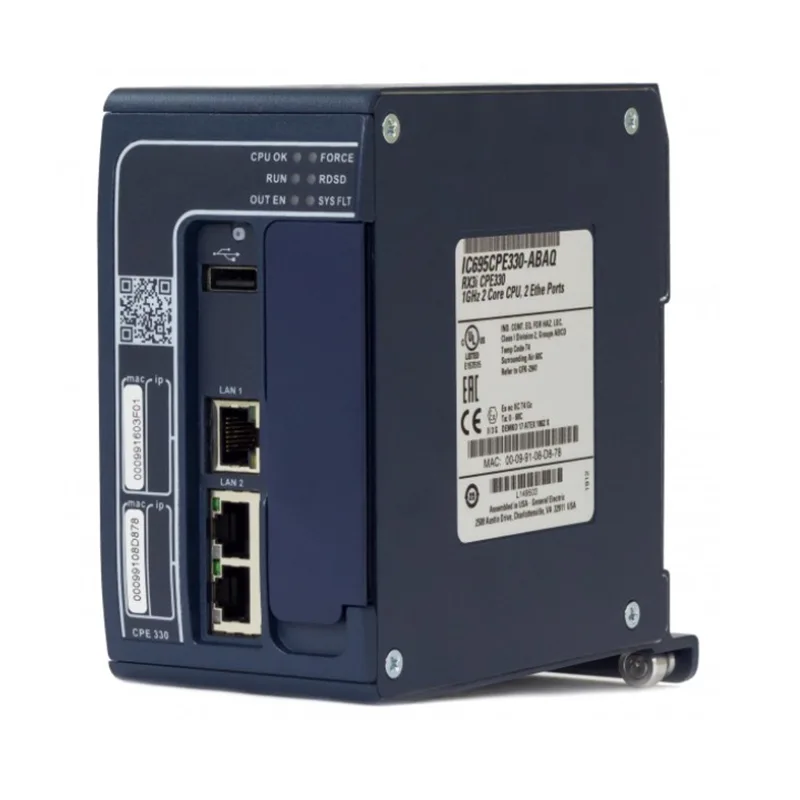
What Makes A Good Industrial Control Choice In Real Projects?
I think the biggest mistake many buyers make is focusing only on price or model numbers. In actual factory environments, the better question is whether a controller can help reduce unplanned downtime, simplify communication between devices, and remain stable under long operating hours. A strong industrial control solution should help engineers work faster, help purchasing teams source more efficiently, and help plant managers feel less pressure during operation.
That is why many buyers continue to pay attention to GE PLC solutions when they want a balance of reliability, practical scalability, and recognizable industrial control architecture. A controller is not only a catalog item. It becomes part of the production rhythm, the maintenance workflow, and the future upgrade path.
| Buying Concern | Why It Matters | What Buyers Usually Want |
|---|---|---|
| System Stability | Unexpected stops create production losses | Reliable operation over long cycles |
| Compatibility | Mixed equipment is common in factories | Easy integration with existing systems |
| Maintenance Efficiency | Faster troubleshooting saves labor and time | Clear diagnostics and manageable replacement |
| Procurement Confidence | Industrial buyers need supply consistency | Responsive support and clear product matching |
| Expansion Potential | Production lines often change over time | Flexible scaling for future needs |
How Can I Tell Whether GE PLC Fits My Equipment Better?
I usually recommend that buyers start with the application rather than the brand name alone. The right fit depends on signal requirements, communication structure, cycle speed expectations, control complexity, and the operating environment. Some projects need straightforward machine control. Others need broader coordination across multiple subsystems. In either case, the value of a GE PLC becomes much clearer when I evaluate it from the perspective of field performance instead of brochure language.
For example, if I am sourcing for a manufacturing line that cannot tolerate frequent interruption, I care a lot about module consistency, system logic reliability, and the practical ease of replacement when service is needed. If I am dealing with an upgrade project, I also care about how smoothly the control system can be integrated into the current architecture without forcing the factory into unnecessary redesign costs.
- I first check the actual control task and I/O demand
- I then review communication and network requirements
- I compare maintenance convenience across possible models
- I consider spare-part accessibility and supply responsiveness
- I weigh long-term ownership value rather than only initial pricing
Why Do Buyers Care So Much About Reliability Instead Of Chasing The Lowest Price?
I understand why price attracts attention. Purchasing departments have budgets, and every cost line matters. But when I look at automation projects honestly, the cheapest option can become the most expensive one if it leads to unstable operation, delayed replacement, or repeated troubleshooting. Industrial control purchasing is not like buying a simple consumable. A poor decision can affect labor time, product consistency, delivery schedules, and even customer satisfaction further downstream.
This is one reason a well-matched GE PLC often keeps its appeal. Buyers are not only paying for a product. They are paying for a lower-risk control foundation. In environments where machines must run for long periods and teams need predictable performance, dependable control hardware is often worth more than a lower purchase price that creates future uncertainty.
| Option | Short-Term View | Long-Term Result |
|---|---|---|
| Lowest Initial Cost | Looks budget-friendly at first | May create higher service and downtime costs |
| Reliable Industrial Controller | May require more careful selection | Usually supports smoother production continuity |
| Proper Supplier Support | Improves buying confidence | Reduces mismatch and procurement errors |
What Problems Do Buyers Usually Hope To Solve With GE PLC?
In real business conversations, I hear the same operational pain points again and again. Buyers are trying to reduce risk. Engineers are trying to simplify control logic. Maintenance teams want quicker replacement and clearer fault handling. Managers want a production line that behaves consistently day after day.
That means the purchasing decision is rarely just about “which PLC should I buy.” The deeper question is “which controller helps me operate more confidently.” A properly selected GE PLC can support that goal in several ways:
- It helps reduce uncertainty in daily equipment operation
- It supports more structured control across industrial processes
- It can make planned maintenance easier to organize
- It gives procurement teams a clearer sourcing target
- It can support upgrade planning without chaotic rework
From my perspective, those are not small advantages. Those are exactly the issues that determine whether a project remains manageable after installation.
How Do I Evaluate Supplier Value Beyond The Product Itself?
This is where many purchasing articles stay too shallow, and I do not think that helps real buyers. A product matters, but supplier behavior matters too. When I evaluate a source, I want to know whether the supplier can communicate clearly, respond quickly, understand model matching, and support the buying process without wasting time. A smooth procurement experience is often the difference between a confident order and a frustrating one.
That is why buyers often prefer working with a supplier that understands industrial automation needs in a practical way. The goal is not simply to sell a part number. The goal is to help the buyer reduce selection errors, speed up internal approval, and make the final purchase easier to justify.
| Supplier Factor | Why I Consider It Important | Buyer Benefit |
|---|---|---|
| Clear Communication | Reduces misunderstanding during selection | Faster decisions and fewer procurement delays |
| Model Matching Support | Helps confirm the right product | Lower risk of ordering errors |
| Responsive Service | Important when projects are urgent | Better control of lead time expectations |
| Industrial Understanding | Shows familiarity with real applications | More useful guidance for the buyer |
Why Does Application Matching Matter More Than Generic Product Claims?
I have seen many automation descriptions that sound polished but say very little. Buyers do not need vague promises. They need usable information. If I am choosing a control solution for packaging, process handling, conveyor logic, or machine retrofitting, I need to know whether the product makes sense for the application in front of me. That is why I always prefer application-based selection logic over generic marketing language.
A useful industrial blog should help the buyer think more clearly. It should explain what to compare, what risks to avoid, and how to weigh control performance against sourcing convenience. In that sense, discussing GE PLC from a project angle is far more valuable than simply repeating broad technical praise.
- What environment will the controller work in?
- What signals and devices must it manage?
- How fast does the process need to respond?
- How easy will maintenance be after installation?
- Will future upgrades require more flexibility?
Can A Better Purchasing Decision Also Improve Long-Term Factory Efficiency?
Yes, and I think this point deserves more attention. A better purchasing decision can influence the speed of maintenance, the confidence of operators, the consistency of output, and even the quality of communication between departments. When a controller is selected properly, people spend less time fighting avoidable issues. That means more time goes into production and improvement instead of repair and confusion.
In that sense, buying the right GE PLC is not just a technical action. It is an operational decision. It can support more stable workflows, more predictable equipment behavior, and a more comfortable experience for the teams responsible for keeping production moving.
| Operational Goal | Effect Of Better Controller Selection |
|---|---|
| Reduce downtime | Improves continuity and lowers disruption risk |
| Simplify maintenance | Makes diagnosis and replacement easier |
| Support expansion | Leaves more room for future system planning |
| Improve purchasing confidence | Helps internal teams justify the decision more clearly |
What Should I Ask Before Sending An Inquiry?
Before I contact a supplier, I like to prepare a few practical questions. This saves time and makes the discussion more productive. It also helps the supplier recommend the most suitable option instead of offering something too general.
- What exact model or equivalent specification do I need?
- What is my application environment and control target?
- What communication or integration requirements exist?
- Do I need expansion flexibility for later upgrades?
- How urgent is my procurement timeline?
- What technical or commercial support matters most to me?
These questions are simple, but they can dramatically improve the quality of the buying conversation.
Why Should I Reach Out Now Instead Of Waiting Until A Failure Happens?
I always think proactive sourcing is smarter than emergency sourcing. When a factory waits until a control issue becomes urgent, pressure increases, options narrow, and procurement decisions are often made too quickly. By discussing requirements early, buyers can compare options more calmly, confirm matching details, and reduce avoidable mistakes.
If you are currently comparing automation control options and want a more dependable sourcing experience, this is a good time to act. Quanzhou Xinyuan Technology Co., Ltd. can support buyers who are looking for a practical and efficient way to source GE PLC solutions for industrial applications. If you want help confirming a model, discussing your project needs, or improving your purchasing confidence, contact us today and send your inquiry. A clear conversation now can save you time, cost, and uncertainty later.