

How High-Efficiency Block Machines Reduce Construction Delays
2026-04-21
Why Do Delays Often Start at the Block Supply Stage?
Many construction schedules slip not because of structural design or labor shortages, but because masonry units arrive late, arrive uneven in quality, or fail inspection. When contractors depend on outside suppliers, transport bottlenecks, curing inconsistency, and stock shortages can disrupt the entire programme. This is why many developers now bring production closer to the site or partner with plants using modern automated systems.
A high-output production line allows builders to maintain a reliable flow of hollow blocks, pavers, kerbstones, and solid units. Our engineering team has seen projects lose valuable weeks waiting for replacement batches after dimensional errors. Our factory focuses on stable production systems that reduce those avoidable setbacks through controlled forming, batching accuracy, and repeatable output.
Quangong Machinery Co., Ltd. supports contractors and investors looking for dependable manufacturing solutions where lead time matters as much as unit cost. With better planning and consistent supply, project managers gain stronger control over milestones and handover dates.
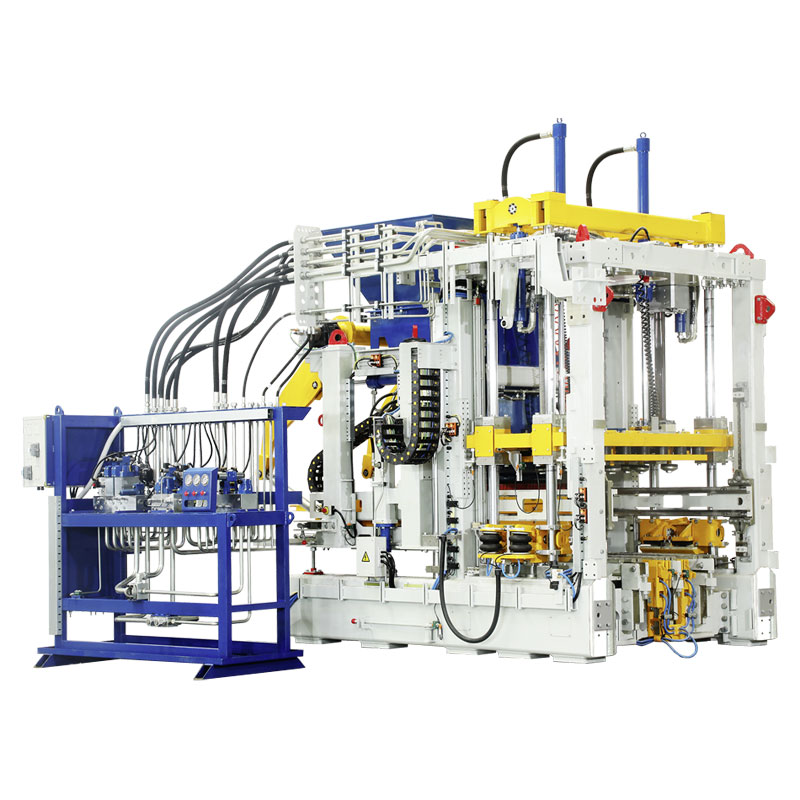
How Does QGM Block Making Machine Speed Up Daily Production?
The main advantage of a modern QGM Block Making Machine is throughput. Automated feeding, vibration compaction, hydraulic pressing, and fast mould changeovers allow operators to produce more units within each shift. Instead of relying on semi-manual methods, plants can run scheduled cycles with predictable output and lower stoppage risk.
Our site visits often show that productivity losses come from poor material flow rather than the press itself. That is why our factory recommends integrated systems with aggregate bins, weighing stations, mixers, pallet circulation, and stacking lines. When each stage is synchronized, downtime falls sharply.
The QGM Block Making Machine also improves dimensional consistency, helping blocks fit faster on site. Better sizing reduces mortar waste, rework, and alignment corrections. Quangong Machinery Co., Ltd. has worked with clients who needed higher production without expanding labor headcount, making automation a practical route to growth.
| Item | Typical Specification |
| Production Capacity | 8000 to 18000 standard blocks per 8 hours |
| Cycle Time | 12 to 18 seconds |
| Vibration System | Servo or frequency controlled |
| Hydraulic Pressure | Up to 25 MPa |
| Pallet Size | 850 x 680 mm to 1400 x 1100 mm |
| Control System | PLC with touch screen interface |
What Quality Improvements Help Contractors Avoid Rework?
Construction delays are often caused by hidden quality problems. Blocks with weak compressive strength, chipped corners, or excessive size tolerance slow laying speed and trigger site rejection. A QGM Block Making Machine addresses this through accurate batching, dense compaction, and stable mould pressure.
Our customers frequently request production lines that can meet local ASTM, EN, or regional municipal standards. Our factory assists with mix design adjustments based on available sand, crushed stone, fly ash, or cement grades. This practical approach helps plants reach target strength while controlling material cost.
Uniform units also improve palletizing, transport loading, and yard stacking. QGM understands that quality in the yard directly affects speed on the scaffold and in the blockwork crew.
| Performance Factor | Operational Benefit |
| Accurate Dimensions | Faster laying and cleaner joints |
| Higher Density | Improved strength and lower breakage |
| Stable Surface Finish | Better appearance for facing units |
| Automated Stacking | Safer handling and quicker dispatch |
| Recipe Control | Consistent batches across shifts |
Why Is Automation Important When Labor Markets Tighten?
Many regions face skilled operator shortages, rising wages, and pressure to deliver more units per shift. Automated controls reduce dependence on manual adjustments and make training easier for new staff. A QGM Block Making Machine uses stored recipes, diagnostics, and touch-screen controls so crews can maintain output with fewer errors.
Our service data shows that preventive maintenance reminders and fault alerts can reduce unexpected stoppages. Our factory advises clients to keep wear parts, seals, and vibration components in planned stock to avoid production gaps during busy seasons.
When labor availability changes suddenly, plants with automated systems usually adapt faster than manual yards. That flexibility can be the difference between delivering on time and paying delay penalties.
How Can Buyers Evaluate the Right Equipment for Future Growth?
Choosing machinery should involve more than headline capacity. Buyers should assess mould versatility, spare parts support, energy efficiency, plant layout, and after-sales response. A QGM Block Making Machine is often selected by growing producers because it can handle multiple products on one platform, from hollow blocks to paving units.
Our recommendation is to compare total cost per thousand units, not only purchase price. Our factory also encourages reviewing local raw materials, curing yard space, and electrical supply before final selection. A well-matched line performs better than an oversized line running below design efficiency.
FAQ
Q1: How do high-efficiency block machines reduce project delays?
They secure a faster and more predictable supply of masonry units. With stable output and consistent quality, contractors avoid waiting for replacement stock, reduce rejected batches, and keep masonry crews productive.
Q2: Can one machine produce different block types?
Yes. With the correct mould setup, many systems can produce hollow blocks, solid blocks, pavers, curbstones, and specialty units. This helps producers respond quickly to changing site demand.
Q3: What is the biggest factor in long-term performance?
Regular maintenance, proper mix design, trained operators, and timely replacement of wear parts are the key factors. Even advanced equipment performs best when supported by disciplined daily management.
Why Does Reliable Equipment Matter for On-Time Delivery?
Delays in modern construction often begin long before concrete is poured or walls are raised. They begin when material supply becomes uncertain. Investing in dependable production technology gives builders stronger schedule control, better unit quality, and lower rework risk. QGM Block Making Machine solutions are designed to support efficient output, scalable growth, and practical site demands.
If you are planning a new plant or upgrading an older line, contact our team today. Our factory can review your target capacity, product mix, and local market needs to recommend the most suitable solution.