

Wholesale Octagonal Cage Buying Guide for Modern Retailers
2026-11-02
As combat sports keep pulling in bigger crowds, stocking the right octagonal cage isn't just a purchase—it's a competitive edge. Modern retailers need more than a generic supplier; they need cages that hold up under heavy use and meet safety standards without eating into margins. This guide breaks down what actually matters when buying wholesale, from frame construction to shipping logistics. At PandaWin Sports, we've seen how the right cage can move off your floor fast, so let's cut through the noise.
What Makes Octagonal Cages a Smart Shelf Addition
The eight-sided design isn’t just a visual quirk. It lets the cage sit flush against a shelf back or nestle into corners that rectangular bins can’t reach, which means you reclaim awkward dead space without shoving things out of alignment. The flat facets also give you more front-facing angles for grabbing or viewing, so items stay easy to scan at a glance.
Because the weight distributes across those angled corners, octagonal cages tend to feel less tippy than squared-off alternatives when loaded unevenly. That stability matters on narrow shelving or in busy pantries, closets, or workshop setups where a bumped edge can send everything sliding. You can stack them or slide them side by side, and the shape naturally locks units together with fewer wasted gaps.
Beyond function, the silhouette breaks up the usual grid of boxes and bins. It adds a subtle geometric accent that makes a shelf look deliberate rather than cluttered, which is a rare win when you’re trying to organize without hiding everything behind closed doors.
Reading the Market: Who Actually Buys Octagonal Cages?
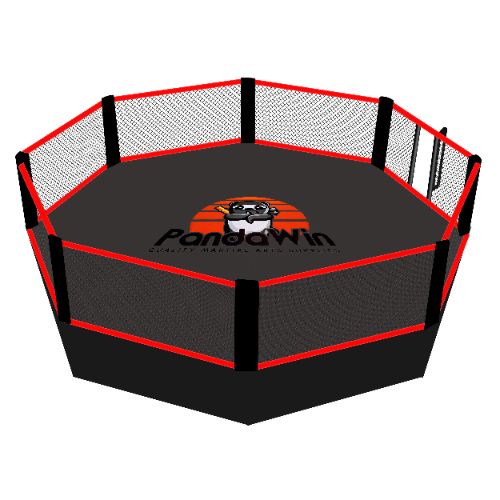
Octagonal cages draw a very specific crowd—usually small-scale breeders working with finches, canaries, or other flighty species. The extra corners give birds more places to perch without making the space feel boxed in, which cuts down on stress behaviors. These buyers tend to study cage geometry carefully before pulling the trigger, caring less about price and more about how the shape affects day-to-day bird behavior.
Urban pet owners with tight floor plans are another solid segment. An octagonal cage slides neatly into a room corner while still offering better sightlines than a plain rectangle. You'll also find them among show-bird hobbyists, because the shape reads as more decorative and less utilitarian when displayed in a living room or at a competition.
A newer wave of buyers comes from first-time bird owners who care about interior design. They don't want a cage that looks like a holding cell. Octagonal models, especially ones with wooden or bamboo frames, blend well with boho or mid-century decor, making the purchase feel like part of the home rather than just a piece of equipment.
Material Shortcuts That Cost You Returns
Cutting costs on materials often feels like an easy win until the first wave of returns hits. That cheaper zipper, thinner stitching, or softer alloy might pass a quick visual check, but real-world use exposes the difference fast. Customers notice when a product degrades after a few wears or a handle snaps under normal load. What looks like a smart margin boost in the factory becomes a silent drain on your return rate and reputation.
The problem isn't always obvious in product photos or even the first unboxing. A fabric that pills after three washes or a coating that chips once exposed to heat won't trigger complaints on day one. By the time the negative reviews pile up and the return requests reach your inbox, you've already paid for shipping, restocking, and lost repeat business. The real cost of material shortcuts shows up later, often hidden in the metrics you don't check right away.
Smart brands treat material selection as part of the customer experience, not just the bill of materials. Instead of cutting corners on what customers touch, feel, or stress daily, they engineer durability into the places that matter most and save weight or cost where it won't be noticed. That way, the product survives long enough to earn a second purchase, and the returns line stays quiet.
Size Gaps Most Wholesalers Overlook
Walk into most wholesale showrooms and you will see racks neatly arranged from small to extra large, as if the entire population fits into those four sizes. The problem is that real purchase orders repeatedly ask for 2XL and 3XL, or for petite lengths that never seem to make the cut. Many buyers have learned to simply stop requesting these sizes, knowing the answer will be a polite no or a delayed special order that never arrives.
Beyond the obvious plus-size gap, there are quieter misses: the in-between customer who finds a medium too snug and a large too boxy, the tall buyer who needs two extra inches in a sleeve, or the shorter buyer tired of hemming every pair of trousers. Wholesale size charts often treat body proportions as a linear scale, so a 2XL is just an XL with more width, but real bodies gain in shoulders, upper arms, and torso length at different rates. Ignoring these shape variations means losing repeat business to competitors who offer only one or two extended options.
A practical fix starts with pulling order data from the past two years, not just current inventory counts. Look for the sizes that repeatedly sell out first or trigger the most backorder requests. Then run a small test batch of those sizes in core colors before committing to a full run. Wholesale buyers will notice when a supplier actually keeps a couple of 3XL or tall sizes in stock, and that trust converts into larger, more consistent orders.
Supplier Red Flags You Can Spot Before Ordering
One red flag that often gets overlooked is inconsistency in communication. If a supplier takes days to reply before you've even placed an order, imagine the silence after payment clears. Watch for vague answers about lead times, materials, or certifications. A serious supplier can usually give concrete numbers without making you chase them.
Another warning sign is when product samples look great but the quoted price seems too good to be true. That usually means corners are cut somewhere—cheaper raw materials, thinner packaging, or reused factory photos. Ask for a video walkthrough of the current production line, not just a polished catalog.
Pay attention to how they handle small mistakes. If you spot an error in the proforma invoice or spec sheet and they brush it off with 'no problem, we fix later,' that's a clue. Reliable suppliers care about details before money moves, not after.
Pricing Anchors That Move Slow Inventory
Markdown price tags with a higher original figure right next to the markdown can feel like a trick, but done honestly, it becomes a quiet nudge. The old price acts as a reference point, and the gap between that and the new price does the heavy lifting. For inventory that has been sitting too long, setting an anchor slightly above the true historical price—not an inflated one—helps shoppers see the current offer as a clear win. This isn't about manipulation; it's about giving context that older stock often lacks on its own.
The real lever is not the anchor itself, but how it changes the mental math. If a jacket has been priced at ninety dollars for three months, moving it to sixty without any reference may just read as “this wasn't worth ninety.” But placing a visible “was seventy-five” next to the sixty-dollar tag shifts the story: the item was already discounted, and now it's further reduced. Customers start comparing the current price to the anchor, not to their vague memory of what it might have cost. That comparison ignites the sense of getting ahead of a deal, which is often enough to tip a hesitant buyer.
Where anchors fail is when they are used as a crutch for bad pricing decisions. A lazy anchor—say, listing a “compare at” price that no one ever saw in-store—gets ignored after the first glance. The effective approach pairs the anchor with scarcity cues that are already true: a limited size run, a last chance rack, or a season ending. The anchor gives the reason, but the surrounding signals give the urgency. Together they convert stagnant piles into moving units without eroding the trust that brings customers back.
FAQ
Ask for a physical sample before any bulk commitment. Check the weld points on the frame, the consistency of the finish, and whether door latches align without force. Uneven spacing or sharp edges on hidden corners often signal rushed production runs.
Run a simple scratch test on a low-visibility area to see how easily the coating flakes. Flex the wire or panel gently—if it springs back without permanent bending, the metal gauge is adequate. Also compare the weight of the sample against a known reference; lighter cages often mean thinner tubing or hollow extrusions.
Many mid-size factories will agree to a mixed container if you combine two or three finishes. Instead of asking for a lower MOQ outright, propose a split order with a slight per-unit surcharge. This lets you test demand without overloading storage or tying up working capital.
Flat-packed cages with tool-free assembly are easier for customers to take home immediately. Neutral tones like matte black, warm gray, or brass accents fit modern interiors better than glossy white or ornate scrollwork. Stackable or modular options also appeal to buyers with limited floor space.
Start with a small trial batch and track weekly sell-through before reordering. Use customer preorders or waitlists for premium finishes. If a particular size stalls, offer it as a bundle with matching accessories rather than discounting it heavily right away.
Request individual inner boxes with molded foam corner protectors, not just plastic wrap. Flat-packed units should include labeled hardware bags and a one-page assembly guide with clear diagrams. For international shipments, ask about pallet height and whether the supplier uses moisture-resistant cartons to prevent rust in transit.
Customization is worth it only if it does not delay production by more than two weeks. A subtle logo embossed on the door latch or a signature color on the tray can create brand recognition. For first orders, keep custom changes to one or two details, then expand based on actual customer feedback.
Conclusion
Octagonal cages earn their shelf space because the shape naturally draws the eye while using corner areas that rectangular units waste. For modern retailers, the real buyers aren't just pet shops—they include urban cat owners, reptile breeders, bird rescues, and boutique grooming salons that want display enclosures with better air flow and fewer blind spots. Before you commit to a container, check the wire gauge and finish. Thin rods painted to look like powder coating will bend in transit and rust within weeks, which is a guaranteed route to chargebacks and return requests. A good octagonal cage should have smooth welds, no sharp burrs, and a finish that survives light outdoor use.
Size gaps are where many wholesalers leak money. You'll find plenty of tabletop models under 24 inches and giant aviaries over six feet, but the profitable middle—roughly 30 to 45 inches tall for medium cats, small dogs, and juvenile birds—is often ignored. Stock that range and you'll quietly capture demand that competitors cannot fill. When vetting suppliers, ask for a physical sample with exact panel measurements, not just a spec sheet. If the lead time shifts more than twice or the packaging arrives crushed on a regular basis, walk away. On pricing, anchor slow-moving colors and small accessories as add-on bundles with the best-selling sizes. Tiered volume discounts work better than blanket markdowns, and starter kits with bowls, perches, or divider panels can turn a stale SKU into an easy upsell.
Contact Us
Contact Person: Fei Xu
Email: [email protected]
Tel/WhatsApp: +8618631245578
Website: https://www.pandawinsports.com/