

White Masterbatch Factory: Crafting High-Performance Color Solutions for Plastics
2026-07-15
In the world of plastics, achieving the perfect white isn't just about adding pigment—it's a science. From vibrant packaging to durable automotive parts, the right white masterbatch can make or break a product's appeal and performance. But with so many options, how do you ensure consistency, opacity, and processability every single time? That's where Xinwancai steps in, turning complex color challenges into seamless, high-performance solutions. In this blog, we'll pull back the curtain on what goes into crafting masterbatches that don't just color plastics, but elevate them—and why Xinwancai's approach is different from the rest.
Behind the Scenes: How We Engineer Precision White Masterbatches
Every batch begins with a deep understanding of the base polymer and the specific demands of the final application. We don't just guess at the right titanium dioxide loading; we analyze the polymer's rheology, the processing conditions, and the desired opacity level. This technical groundwork allows us to pre-select dispersion aids and exactly define the masterbatch formulation before any material touches our equipment.
The real differentiator is our compounding approach. Instead of relying on standard high-shear mixing alone, we pass the melt through a series of custom-designed filter packs under precisely controlled pressure. This step catches any oversized pigment agglomerates and ensures the white concentrate remains free of gels or fisheyes. For applications like thin films or fine fibers, this filtration protocol is non-negotiable—it directly prevents defects that would otherwise show up only on the production line.
Quality checks run continuously, not just at the final stage. We draw samples mid-process to test both the masterbatch's melt flow index and its dispersion rating under a microscope. If the results deviate even slightly from the target window, we adjust the extruder parameters in real time. That closed-loop control means the white masterbatch you receive tomorrow will perform identically to the one that passed trials six months ago—same tint strength, same processability, same end-product look.
Pigment Dispersion That Defines Opacity and Consistency
The way pigment particles are dispersed in a medium fundamentally shapes the visual and tactile qualities of a coating. When dispersion is incomplete, clumps of pigment remain, reducing the effective surface area that interacts with light. These agglomerates scatter light unevenly, leading to lower opacity and a washed-out appearance. More than that, a poor dispersion creates pockets of inconsistent density, resulting in a finish that might look speckled or streaky under certain lighting conditions.
Opacity itself is a direct consequence of how well pigment particles are separated and stabilized. Ideally, each particle should be individually surrounded by the binder, allowing for maximum light scattering at the interfaces between pigment and medium. As light encounters these boundaries, it bends and bounces, preventing it from reaching the substrate. Hence, a coating with finely dispersed particles can hide what’s underneath with a thinner film, while an inadequately dispersed mixture demands more coats to achieve the same coverage. The difference in hiding power often comes down to the sheer quality of the grind, not just the pigment loading.
Consistency, from brush drag to spray atomization, is equally influenced by the state of dispersion. A well-dispersed system tends to have a more predictable flow behavior, as the uniform distribution of particles avoids abrupt changes in viscosity. On the contrary, aggregates can settle or form a network that thickens the liquid, making application difficult and leaving an uneven texture. Proper wetting agents and high-shear mixing are critical to break down these structures and maintain stability over time, ensuring that the product goes on smoothly and delivers the intended opacity from can to final cure.
Tailored Formulations for Every Plastic Application
Plastic isn't a one-size-fits-all material. From rigid automotive components that endure extreme temperatures to flexible medical tubing demanding biocompatibility, each application carves its own set of requirements. Our approach starts by listening to what your product truly needs—whether it's UV resistance for outdoor fixtures, flame retardancy for electronics housings, or enhanced impact strength for consumer goods that face daily abuse. We don't just modify polymers; we engineer material behaviors by fine-tuning molecular structures, integrating multifunctional additives, and rigorously testing against real-world stressors. The result is a formulation that fits your process and performance criteria as precisely as a key fits a lock.
Beyond standard property enhancements, we delve into the less obvious challenges: cycle time reduction without sacrificing aesthetics, color stability under harsh lighting, or compatibility with post-consumer recycled streams. Our chemists collaborate directly with your production teams to translate shop floor realities into lab bench solutions, sidestepping the common gap between theoretical data sheets and actual mold behavior. Whether you're producing millions of identical parts or a limited run of specialized components, the goal remains the same—a material that not only meets the spec but also simplifies your manufacturing rhythm. This kind of targeted formulation thinking turns material selection from a compromise into a strategic advantage.
The Science of Achieving Brilliant Whiteness Without Compromise
Achieving a truly brilliant white often hinges on sophisticated light manipulation at the microscopic level. Rather than simply piling on pigments that can dull surfaces or compromise material integrity, advanced optical brighteners work by absorbing invisible ultraviolet light and re-emitting it as visible blue light. This shift counteracts natural yellowing, tricking the eye into perceiving a crisp, luminous white. The result is a finish that feels clean and pure, without any chalky buildup or loss of texture.
Crucially, this approach sidesteps the trade-offs that plague older whitening methods. Some techniques rely on harsh bleaching agents that weaken fibers or cause brittleness over time, while others mask imperfections under thick, opaque layers that erase subtle details. By instead engineering surfaces that play with wavelengths, modern formulations maintain the material's original suppleness, breathability, and tactile appeal. You get a radiant white that stands up to repeated use and washing, all while preserving the nuanced character of the fabric or coating.
What ties the science together is an unwavering focus on longevity and environmental responsibility. These brighteners are designed to withstand prolonged exposure to light and heat without breaking down into yellowed byproducts, preserving that fresh-from-the-factory look for years. At the same time, many of these breakthroughs move away from chlorine or other aggressive chemistries, embracing processes that require less water and energy. The end product is a deep, satisfying white that doesn't ask you to compromise on performance, sustainability, or aesthetic quality.
Sustainability and Performance: Our Dual Commitment
We don’t see sustainability and performance as competing goals — they fuel each other. Every material we source, every process we refine, is chosen because it sharpens product quality while shrinking environmental impact. It’s an approach that pushes us to innovate relentlessly, finding solutions where efficiency gains and ecological care overlap.
Take our latest equipment line: it delivers 20% more throughput using recycled alloys and energy-recovery systems that lower operating costs. Users get the power they expect, but behind the scenes, waste heat is captured and reused, and reliance on virgin resources drops sharply. This isn’t a trade-off; it’s a design philosophy that turns constraint into creativity.
The result? Products that last longer, perform better under tough conditions, and leave a lighter trace. Our commitment means you don’t have to choose between what works today and what preserves tomorrow — you get both, engineered into one seamless package.
Partnering with Converters to Solve Real Production Challenges
True collaboration with converters means getting involved long before a production line starts rolling. We work side-by-side with your teams, examining every step of the conversion process—from substrate handling and adhesive selection to cutting and delivery. It’s in these early-stage deep dives that hidden inefficiencies surface: a tension irregularity that causes wrinkles, a curing speed that fails to match line speeds, or a material combination that leads to excessive waste. By addressing these together, we craft solutions that fit the reality of your shop floor, not just a lab spec sheet.
Our approach is built around active troubleshooting on live production floors. When a converter faces inconsistent laydown or delamination under heat, we don’t send a generic advisory—we show up with data loggers, run trials on your equipment, and adjust formulations in real time. This hands-on method has resolved challenges like low peel strength on recycled liners, die-cutting drag on high-speed lines, and foaming in warm climates. Each fix becomes a shared asset: you gain process stability, we learn to refine our products for the real world.
What makes these partnerships stick is a commitment to evolving together. As converters push into new substrates, faster throughput, or thinner laminates, we keep pace by co-developing next-generation solutions. Often, that means prototyping adhesives that overcome your specific bottleneck—say, a sealant that retains clarity after retort, or a tape that adheres perfectly to powder-coated metal without priming. It’s a cycle of mutual growth that turns one-off problem-solving into lasting competitive advantage, building products that perform where others fail.
FAQ
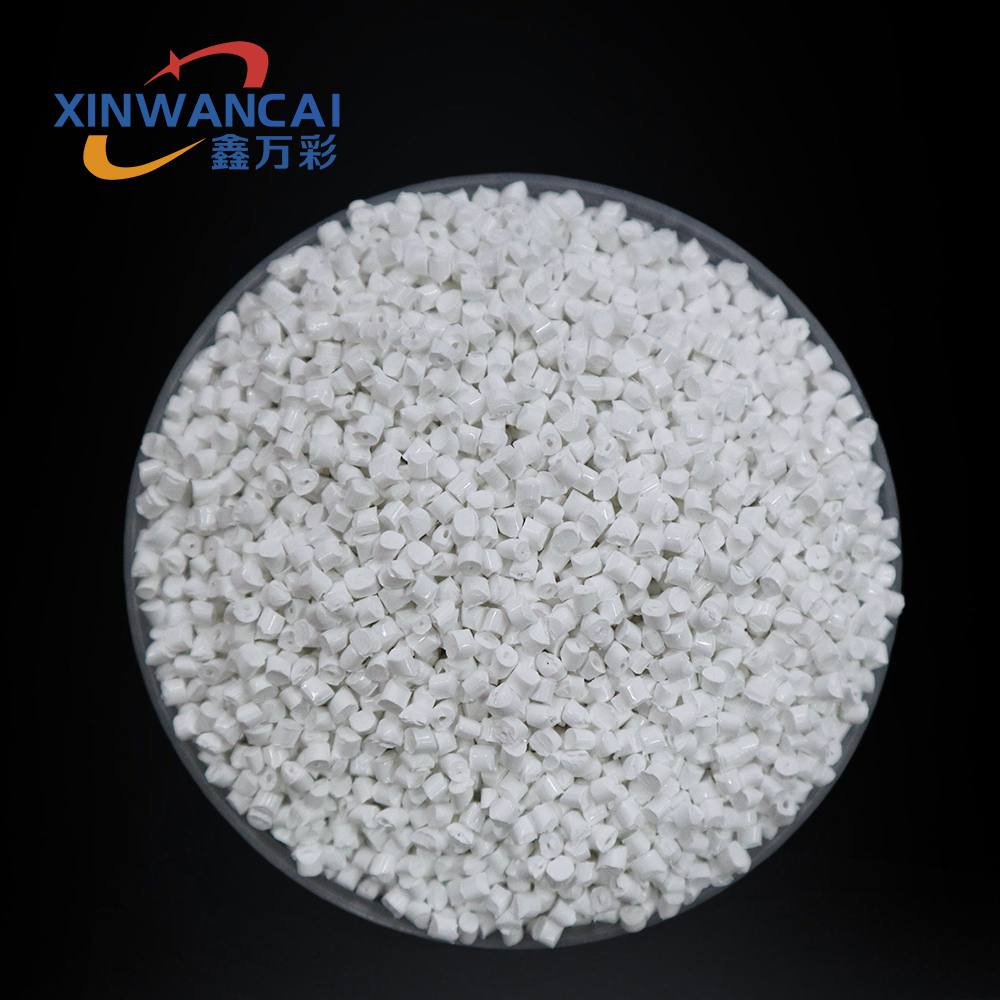
A white masterbatch factory produces concentrated mixtures of titanium dioxide and other additives encapsulated in a carrier resin. These pellets are used to impart bright white color and improve properties like opacity, UV resistance, and processing stability in plastic products.
Beyond color, white masterbatch boosts product durability by increasing opacity, shielding against UV degradation, and improving dispersion uniformity. This results in plastics that look better, last longer, and perform reliably under demanding conditions.
Specialized factories invest in advanced dispersion technology and rigorous quality control. They tailor formulations to specific polymers and applications, ensuring superior color consistency, easier processing, and fewer defects compared to off-the-shelf alternatives.
Industries such as packaging, automotive, construction, and consumer goods rely heavily on white masterbatch. It provides the essential white base for films, pipes, containers, and components where appearance and durability are critical.
Consistency is maintained through precise raw material selection, automated dosing systems, and continuous monitoring during production. In-house spectrophotometer testing and melt flow analysis guarantee every batch meets strict color and performance specifications.
High-quality white masterbatch can reduce the need for additional pigments and coatings, lowering material usage. It also enables efficient processing and can be formulated to support recyclability, aligning with circular economy goals without compromising product integrity.
Conclusion
At our white masterbatch factory, every pellet we produce is the result of meticulous engineering and a deep understanding of plastics processing. We don't just blend titanium dioxide into a carrier; we design precision masterbatches from the ground up, considering the specific polymer, processing conditions, and end-use demands. Behind the scenes, our scientists focus on achieving pigment dispersion at a microscopic level, because that's what truly defines opacity and consistency. By using advanced dispersion technology, we eliminate agglomerates, ensuring each masterbatch delivers uniform hiding power, whether it's a thin film or a thick-walled container. And because no two applications are alike, our tailored formulations range from high-flow grades for injection molding to heat-stable solutions for demanding extrusion lines, always matching the right carrier resin and additive package to the job.
The science of achieving brilliant whiteness without compromise means balancing maximum reflectance with processability—too much TiO2 can sacrifice mechanical properties, but too little dulls the finish. We navigate this fine line with custom stabilizers and dispersion aids, producing masterbatches that radiate a clean, bright white even in recycled resins or challenging surfaces. This technical rigor goes hand in hand with our sustainability commitment: we minimize waste, optimize energy use during compounding, and help converters reduce their own footprint through higher efficiency. We see ourselves as partners, not just suppliers, working alongside converters to solve real production challenges—such as die build-up, inconsistent feeding, or surface defects—with on-site support and swift formulation tweaks. Ultimately, our factory delivers more than color; we deliver confidence, consistency, and a true competitive edge for plastics manufacturers worldwide.
Contact Us
Contact Person: JACK
Email: [email protected]
Tel/WhatsApp: 86 18650130917
Website: https://www.xinwancai.com/