

Trusted Trimethyl Phosphate Dealer for Bulk and Small Quantity Orders
2026-11-16
Sourcing trimethyl phosphate often means choosing between inflexible bulk suppliers and unreliable small-quantity vendors—until now. As a specialized chemical supplier, Fortune bridges that gap with consistent quality, whether you need a drum or a full container. In this post, we unpack what makes a dealer truly trustworthy when every order size matters.
Trimethyl Phosphate Sourced for Uncompromising Purity
Every batch of trimethyl phosphate we offer begins with a deliberate selection of raw materials, traced back to suppliers who share our obsession with minimal impurity profiles. Rather than relying on bulk industrial streams where trace metals or organic residuals can quietly compromise downstream performance, we insist on a tighter specification from the start. This means phosphate esters arrive with a clarity that needs no further justification—just a consistently low acid number, negligible water content, and a colorless appearance that holds steady under storage conditions most would consider stressful.
The purification pathway itself is treated not as a simple distillation step but as a series of deliberate decisions. By avoiding aggressive drying agents that could introduce their own ghost contaminants, the final material emerges with a purity that makes it suitable for sensitive catalytic processes, pharmaceutical intermediates, and electrolyte formulations where even parts-per-million variances matter. In practice, that translates to fewer unexplained batch rejections and a quieter baseline when the material moves into your most demanding reactions.
From Research Batches to Production-Scale Needs
Early-stage work often revolves around small, carefully controlled experiments. You fine-tune a handful of samples, manually check every output, and iterate in tight loops. This is where understanding deepens and unexpected insights surface. But the very things that make research thrive—custom scripts, ad-hoc data wrangling, quiet hours of manual inspection—start to creak when the goal shifts from a one-off result to something that needs to run reliably, repeatedly, and at a completely different order of magnitude.
Moving into production isn't just about adding more servers or writing a scheduler. It’s a change in posture. The question stops being "Can we make it work on these ten examples?" and becomes "How does the system behave at 2 a.m. when ten thousand requests arrive at once, and three of the upstream data sources are running late?" Caching strategies, fallback logic, monitoring that doesn’t drown you in false alarms, and the shape of your data pipelines all become first-class problems. They’re not afterthoughts; they’re the architecture that keeps the original insight alive under pressure.
Bridging this gap means treating the journey not as a straight line but as a translation exercise. The fragile notebook pipeline gets re-expressed in code that other people—or your future self—can understand six months later. Metrics that mattered to a researcher (like model perplexity) are joined by metrics that matter to an on-call engineer (like p99 latency and error budgets). With every iteration, the core idea remains the same, but its packaging evolves until it can breathe comfortably in an environment that never stops asking for more.
Secure Packaging Built for Global Transit
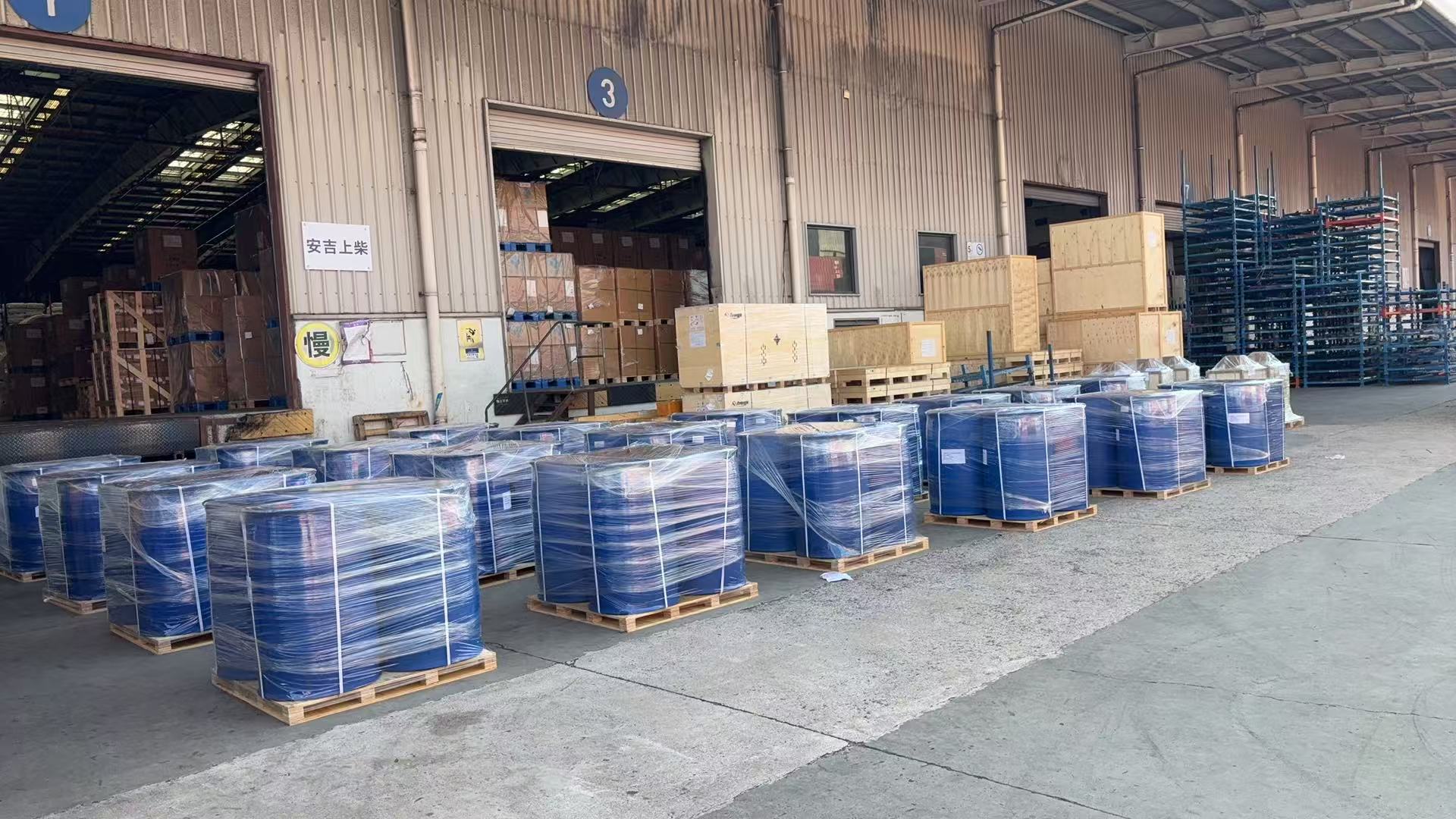
Your shipment might cross oceans, bounce through cargo hubs, and sit in a sweltering container for days before it reaches a warehouse on the other side of the world. We engineered our packaging with that exact journey in mind—not just a flimsy box, but a system of shock-absorbing liners, reinforced double-wall corrugated layers, and tamper-evident seals that keep moisture, pilfering, and rough handling from ever becoming your problem.
Instead of a one-size-fits-all approach, every crate we ship is sized to the product and its center of gravity, because excess empty space is where breakage begins. We also run live-drop and vibration tests on each new packaging design before it ever wraps a real shipment, so by the time your goods are inside, the protection isn't theoretical—it's measured in how many times the box laughed at a tilt-table test.
The last mile of global transit is often the most unpredictable, so we add intelligent cushioning that compresses under impact but doesn't degrade over long transits. That means no matter how many conveyor belts, trucks, or forklifts intervene between your product and its final stop, the unpacking experience is consistently clean—no shattered corners, no compression scars, just the item exactly as it left your facility.
Where Expertise Meets Reliable Supply Chains
True supply chain strength isn't simply about moving goods from point A to point B. It emerges when deep industry knowledge fuses with hardened logistics networks that can absorb disruptions without missing a beat. Our teams don't just track shipments; they anticipate material shifts, interpret regulatory nuances, and recalibrate routes before challenges turn into delays. That proactive insight is what converts a standard supply line into a competitive advantage.
Reliability is built layer by layer, starting with the people who understand your sector's specific pressures. Whether navigating volatile raw material markets or aligning with complex local compliance demands, our specialists bring years of focused experience to every node. We've engineered redundancies and cultivated partner relationships across continents, so your operations continue seamlessly even when external conditions change overnight. This isn't predictive modeling alone—it's mature judgment earned on the ground.
The result is a supply chain that feels invisible because it simply works. You concentrate on product innovation and customer growth, confident that sourcing, quality control, and delivery timelines aren't open questions. When expertise anchors every decision and reliability becomes a quiet constant, your business stops managing risk and starts exploring new opportunities with full confidence.
Application-Ready for Diverse Chemistries
Versatility sits at the core of modern chemical processing, where a single platform must shift effortlessly between reactions with wildly different demands. From hydrogenation to Suzuki couplings, these systems are engineered with a modular fluid path and a chemically inert wetted zone, ensuring that no residual reagent contaminates your next step. The result is a seamless transition across polarities, temperatures, and reagent types without sacrificing yield or purity.
Rather than forcing chemists into a narrow set of conditions, the design embraces real-world unpredictability. Built-in feedback loops continuously adjust parameters like residence time and mixing intensity in response to viscosity changes or exothermic spikes. This adaptability means the same hardware can handle a slow Grignard initiation in the morning and a high-pressure carbonylation by afternoon, all while maintaining consistent heat transfer and precise stoichiometric control.
The hidden strength lies in what you don't have to do: no repeated cleaning validations, no long changeover protocols, and no piles of single-use consumables. Materials have been chosen not just for safety but for their ability to withstand aggressive reagents like acid chlorides, azides, or strong bases over extended campaigns, making the system truly ready for whatever chemistry you throw at it next.
Orders Tailored Without the Volume Pressure
There’s a quiet relief in placing an order that actually fits what you need right now—not what someone else thinks you should stockpile. No one is nudging you toward a bulk discount you don’t really want, and no minimum quantity thresholds are quietly inflating your invoice. It’s a straightforward exchange where the focus stays on the items, not the pressure to buy more.
This approach flips the usual dynamic on its head. Instead of the chase for ever-larger orders, the emphasis lands on getting your selection exactly right—whether that means a single piece or a small curated set. It respects the rhythm of a smaller business, a careful trial, or simply a personal preference for holding less inventory. The result is a calmer experience that feels more like a considered choice than a sales funnel.
What often follows is a surprising sense of control. You can reorder on your own timeline, adjust quantities as actual demand unfolds, and avoid the subtle guilt of unused stock sitting on a shelf. The absence of volume targets means the relationship isn’t built on hitting numbers, but on trust that you’ll come back when it makes sense for you.
FAQ
Our track record spans over a decade, with consistent product purity and on-time deliveries that have earned us long-term partnerships across pharmaceutical and industrial clients.
Absolutely. We understand that pilot projects need flexibility, so we offer sizes from 500ml up to full drums, with no minimum order for research-grade purchases.
Every batch undergoes GC-MS analysis and comes with a certificate of analysis. We also store samples for three years in case you need retrospective verification.
For standard bulk quantities, we usually ship within 5-7 business days. If you need expedited processing, we can prioritize your order and arrange express freight.
It’s widely applied as a methylating agent, a flame retardant intermediate, and a solvent in pharmaceutical synthesis, agrochemicals, and lithium-ion battery research.
Yes, we ship worldwide using UN-certified packaging that complies with ADR, IMDG, and IATA regulations. Custom packing options are available for sensitive delivery routes.
Conclusion
Trimethyl phosphate orders shouldn't force a compromise between purity and practicality. As a specialty supplier, we source material that undergoes rigorous quality control—every lot is third-party verified against pharmacopeial and industrial grades, with residual moisture and acidity tightly controlled—to ensure batch-to-batch consistency, whether it's destined for sensitive research or continuous manufacturing. From single kilogram research batches right through to multi-ton production-scale deliveries, every shipment is backed by transparent technical documentation and a packaging protocol engineered for intercontinental transit. Nitrogen-blanketed drums, double-sealed closures, and impact-resistant outer casing hold up under extreme logistics challenges. This reliability is rooted in a supply network where hands-on chemical expertise meets carefully vetted logistics partners, meaning your material arrives on time and intact, without surprises.
Beyond logistics, what truly sets this service apart is how it adapts to your application. Trimethyl phosphate enters diverse chemistries—as a methylating agent, a flame retardant intermediate, or a specialty solvent—and each use case demands slightly different handling or concentration. Our technical team works with you to confirm suitability, offering pre-testing samples and custom blending when needed. Moreover, there's no penalty for ordering modest quantities. While many distributors demand container-sized commitments, we structure smaller orders without surcharges, treating a start-up's pilot run with the same attention as a multinational's standing order. This combination of application-focused support and volume flexibility turns a transactional purchase into a lasting supply partnership.
Contact Us
Contact Person: WANG SIHAI
Email: [email protected]
Tel/WhatsApp: +86-13815295628
Website: https://www.fortunechemtech.com/index_en.html