

Top Q235 Steel Plate Wholesaler for Reliable Bulk Supply
2026-08-31
Ask any purchasing manager who regularly buys Q235 steel plate in bulk, and they’ll tell you the same thing: the real test of a wholesaler isn’t the first shipment—it’s the tenth. Sanhe Steel has passed that test repeatedly, earning a reputation as a top-tier Q235 supplier for projects where downtime is simply not an option. Here’s why that track record matters for your next order.
Reading Q235 Plate Specs Without the Guesswork
Most spec sheets for Q235 plate look like a wall of numbers, but once you know which columns actually matter, the rest falls away. Start with thickness and width—those drive cutting, forming, and load calculations. Don't skip the tolerance notes buried at the bottom; a 0.3 mm variance changes fit-up on weldments more than most people expect.
Chemistry gets a lot of attention, but for Q235 the practical range is tight enough that you rarely need to double-check carbon or manganese unless the heat lot is suspect. What you do want to confirm is the delivery condition—hot rolled versus normalized—because that affects flatness and residual stress, not just surface finish. A plate that looks flat on the rack can spring after the first pass if it was shipped with uneven cooling.
Mechanical properties are where guesswork creeps in. Yield and tensile values on the certificate are minimums, not targets, so a plate testing 10% above spec isn't “better” in a way that changes your design. Pay closer attention to elongation and bend test results—those tell you how the material behaves when you actually work it, not just when you pull it in a straight line. If the cert doesn't list a bend radius, ask for the mill test report before you commit to a forming job.
Bulk Supply Chains That Don't Stall at the Loading Dock
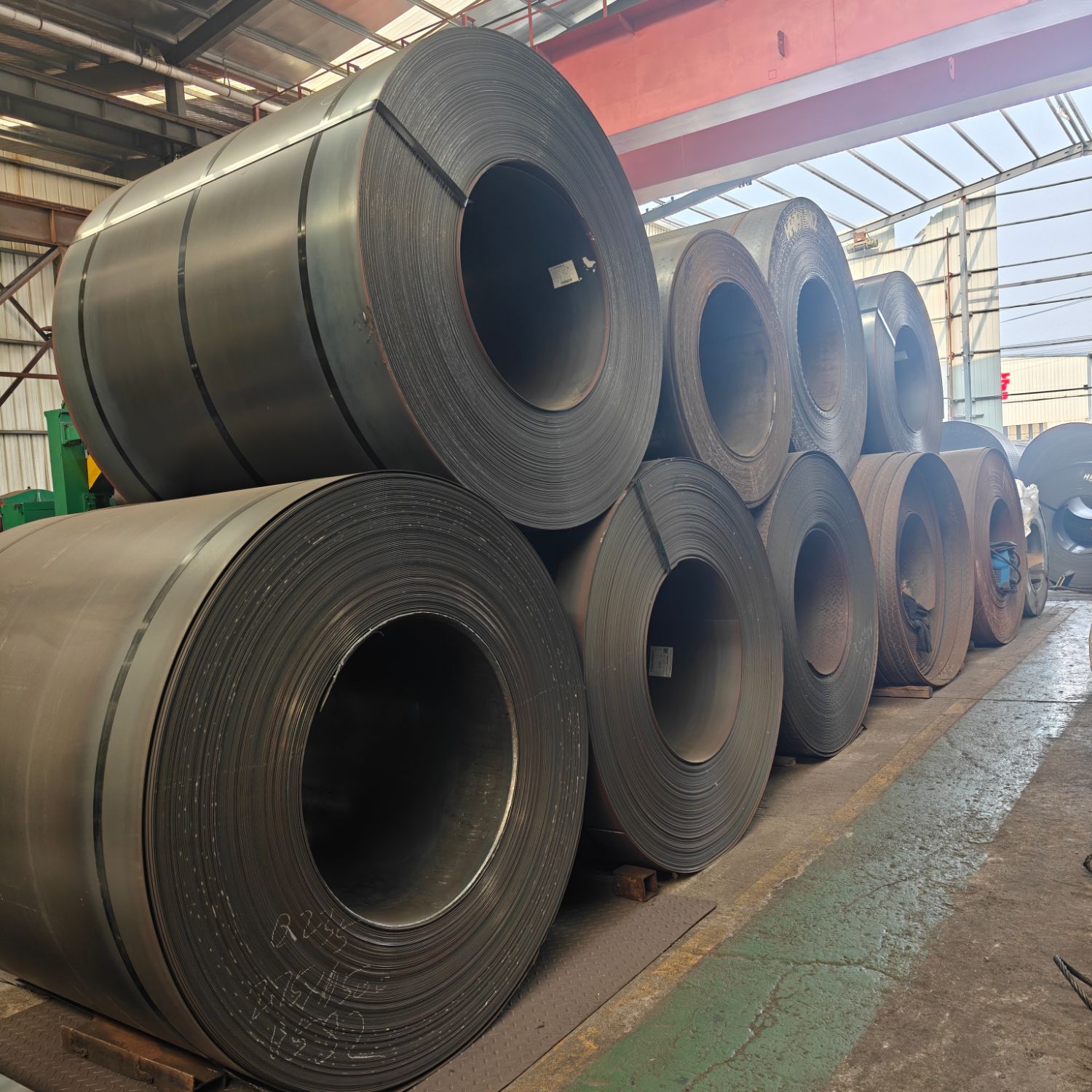
A loading dock that backs up is rarely an accident — it's the visible symptom of decisions made days earlier. Bulk supply chains often stumble when purchase orders, carrier arrivals, and warehouse labor aren't sequenced in real time. The fix isn't more dock doors; it's treating the dock as a control point where inbound volume, unloading capacity, and outbound staging are balanced hour by hour, not just planned in weekly batches.
Shippers who keep bulk freight moving tend to use short-interval scheduling: they release dock appointments in small windows, hold carriers to precise arrival slots, and reroute overflow to satellite yards before congestion forms. Instead of letting trailers stack up like a parking lot, they build flexibility into drop-and-hook pools and prioritize live unloads based on production pull rather than first-in-first-out.
The difference shows up in yard turns and driver detention. When dock operations are tied to actual consumption rates and inventory buffers, trucks don't sit idle for hours, and warehouses don't burn overtime catching up. It's a shift from chasing delays to designing the flow so delays don't have a place to gather.
Shop-Ready Cuts That Skip the Secondary Processing
These blanks arrive at your bench with edges already squared, holes drilled, and surfaces cleaned up. You won’t spend an afternoon running a deburring tool or chasing a wandering jigsaw line.
The whole point is to move straight into assembly or finishing. Whether it’s brackets, panels, or frame parts, each piece comes off the pallet and goes right where it’s supposed to—no extra passes through the planer or grinder.
That kind of head start matters when you’re juggling multiple jobs. You keep the workflow tight, and the only thing between you and the final product is the work you actually planned to do.
Volume Pricing That Keeps Your Bid Competitive
Large orders should translate into real leverage when you prepare a tender. This pricing model works on a stepped unit cost that drops as your planned quantities increase. You know exactly where each break lands, so the numbers you put in front of a client already reflect the most favorable rate for that scale.
Instead of a generic discount that ends up being negotiated later, the tier thresholds are published up front. Once your projected volume crosses a line, the revised unit price applies to the whole order—not just the extra units. That creates a genuine incentive to submit a sharper bid without cutting into your own overhead.
There is also room for changes after the award. If the scope expands and additional units are requested, the original volume tiers remain valid for the added quantities. You avoid the usual scramble to reprice, which keeps your initial offer stable and credible from the client’s perspective.
Heavy Plate Deliveries Scheduled Around Your Crew
Heavy plate orders rarely arrive at a convenient hour, and forcing crews to wait on a truck throws off the rest of the shift. We build delivery windows around your team’s actual schedule, not the other way around. If the crane is tied up until mid-morning, the plates show up after that. If you run a night pour, we adjust the drop-off so material lands before the crew clocks in, not during the handover.
The goal is simple: no idle welders, no overtime burn, no stacked plates blocking traffic lanes. You tell us when the crew can accept steel, and we route the load to match. Last-minute changes get a direct call to the driver, not a ticket system. If weather or site access shifts the plan, the delivery moves with it, and your foreman knows the new ETA before the old one passes.
This works best with a standing order pattern. Once we know your typical pour days or erection rhythm, we pre-stage trucks and plate inventory so release times line up with your manpower. It takes the daily scramble out of the equation and keeps the job moving without making anyone babysit the gate.
Q235 in Action: From Structural Frames to Machine Bases
Walk onto almost any construction site and you'll see Q235 holding things together. Its balance of tensile strength and ductility makes it a go-to for structural frames—think warehouse columns, mezzanine beams, and even the skeleton of a mid-rise building. Welders favor it because the carbon content stays low enough to avoid cracking, yet the steel still carries daily loads without complaint. You won't find flashy alloys here; just a reliable workhorse that gets the job done.
Shift from buildings to the factory floor, and Q235 shows another side. Machine bases demand more than raw strength—they need mass to damp vibration and enough flatness to keep a CNC spindle or stamping press from walking across the floor. Q235 plates, cut and welded into thick box sections, deliver that stability at a fraction of the cost of cast iron. Shops often machine the top surface after welding, and Q235's uniform grain structure makes it predictable under a cutter.
The real trick is that Q235 doesn't force engineers to choose between frame work and foundation work. One material, stocked everywhere, handles both the overhead truss and the concrete-anchored base plate beneath a laser cutter. Add a coat of primer or powder coating, and it shrugs off years of workshop grime. That versatility is why you'll see it in everything from conveyor supports to the legs of a fifty-ton hydraulic press.
FAQ
A dependable wholesaler keeps consistent thickness and flatness across every batch, maintains deep inventory, and can arrange mill-direct loading so your project doesn't stall waiting on material. Look for clear mill test certificates and a track record of on-time dispatch for bulk buyers.
Ask for original mill test certificates that show chemical composition and mechanical properties, and if possible request a sample cut from the current stock. Reputable suppliers also allow third-party inspection at the warehouse before payment or shipment.
Most wholesale stocks cover 3 mm to 150 mm in thickness and widths from 1,250 mm to 2,500 mm, with lengths commonly 6 m or 12 m. Some suppliers also offer custom cutting to reduce handling waste on site.
Q235 offers a balanced combination of weldability, machinability, and moderate strength at a lower cost than higher-grade structural steels, which makes it practical for frames, brackets, bases, and general fabrication where extreme loads are not the main concern.
Compare not just per-tonne price but also tolerance standards, delivery lead time from stock, packing and edge condition, and whether the supplier can handle mixed-size orders without long delays. A supplier that regularly ships to industrial buyers is often more reliable than one focused only on retail.
Many established wholesalers arrange flatbed or container delivery to job sites, ports, or warehouses. Confirm unloading requirements and delivery windows before ordering so the plates arrive when the site crew is ready to receive them.
Buying in bulk usually lowers the per-tonne price, reduces per-order transport charges, and lets you lock in one consistent heat or batch, which reduces the chance of mixed material on site and makes cutting plans more predictable.
Have your required thickness, width, length, quantity in tonnes, delivery location, and deadline ready. The more precise your list is, the faster a supplier can give an accurate price and confirm whether the material can ship from existing inventory.
Conclusion
Sourcing Q235 plate in volume usually means wrestling with inconsistent mill certificates or waiting on a distributor that treats your schedule as a suggestion. A wholesaler built for reliable bulk supply removes that friction. Specs are translated into plain terms—thickness tolerances, yield strength, and surface condition are laid out against common fabrication needs, so you don't have to guess whether a batch will bend cleanly or hold a weld. The supply chain itself is stocked deep enough that a sudden change order doesn't idle your crew at the loading dock. And because the plates arrive cut to your shop's dimensions—beveled, squared, or sheared to length—you skip the secondary processing that eats into labor hours and floor space.
That shop-ready approach carries into pricing and delivery. Volume quotes are structured around your bid, not padded with hidden handling charges, which keeps your numbers sharp when you're up against other fabricators. Heavy plate shipments are dispatched on a schedule that matches your project timeline, so a 40-ton structural order lands before the crane is rented, not after. The material itself covers a wide range: structural frames for mezzanines, base plates for presses, gussets for column splices, machine beds where flatness matters. Whether you're feeding a beam line or rebuilding equipment foundations, the Q235 plate you receive is consistent enough that the only surprise is how little rework you need. That's what reliable bulk supply should feel like—less paper chasing, more cutting and welding.
Contact Us
Contact Person: Zoey
Email: [email protected]
Tel/WhatsApp: +86 15865577002
Website: https://www.sanhesteels.com