

Top 10 Container Refrigeration Room Solutions to Maximize Cold Chain Efficiency
2026-11-16
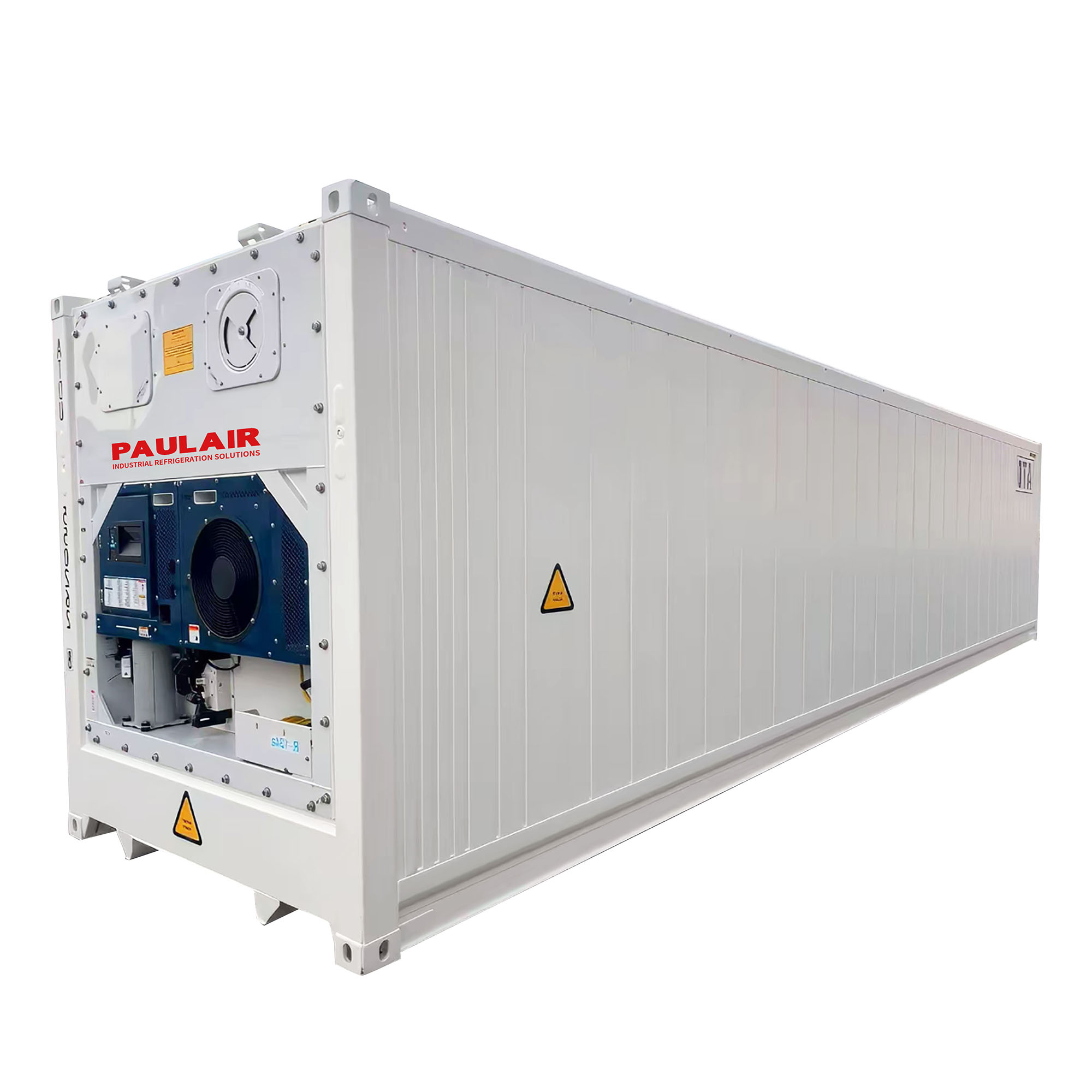
Cold chain failures don’t just spoil cargo—they shatter reputations and drain budgets. Yet with so many container refrigeration room options flooding the market, picking the right setup feels overwhelming. That’s why we’ve distilled the field down to ten proven solutions that actually move the needle on efficiency. From smart temperature zoning to energy recovery systems, each entry tackles a specific pain point. And while you explore the list, keep an eye on PAULAIR—their modular designs quietly solve problems most operators don’t even realize they have.
Zone-Specific Temperature Profiles for Mixed Cargo Loads
Mixing cargo with different temperature requirements in one trailer or container often forces a compromise, but zone-specific temperature profiles avoid that by treating the space as distinct thermal regions rather than a single uniform box. This approach matters most with loads like fresh berries alongside chocolate couverture or heat-sensitive pharmaceuticals next to chilled dairy—each zone gets its own set point and airflow pattern, so the reefer unit doesn't have to fight against an impossible average temperature.
Establishing reliable zones starts with physical separation. Bulkheads, air chutes, and repositioned evaporator fans create barriers that let supply air reach one section without overcooling another. Sensor placement follows the actual airflow, not just the middle of the load, because return-air readings can hide warm pockets near the doors. In practice, a multi-zone reefer may run the forward compartment at 2°C for leafy greens while the rear holds 10°C for citrus, with the controller switching between evaporator circuits to keep both bands stable through different door openings and sun exposure.
Operationally, zone-specific profiles demand a stricter loading sequence and more frequent temperature mapping than single-set-point hauls. Pre-cooling each zone to its target before loading reduces thermal shock, and stowing higher-respiration produce away from direct fan blast prevents dehydration. Drivers often log zone drift per stop, because a two-degree swing in the middle section might be acceptable for potatoes but ruin vaccine shipments. Getting this right is less about advanced hardware than about matching the physical layout, airflow behavior, and product sensitivity to a realistic thermal map.
Airflow Tweaks That Kill Hot Spots Without Wasting Energy
Most hot spots are not a capacity problem—they are a distribution problem. Start by walking the room and noting where supply registers actually point. A vent blowing straight down behind a couch or buried under curtains is doing little more than heating the furniture. Angle the louvers so air sweeps across the floor toward the center of the room, not straight at the nearest wall. If a register is in an awkward spot, a clear plastic deflector can lift the air over obstacles and nudge it into the living zone. The goal is to get moving air to mix with the still air near the floor, which breaks up the warm pocket without forcing the system to run longer.
Next, look at return paths. A room with a closed door and no return vent will pressurize, and supply air will stall at the threshold—leaving a hot spot near the door or in a far corner. Undercutting the door by an inch or adding a transfer grille above the door lets air circulate back to the return without touching the thermostat. On the supply side, avoid the temptation to fully close registers in unused rooms; most residential systems are not designed for that kind of static pressure. Instead, close them only a third or half, and balance the dampers at the trunk line if you can reach them. That trims heat where it is not needed and redirects it to the problem area while keeping the blower from working against itself.
Real-Time Alerts That Catch Temperature Drift Before It Spoils Cargo
Temperature drift rarely announces itself. It starts as a subtle creep—a failing compressor, a door left ajar for an extra minute, a container sitting on the tarmac under unexpected sun. By the time someone notices, the cargo is often already compromised. Real-time alerts change that dynamic entirely. Instead of relying on periodic spot checks or end-of-trip data loggers, these systems watch temperature second by second and send an immediate notification the moment values wander outside the safe band. It’s the difference between finding out about a fever after the patient has collapsed and catching it while there’s still time to intervene.
What makes these alerts practical is their configurability. You can set a gentle nudge for a minor deviation—say, half a degree above the upper limit—so staff can investigate before things escalate. Then a critical alarm fires if the drift continues or spikes quickly, triggering calls, texts, or push notifications to everyone on the duty roster. For example, a seafood distributor shipping live lobsters might configure alerts at 2°C and 4°C above the set point; the first warning prompts a check on the reefer unit, while the second triggers an emergency protocol to reroute or offload the shipment. That kind of graduated response keeps small issues from becoming total losses.
Beyond the immediate save, real-time alerts cut down on manual monitoring fatigue. Drivers and warehouse crews no longer need to babysit temperature gauges around the clock—they can focus on other tasks, knowing the system will tap them on the shoulder only when something actually requires attention. Over time, the alert history also reveals patterns: a particular lane habitually runs warm in summer, or a specific trailer model struggles to hold set point after eight hours. That data lets operators fix root causes rather than just reacting to emergencies, which means fewer ruined loads and fewer awkward conversations with insurance adjusters.
Insulation Upgrades That Quickly Pay for Themselves
Adding insulation to an older home often feels like a chore with invisible benefits, but the financial return can arrive faster than most people expect. Attic insulation, especially in houses built before 1980, frequently pays for itself within two to three years through reduced heating and cooling bills. The Department of Energy estimates that upgrading from R-11 to R-49 in a typical attic can cut energy loss through the ceiling by more than 50%, which translates into real monthly savings during both summer and winter peaks.
Wall cavity insulation, though harder to install in existing homes, offers an even quicker payback in climates with harsh temperature swings. Dense-pack cellulose or injection foam can seal hidden gaps that let conditioned air escape, and homeowners often notice a difference on their very next utility statement. Because these upgrades also reduce strain on HVAC equipment, they lower maintenance costs and extend system lifespan—an indirect saving that rarely shows up in simple payback calculators.
What makes insulation different from other energy retrofits is its permanence. Unlike a smart thermostat that can become obsolete or a high-efficiency appliance that will eventually wear out, insulation keeps working at the same level for decades without any upkeep. That means once the initial cost is recovered, every subsequent month of savings is pure gain, making it one of the few home improvements that truly compounds its value.
Backup Power Plans That Keep Cold Chains Running Through Outages
When the grid goes down, a cold chain doesn't have minutes to spare. A single temperature excursion can spoil an entire shipment, making backup power not just a safety net but a core operational requirement. The most resilient plans layer multiple redundancies: automatic transfer switches that kick in within seconds, generators sized to handle peak compressor loads, and battery banks that bridge the gap before the generator reaches full output. Facility managers often overlook the importance of regular load testing under real-world conditions—dry runs reveal hidden vulnerabilities like fuel line issues or insufficient runtime for extended outages.
Designing an effective backup power strategy starts with mapping your cold storage's critical load profile. Not every cooler or freezer needs the same priority; blast freezers and vaccine storage demand near-instantaneous failover, while less sensitive areas can tolerate a brief delay. Modern solutions increasingly integrate renewable sources like solar arrays paired with industrial batteries, which not only reduce diesel dependence but also provide a quieter, cleaner buffer during prolonged blackouts. Smart controllers can stagger compressor restarts to avoid the inrush current spike that often trips smaller generators, a common failure point that leaves facilities dark even when backup power is technically available.
Beyond equipment, the human element often determines whether a plan holds up in the middle of a storm. Written procedures that sit in a binder are worthless if staff haven't drilled the sequence: isolate non-critical loads, verify fuel levels, monitor temperature logs at 15-minute intervals. Partnerships with fuel suppliers for priority delivery during regional outages and with rental generator firms for rapid deployment can turn a catastrophic event into a controlled inconvenience. The best backup power plans are living documents, updated after every test and every real outage, because the cold chain doesn't reward good intentions—it rewards preparation.
Turning Temperature Logs Into a Reliability Advantage
Most maintenance teams treat temperature logs as a chore — a clipboard check to keep auditors happy. But those records hide early warnings that can stop a breakdown before it starts. When you track temperature swings alongside runtime hours, you start seeing patterns: a compressor running five degrees hotter on Tuesdays, or a chiller that drifts upward an hour before every fault. That’s not noise. It’s a signature.
Turning that signature into an advantage takes two shifts in thinking. First, stop logging for compliance and start logging for prediction. Compare current readings against that asset’s own baseline, not just the manufacturer’s spec. Second, give your team a simple rule — if temperature deviates by more than three percent from the rolling average, open a work order for inspection. No fancy software required. Just a spreadsheet and a standing ten-minute review.
The payoff shows up in avoided downtime and longer component life. Bearings, seals, and insulation all degrade faster when heat runs unchecked. By catching the drift early, you replace a $50 sensor instead of a $5,000 motor. Over a year, that’s the difference between a plant that runs to failure and one that schedules its own luck.
FAQ
Swap worn door gaskets and check hinge alignment first—small air leaks undo even the best cooling unit. Adding strip curtains or high-speed doors at entry points also keeps cold air from spilling out during loading. For a bigger impact, upgrade to variable-speed compressors that adjust output instead of cycling harshly on and off.
Set the controller to a slightly tighter deadband so the compressor runs longer but fewer starts, cutting surge demand. Insulate any exposed pipe runs and shade the container walls if they face direct sun. Night-time pre-cooling can also shift compressor load away from peak-rate hours while keeping product temperatures stable.
Place temperature loggers in the warmest and coldest spots, not just near the return air sensor. Use real-time alerts for door-open events longer than two minutes and for any power blip. Reviewing defrost cycle data weekly often reveals early sensor drift or ice buildup that would otherwise go unnoticed.
Putting the evaporator too close to a wall chokes airflow and creates dead zones. Another frequent error is skimping on floor insulation, which lets ground heat seep in. People also forget to plan drainage—if melt water pools or freezes, it blocks airflow and forces the system to work harder.
Use load bars or pallet stops to keep stacked cartons from pressing against side walls, leaving a clear return-air path. Alternate pallet orientation so air can snake through rather than hitting a solid wall of product. For mixed loads, place heat-sensitive items near the supply-air stream and denser, less sensitive goods closer to the door.
Pair the container with a portable generator that can auto-start on voltage drop, and test it monthly under full load. Keep a stock of dry ice or eutectic plates as a short-term bridge for high-value loads. At minimum, install a battery-powered alarm that sends a phone alert the moment shore power fails so you can act before temperatures climb.
Frequent short cycling chills the air quickly but removes little moisture, so relative humidity creeps up. A desiccant wheel or a small reheat coil can strip excess humidity without overcooling the space. Also check door seals—moist outside air leaking in is often the hidden cause of condensation on walls and packaging.
If pallets move in and out many times a day, a through-flow layout with separate inbound and outbound doors prevents cross-traffic and keeps cold air from escaping. For mixed SKU picking, a U-shaped layout shortens walking distance but needs stronger air curtains. Weigh the cost of extra doors and fans against the savings from fewer defrost cycles and less product damage.
Conclusion
In cold chain logistics, container refrigeration rooms often fail not from a single flaw but from a cascade of small oversights. The most effective operators treat temperature control as a dynamic system rather than a static setting. Zone-specific temperature profiles for mixed cargo loads allow different sections of the same container to hold distinct climates, preventing ethylene-producing fruits from wilting leafy greens while keeping frozen goods rock solid. Pairing this with airflow tweaks—like repositioning evaporator fan shrouds or adding lightweight draft curtains—kills hot spots without pushing fans to full blast and wasting energy. These adjustments are invisible to customers but obvious in the quality of cargo on arrival. Real-time alerts that catch temperature drift before it spoils cargo turn passive monitoring into proactive defense. Instead of discovering a breach hours after the fact, managers receive an immediate ping when a door seal leaks or a compressor cycles oddly, allowing them to intervene while the load is still salvageable.
Beyond the box itself, two underrated solutions separate reliable operations from reactive ones. Insulation upgrades—spray foam, reflective barriers, or vacuum-insulated panels—often pay for themselves within a single season through lower energy bills and fewer rejected shipments. And backup power plans, from auto-start generators to portable thermal battery packs, keep cold chains running through outages that would otherwise wipe out an entire week's revenue. Finally, turning temperature logs into a reliability advantage means mining historical data for patterns: repeated warm zones near a specific dock door, slow cooling after certain loading patterns, or drift that precedes compressor failure. These insights let operators fix root causes instead of chasing symptoms. By combining these six approaches, a top container refrigeration room becomes a silent profit center—not just a box that cools things down, but a system that protects every dollar of cargo value from farm to fork.
Contact Us
Contact Person: Jack
Email: [email protected]
Tel/WhatsApp: +86-13335127698
Website: https://www.paulair-refrigeration.com