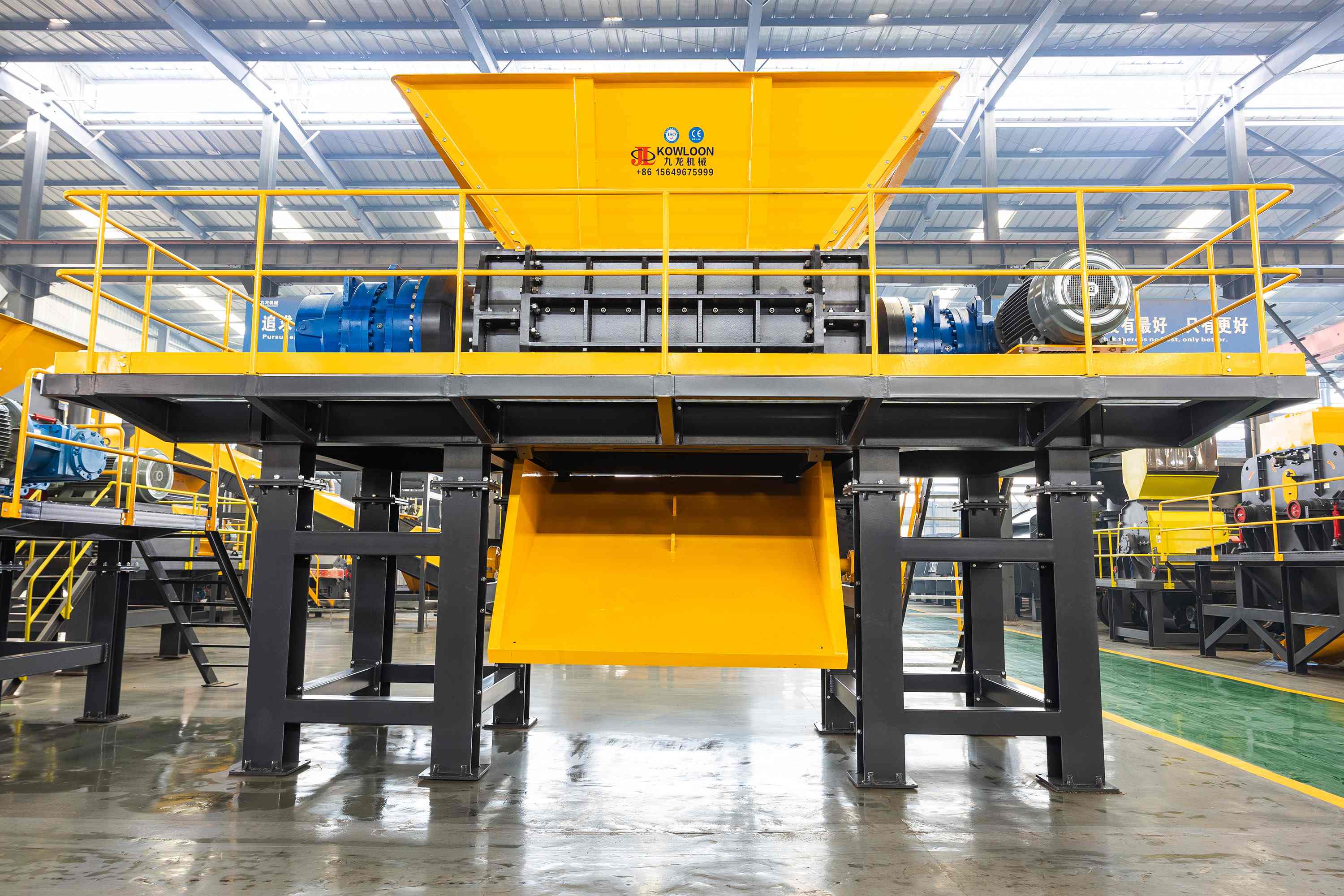

Tire Recycling Manufacturer: Sustainable Methods for Reusing Scrap Rubber
2026-11-02
Every year, millions of worn-out tires pile up in landfills or end up burned in the open, releasing toxic smoke and wasting a material that still holds enormous value. Most people see scrap rubber as garbage, but a handful of manufacturers are proving that it can be reborn into everything from playground surfaces to fuel. At the center of this shift is Kowloon Machinery, a tire recycling manufacturer that has moved beyond outdated shred-and-discard methods to embrace closed-loop systems. Instead of grinding tires into low-grade filler, their equipment separates steel, fiber, and rubber with a precision that makes reuse economically viable—not just environmentally friendly. So what does it actually take to turn a passenger tire into raw material for new products? The answer lies in a combination of mechanical innovation, process control, and a willingness to rethink waste entirely.
How Scrap Rubber Gets a Second Life in Modern Manufacturing
Every year, mountains of worn-out tires and industrial rubber offcuts pile up in landfills, where they stubbornly refuse to decompose. But unlike many waste streams, rubber has a hidden talent: it can be ground back into a fine powder, stripped of its rigidity through a process called devulcanization, and then blended with fresh compounds to create materials that are almost as good as new. This isn't just recycling in the traditional sense—it's a chemical reboot that lets old rubber re-enter production lines without compromising on durability or elasticity.
The real magic happens when these reclaimed rubber particles get mixed into new products. Road builders now add them to asphalt to create quieter, more crack-resistant surfaces that can handle temperature swings without crumbling. Sports flooring manufacturers press them into shock-absorbing mats and running tracks, while automotive suppliers mold them into mud flaps, gaskets, and even tire sidewalls for non-critical applications. In many cases, the final product contains anywhere from 15% to 40% recycled content, which quietly lowers the carbon footprint of each item without the end user ever noticing a difference.
What makes modern rubber recovery stand out is how it has moved past simple shredding and into precision engineering. Ultrasonic devulcanization, cryogenic grinding with liquid nitrogen, and selective chemical treatments now allow processors to tailor the reclaimed material's properties—tuning its hardness, tensile strength, and heat resistance to match specific manufacturing needs. As a result, a scrap tire from a city bus can end up as a damping layer under a playground, a vibration isolator in an industrial machine, or a watertight seal in a drainage system. This material flexibility is turning a once-ignored waste problem into a reliable feedstock for factories that care about both performance and resource efficiency.
Inside a Zero-Waste Tire Recycling Facility
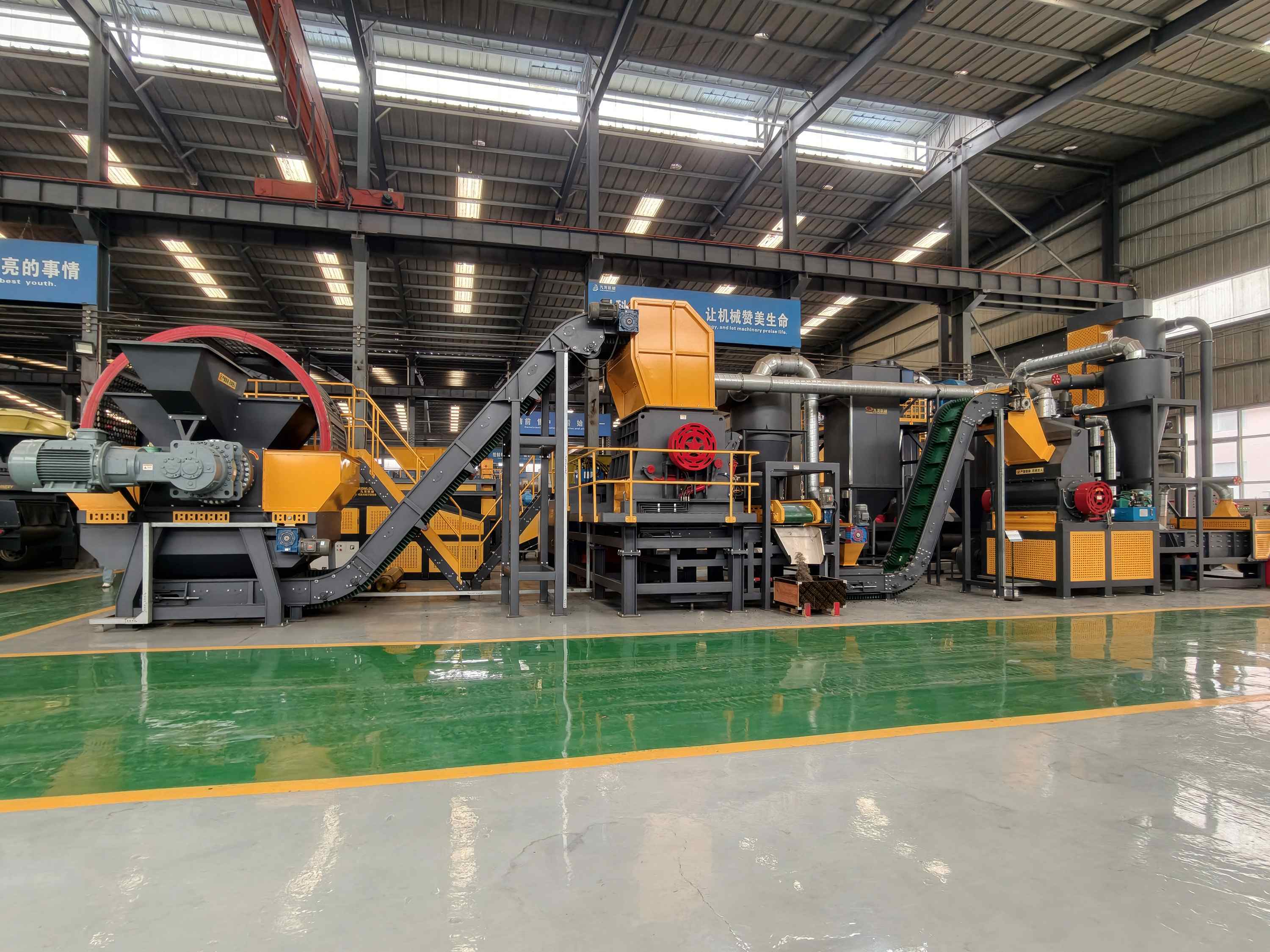
Walking through the main bay, the first thing that strikes you is the absence of the acrid, burning-rubber smell you'd expect. Instead, there's a faint metallic tang in the air and the rhythmic thrum of conveyors. Piles of spent tires, stripped of their rims, wait in orderly rows, each one tagged and weighed. Nothing here is considered trash—every tire is a bundle of raw materials waiting to be pulled apart. A forklift operator maneuvers a stack toward the primary shredder, and the machine's teeth bite in without hesitation, reducing whole tires to fist-sized chunks in seconds.
Farther down the line, the real transformation happens inside a sealed pyrolysis reactor. Oxygen is kept out, and heat—recovered from the facility's own exhaust—breaks the rubber down into three streams: oil, carbon black, and steel wire. The oil is filtered and sent off to be refined into industrial fuel. The carbon black, once used to give tires their color and strength, is milled into a fine powder and sold back to rubber manufacturers. The steel, separated by powerful magnets, gets baled into dense cubes and shipped to electric arc furnaces. Even the gas released during pyrolysis is captured and burned to power the next batch, so the process feeds itself.
In the control room, a single engineer watches a wall of live readouts, adjusting temperatures and feed rates with a few keystrokes. A screen shows the day's tally: 18,400 tires processed, zero pounds sent to landfill. Outside, a truck backs up to the loading dock, its trailer empty and waiting for a shipment of recovered materials. The whole operation runs on a simple logic—if a molecule exists, it should be used. Walking out, you realize that the only thing this facility truly recycles is the idea that waste is inevitable.
Crumb Rubber Markets: From Playgrounds to Road Asphalt
Crumb rubber, finely ground from end-of-life tires, has long been a quiet workhorse in playground surfacing. The material's shock-absorbing properties reduce fall-related injuries, while its porous structure drains water quickly and resists mildew. Municipalities and schools favor it over wood chips or sand because it doesn't decompose, attract pests, or require frequent topping up. This established demand set the stage for a much larger industrial role.
The leap from playgrounds to road asphalt came as highway engineers recognized that the same resilience could solve chronic pavement problems. Mixing crumb rubber into bitumen produces a modified binder that withstands temperature swings far better than conventional asphalt. Roads built with this blend show fewer cracks, less rutting in summer heat, and improved skid resistance in wet conditions. Some departments also report a noticeable drop in tire noise on rubberized surfaces—a benefit residents near busy corridors quickly appreciate.
Market growth now hinges on two forces: tightening disposal regulations for scrap tires and a push for longer-lasting infrastructure. As landfill bans spread, crumb rubber becomes an inexpensive feedstock with a ready-made supply chain. Meanwhile, transportation agencies facing budget constraints see rubber-modified asphalt as a way to stretch repaving cycles. The result is a gradual shift in perception—from a recycled filler for soft fall zones to a valued additive in high-performance road materials.
The Science of Devulcanization: Breaking Down Tire Waste
The stubborn durability that makes tires roadworthy also makes them notoriously hard to recycle. At the heart of this challenge lies sulfur crosslinking—the chemical bridges that bind long polymer chains into a tough, elastic network. Devulcanization aims to selectively sever these sulfur-sulfur and carbon-sulfur bonds without shredding the polymer backbone itself. If the backbone snaps, the rubber loses its strength; if too few crosslinks break, the material won't flow or remold. It's a delicate molecular surgery, balancing heat, shear, and chemical agents to peel back the cured structure while preserving the original chains.
Mechanical methods use intense shear and controlled temperature to rip crosslinks apart, though they often damage the main chains. Chemical probes, such as disulfides or inorganic catalysts, target the sulfur bridges more discriminately, while ultrasonic waves create microscopic cavitation bubbles that fracture the weakest links first. Each approach wrestles with the same inherent trade-off: reclaimed rubber rarely matches virgin material in tensile strength or abrasion resistance. Still, even partial devulcanization yields a processable feedstock that can be blended into new compounds, cutting the need for fresh raw polymers.
Recent advances focus on greener solvents and enzymes that work at lower temperatures, aiming to reduce energy use and secondary pollution. Researchers are also mapping the exact distribution of crosslinks using swelling tests and spectroscopy, feeding that data into process models. The goal isn't to restore the original tire but to create a second life for its polymer—one that could show up in shoe soles, industrial mats, or even new tire sidewalls, closing the loop a little further.
Why Some Manufacturers Prefer Pyrolysis for End-of-Life Tires
Many tire producers have moved away from incineration and crumb rubber production because those routes either release heavy pollutants or depend on volatile secondary markets. Pyrolysis offers a closed-loop alternative: the process heats shredded tires in an oxygen-free chamber, breaking the rubber polymers into recovered carbon black, pyrolysis oil, steel, and syngas. Instead of paying disposal fees or facing tightening landfill restrictions, manufacturers can recover materials that feed directly back into new tire compounds and industrial fuel streams. The appeal isn't purely environmental; it's also about controlling input costs when virgin carbon black and petroleum-derived oils fluctuate in price.
From an operational standpoint, pyrolysis systems fit more easily into existing factory logistics than many assume. Modern batch and continuous units can be scaled to match a plant's waste tire volume, and the equipment runs with a smaller footprint than traditional thermal treatment plants. That matters for manufacturers who want to treat end-of-life tires on-site or at a nearby satellite facility, reducing transport overhead and the reputational risk of shipping scrap to distant processors. The recovered steel can be sold to scrap yards, while the oil and gas often power the pyrolysis unit itself, cutting net energy consumption. These practical gains push some companies to adopt pyrolysis even when the initial capital cost is higher than simple shredding.
Long-term, the technology aligns with circular economy targets without requiring manufacturers to redesign their core products. The recovered carbon black, after proper milling and pelletizing, can replace a meaningful share of virgin material in rubber compounds, while the oil can be upgraded for use in tire manufacturing or as a feedstock for new polymers. As regulatory pressure grows around waste tire stockpiles and carbon footprints, pyrolysis provides a traceable material recovery route that avoids the "downcycling" label attached to crumb rubber in playgrounds or asphalt. For plants focused on supply chain resilience, producing their own recovered feedstock from scrap tires turns a liability into an internal resource stream, which is a strong reason to prefer this method over conventional disposal or open burning.
Turning Tire Waste into Profit: A Circular Economy Case Study
For years, discarded tires piled up in landfills, leaching toxins and creating fire hazards. One facility in Ohio decided to flip that equation. Instead of paying disposal fees, they built a small pyrolysis unit that breaks down rubber into fuel oil, carbon black, and steel wire. The fuel oil gets sold to local asphalt plants, the carbon black is pelletized for new rubber products, and the steel goes straight to scrap yards. Within eighteen months, the operation turned a negative waste cost into a seven-figure revenue stream while cutting the site's tire backlog by eighty percent.
What makes this case unusual isn't the technology — pyrolysis has existed for decades — but the way the business structured its partnerships. Rather than competing with virgin material suppliers, the facility signed fixed-price contracts with two regional tire retailers. Those retailers now pay slightly less than landfill tipping fees to offload their scrap, and in return they get a reliable pickup schedule. This shifts the economics away from guessing market prices for recovered carbon black, which fluctuate wildly. The plant doesn't try to undercut the big rubber chemical companies; it simply sells its output at a stable discount to local manufacturers who value short supply chains.
The real insight from this project is that circular economy profit doesn't come from beating waste into submission. It comes from lowering the transaction costs that keep scrap tires stuck in place. By owning the collection logistics, offering drop-off rebates to small garages, and co-locating with a trucking depot, the operators cut hauling expenses by forty percent compared to centralized recycling hubs. That margin is the profit, not the sale price of the recovered materials. Other regions could copy this model only if they map the existing flows of used tires first — most cities have dozens of small generators but no one aggregating them cheaply enough to make conversion worthwhile.
FAQ
They are typically shredded, cleaned, and separated into steel, fiber, and rubber. The rubber can then be ground into crumb or powder, which becomes feedstock for new products.
One effective route is ambient grinding at room temperature, which produces irregularly shaped particles suitable for rubber mats and sports surfaces. Cryogenic grinding uses liquid nitrogen to freeze the rubber first, yielding finer, smoother powders. Devulcanization breaks sulfur crosslinks so the material can be remolded, while pyrolysis converts tires into fuel oil, carbon black, and syngas under low-oxygen conditions.
Beyond typical playground tiles and rubberized asphalt, recycled rubber shows up in shoe soles, automotive underbody coatings, vibration dampers, and even noise barriers along highways. Some manufacturers blend fine rubber powder with virgin compounds to cut costs without sacrificing durability.
They track energy consumption per ton processed, water use in washing stages, and whether byproducts like steel and fiber get sold back into secondary markets. Many also use closed-loop water systems and aim for zero waste to landfill by finding buyers for every output stream.
Rubber is vulcanized, meaning its polymer chains are crosslinked, so it does not melt like thermoplastics. This makes remolding difficult. Contamination from dirt, oils, and other tire components also requires rigorous cleaning. Achieving consistent particle size and removing residual steel wire without damaging grinding equipment remain ongoing engineering headaches.
In many applications yes, especially when used as a filler or in non-critical components. For high-stress uses like automotive tires, the recycled content is usually limited to a low percentage because reprocessed rubber loses some tensile strength and elasticity. However, for mats, bumpers, and construction materials, it often performs just as well or better in abrasion resistance.
By turning an environmental liability into a valuable resource. Instead of tires sitting in landfills or illegal dumps, they become inputs for construction, energy recovery, and consumer goods. This reduces fire risk, mosquito breeding grounds, and the need for virgin rubber extraction.
They need to weigh production volume, target particle size, energy costs, and end-market requirements. Ambient grinding is cheaper but produces rougher particles; cryogenic grinding is better for fine powders but uses more energy for liquid nitrogen; devulcanization is ideal when the goal is to restore some of the original rubber's processing properties, though it involves chemical handling.
Conclusion
Modern tire recycling manufacturers are proving that scrap rubber is not an endpoint but a valuable starting material for a range of sustainable applications. Rather than sending worn tires to landfills or incinerators, these facilities give rubber a genuine second life by transforming it into reusable forms. The journey often begins inside zero-waste operations where every component of a tire—steel, fiber, and rubber—is separated and channeled back into production cycles. Crumb rubber, produced through ambient or cryogenic grinding, now appears in resilient playground surfaces, athletic tracks, and rubberized road asphalt that lasts longer than conventional pavement. Manufacturers are also leveraging the science of devulcanization to break the sulfur crosslinks in tire rubber, restoring some of the original plasticity so the material can be re-molded into new products without the performance penalty of simple mechanical grinding.
Beyond mechanical recycling, pyrolysis offers an alternative route for end-of-life tires that cannot be easily processed by other means. In a pyrolysis reactor, tires are heated in the absence of oxygen, yielding recovered carbon black, steel, oil, and syngas—outputs that can replace virgin fossil feedstocks. Which method a manufacturer prefers depends on regional regulations, input quality, and market demand for the resulting commodities. The most compelling evidence of tire recycling's viability comes from circular economy case studies where manufacturers turn what was once a costly disposal problem into a profitable business line. By pairing advanced processing technology with thoughtful material sourcing and end-market development, these companies reduce environmental burden while creating durable goods from a notoriously persistent waste stream. The result is a model that moves beyond simple recycling quotas and toward genuine industrial symbiosis.
Contact Us
Contact Person: Ray
Email: [email protected]
Tel/WhatsApp: +86 13733817580
Website: https://www.zzkowloon.com/