
Sewer Cleaning Equipment Factory in China Delivers Advanced Drainage Solutions Worldwide
2026-11-02
Beneath every modern city lies a hidden network that rarely gets attention—until something goes wrong. Blocked sewers and failing drainage systems can halt entire districts, yet the equipment used to prevent these crises often comes from a handful of specialized manufacturers. Among them, AMJET has quietly built a reputation as a China-based factory that doesn't just produce sewer cleaning machines; it engineers advanced drainage solutions trusted by municipalities and contractors across multiple continents. In this post, we'll take a closer look at how AMJET's approach to design, quality control, and after-sales support is changing the way the world keeps its underground arteries flowing.
Where the Machines Are Born: A Walk Through the Plant Floor
The smell of cutting fluid and hot metal hits you before the noise does. On the plant floor, nothing is pristine—there's a fine layer of steel dust on every surface, and the concrete has been worn smooth by decades of boots. Rows of CNC mills hum at different pitches, their spindles spinning so fast the sound blurs into a single sustained note. This is where raw castings get their first taste of precision, where a block of aluminum stops being a block and starts becoming a machine.
Over by the assembly line, a crew is fitting linear rails onto a granite base. The base alone weighs more than a pickup truck, and it sits on vibration-damping pads that look like oversized hockey pucks. One technician runs a dial indicator along the rail, watching the needle twitch in thousandths of a millimeter. If it moves more than a hair's width, they loosen the bolts and start again. Nobody rushes this step. The tolerance here is not a suggestion.
Further down, the finished machines are being tested. They're not bolted to the floor—they're running their own programs, cutting air and leaving invisible paths of motion that only the servo motors can feel. A machine is never truly born until it has proven it can hold a tolerance while running at full speed. You watch the gantry slide back and forth, smooth as a knife through butter, and you realize: this is the moment a collection of steel and wires becomes something that will make other things.
Outfitting Crews for Grease Traps, Storm Drains, and Everything Between
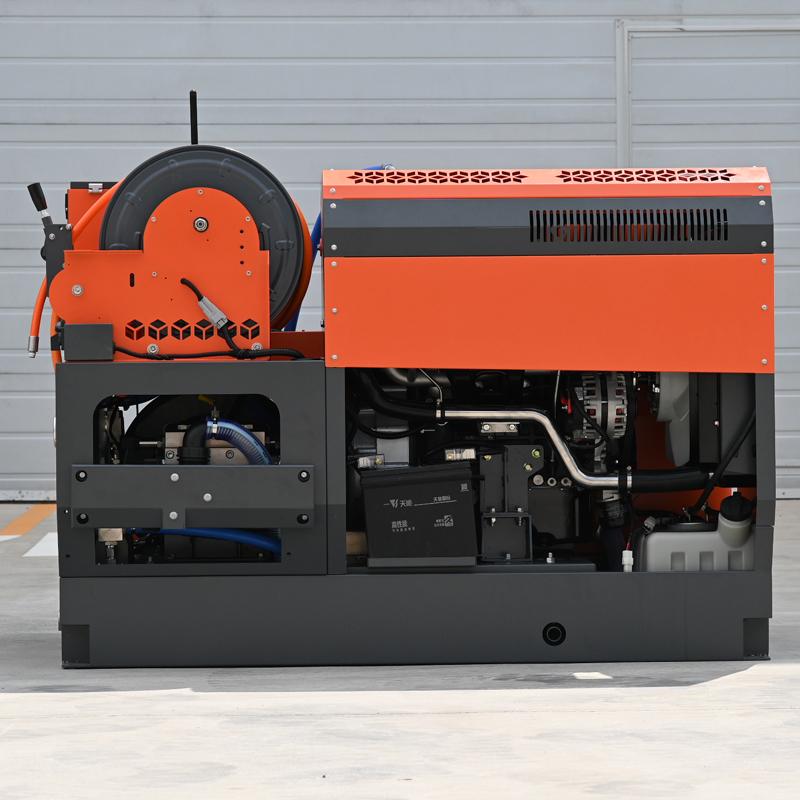
A crew rolling up to a restaurant's grease trap has different needs than one opening a storm drain on a busy avenue. The first might be squeezing a small pump through a kitchen door and dealing with solidified fats, while the second is setting up traffic control and pulling a heavy vacuum hose across asphalt. That spread of tasks means the gear list can't be one-size-fits-all. The best approach is to build a modular kit: a core set of tools and safety equipment that every truck carries, plus add-on packs for grease, stormwater, and combined systems. Core items include chemical-resistant gloves, a gas monitor that reads both combustible and toxic atmospheres, a non-sparking scraper, and a portable pump that can handle solids up to a few inches.
For grease traps specifically, crews need tools that tolerate acidic and caustic breakdown products. Long-handled scoops with reinforced edges work better than flimsy shovels, because grease solidifies into a waxy layer that cracks instead of flows. A steam generator or hot water pressure washer is often the difference between a two-hour job and a five-hour one. And don't forget the small stuff: plastic sheeting to protect kitchen floors, odor-neutralizing spray for the path to the truck, and heavy-duty trash bags that won't split under the weight of trapped solids. Many crews also carry a small transfer pump with a macerator, since not every restaurant has a drain close to the trap.
Storm drains bring their own set of demands. Water flow can change quickly, so crews need submersible pumps that keep working in silt and debris. Waders with steel toes and slip-resistant soles are essential, along with a retrieval tripod and harness for any entry into a confined space. On the surface, high-visibility cones, signs, and a traffic control plan matter as much as the tools below ground. Between the two extremes—catch basins, culverts, oil-water separators, and lift stations—crews may face both grease and stormwater in one day. The goal is to outfit each team so they can switch tasks without returning to the shop, which means every truck should have a mix of hose fittings, adapters, and quick-connects that work across different pump sizes and nozzles.
Custom Rigs Built to Meet Local Codes Without the Back-and-Forth
Most rig builders give you a generic frame and a stack of paperwork, leaving you to sort out which state or county rules apply before the machine ever touches dirt. That back-and-forth with inspectors eats weeks and burns budget. Our approach is different: every custom rig starts with a code audit for your specific operating region. We pull the relevant electrical, structural, and emission requirements up front, then engineer the unit around them. No surprise rejections at the job site, no last-minute retrofits in the yard.
What this means in practice is a rig that arrives with documentation matching the exact jurisdiction where it will run. We pre-wire control panels to local disconnect standards, size the frame for regional wind and seismic loads, and match the exhaust aftertreatment to the county’s current air quality rules. If you run across three states, we build the rig to the strictest one by default, or design quick-swap modules so you stay compliant without hauling a second machine.
The real payoff shows up when the inspector walks around the truck. Instead of a binder full of redlines and phone calls, you hand over a clean approval package and a rig that already reflects the code. We’ve had customers go from delivery to first drill in under two days because nothing needs to be changed, argued, or re-inspected. That’s the whole point: the rig doesn’t just meet code on paper, it meets code in the steel and wiring from the first weld.
How Every Unit Earns Its Spot on a Service Truck: The Testing Gauntlet
A service truck has no room for passengers. Every unit bolted into a drawer or rack has already survived a gauntlet most components never see. Vibration tables shake them at frequencies that mimic washboard roads. Thermal chambers cycle from -40°F to 160°F while the unit runs at full load. Salt fog eats at housings for days. If a seal weeps or a circuit board hiccups, it is pulled immediately.
The real filter is the endurance run. Units get mounted to a fixture that slams them with 10,000 cycles of pressure spikes and releases, then they are torn down and inspected under magnification. Any scoring, pitting, or uneven wear means a redesign, not a quick fix. The ones that pass get a certificate and a shelf spot on the truck.
That is why you will not find the latest gadget on a service truck just because it is new. It has to prove it can handle mud, diesel fumes, and being grabbed with greasy gloves at 2 a.m. Every unit earned its spot the hard way.
Shipping from the Factory Floor to Cities That Can’t Afford Downtime
Moving critical equipment out of a factory and into a city that runs 24/7 demands more than a standard delivery schedule. Hospitals, data centers, and public transit systems can't wait for a missed connection or a delayed truck. Each shipment is packed with extra care, labeled clearly, and routed through carriers that understand the consequences of a late arrival.
The process starts with a tight handoff from the production line. Inventory is staged near the dock, paperwork is checked twice, and drivers receive precise delivery windows instead of vague estimates. City traffic is unpredictable, so we build in buffer time without turning the whole route into a waiting game. Real-time updates let ground teams adjust before small delays become big problems.
For customers, this means fewer emergency orders and lower safety stock levels. They don't need to warehouse spare parts just in case. Instead, they trust that a replacement component will leave the factory floor and reach their loading bay before the current one fails. That reliability keeps essential services running without interruption.
Support That Doesn’t Stop at the Dock: Training, Parts, and Fast Answers
When you take delivery of your equipment, the handoff is just the start. We send a technician to your site for initial setup and walk your crew through daily checks, adjustments, and safe shutdown procedures. No rushed PowerPoint session—just real time around the machine until your people are confident running it without looking over their shoulders.
Downtime usually comes down to waiting on a part or waiting on an answer. That’s why common wear items and critical spares sit in regional hubs, not across an ocean. If you need something less common, we tell you honestly whether it ships same day or takes a week—and then we follow through. Phone calls go to the same engineers who know your equipment, not a call center script.
Questions don’t always fit into business hours. Our support line is answered by people who can read a wiring diagram and a hydraulic schematic, and they’re measured on how quickly they get you running again. Whether it’s a video call to spot a misaligned sensor or a replacement part on a midnight truck, the goal is to keep your operation moving long after the dock is empty.
FAQ
The factory manufactures a wide range of machines including high-pressure jetting units, vacuum trucks, and robotic crawlers for pipe inspection and cleaning. Each product line is designed to handle different pipe diameters, from residential lateral lines to large municipal interceptors.
Equipment is exported to more than forty countries across six continents. The factory has dedicated export packaging and works with regional logistics partners to manage customs clearance and on-time delivery for municipal contractors and industrial clients.
Engineers evaluate factors like pipe material, climate, and local water quality before recommending configurations. For example, units sent to cold regions include heated tanks and frost-resistant seals, while models for coastal areas use extra corrosion-resistant coatings.
Each machine goes through a multi-stage inspection that includes a no-load run, a pressure test at 120% of rated working pressure, and a simulated blockage clearing test. Only after passing all three stages is the unit approved for packing.
Yes, the engineering team regularly modifies chassis layouts, adds custom reel sizes, or integrates camera systems based on client specifications. One recent project involved a trailer-mounted unit with a dual-tank system for a district with no access to continuous water supply.
The factory provides remote diagnostics through onboard telemetry, a two-year warranty on major components, and a network of trained service partners in key export markets. Spare parts are stocked in regional hubs to reduce downtime.
All units meet or exceed relevant emission and noise standards. The factory also offers water recycling add-ons that capture and filter jetting water for reuse, helping operators cut consumption and comply with local discharge rules.
It combines in-house manufacturing of pumps, reels, and control panels with a full-scale test facility that includes a 300-meter closed-loop pipe network. This allows the factory to validate performance under real-world blockages before shipping, rather than relying only on theoretical specifications.
Conclusion
Inside this Chinese factory, sewer cleaning machines take shape on a plant floor where welding sparks and hydraulic fittings are part of the daily rhythm. Crews building units for grease traps, storm drains, and mainlines know that no two cities face the same clog, so custom rigs are assembled to match local codes directly, cutting out the usual back-and-forth with distant sales offices. Each machine then runs a testing gauntlet that simulates real service calls, from sudden pressure spikes to heavy debris loads, and only the ones that hold up under that kind of abuse earn a spot on a service truck.
From the factory floor, finished units ship fast to cities where blocked drains mean lost revenue and public frustration. But the relationship does not end at the dock. Training sessions, spare parts stock, and quick answers keep crews working instead of waiting on a callback. This mix of practical build quality, code-ready customization, and responsive follow-through is what makes the equipment a dependable choice for contractors and municipalities around the world.
Contact Us
Contact Person: Mike
Email: [email protected]
Tel/WhatsApp: +86 19545555505
Website: https://www.amjeting.com/