Sanitary Ware Vertical Lift Plating Equipment Exporter Guide for Industrial Buyers
2026-11-02
For industrial buyers sourcing sanitary ware vertical lift plating equipment, the real challenge isn't finding a supplier—it's finding one that won't quietly compromise on rectifier stability, tank geometry, or after-sales service. Too many export guides recycle the same vague promises. This one skips the fluff. Junda has built its reputation on vertical lift lines that hold tolerances and keep running when order books fill up. Below, we map out the exact criteria you should use to evaluate any exporter—so you can separate genuine engineering from marketing noise.
Vertical Lift Plating Lines: The Backbone of Consistent Sanitary Ware Finishing
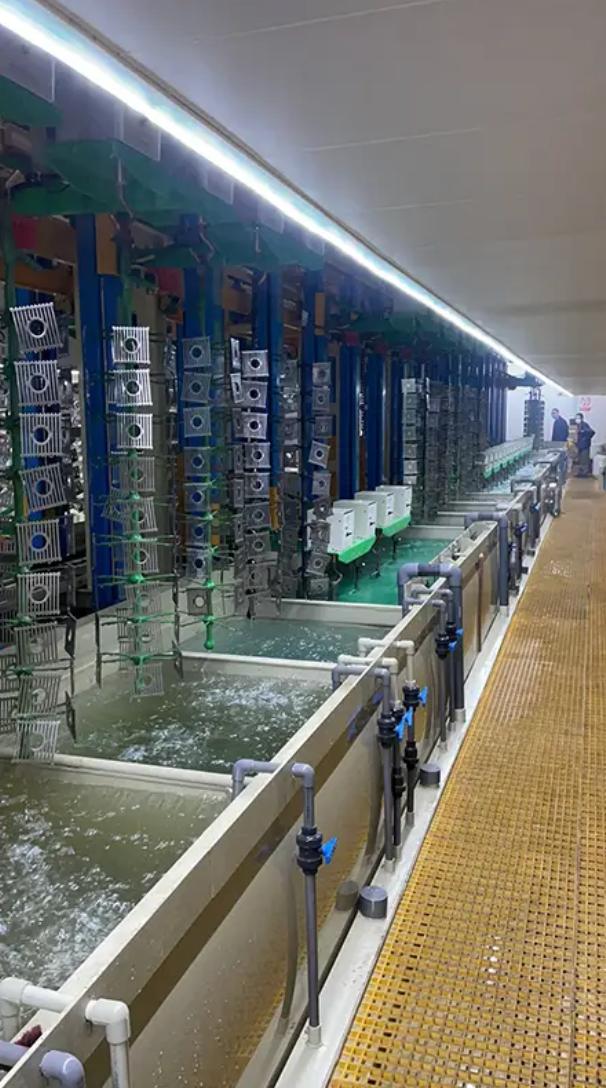
In high-volume sanitary ware production, surface finish consistency rarely comes from the plating bath alone. Vertical lift plating lines solve a spatial and handling problem that horizontal systems often create: parts arrive at the tanks in a fixed orientation, and any shift in immersion angle alters current distribution. By suspending ware from above and lifting it straight down into each process tank, these lines keep the distance between anodes and the workpiece surface uniform from top to bottom. The result is a chromium or nickel deposit that reads the same on the bowl rim, the trapway, and the less visible underside—where uneven flash or burn often hides.
The real advantage shows up in repeatability. Because vertical lift frames index through pre-treatment, plating, and rinse stations with the same dwell time and agitation pattern every cycle, operators can lock in a recipe rather than compensate for rack movement. That matters when a plant runs multiple SKUs through the same line in a single shift. A well-tuned vertical lift system also reduces solution drag-out and cross-contamination between baths, which directly lowers rework rates and chemical consumption. For sanitary ware manufacturers chasing a defect rate below one percent, that mechanical predictability is harder to replace than any single plating chemistry upgrade.
Questions Industrial Buyers Should Ask Before Signing with an Exporter
A signed contract with an overseas supplier can unravel quickly if you skip the hard questions about production capacity and quality control. Ask for a detailed breakdown of their current manufacturing lines, typical lead times during peak seasons, and the specific certifications their factory holds—not just the exporter’s sales office. Have them walk you through how they handle a sudden 30% increase in order volume or a raw material shortage. If their answers stay vague or overly optimistic, treat that as a warning sign.
Logistics and documentation often cause more friction than the product itself. Get clear answers on who arranges freight, who bears the risk at each Incoterm, and what paperwork will be provided for customs clearance at your port. Request a sample of the actual export documents they use, including the bill of lading, packing list, and certificate of origin. Ask how they handle damaged goods discovered after unloading—will they issue a credit, ship replacements, or expect you to file an insurance claim on your own? The time to negotiate these details is before your first payment leaves your account.
Finally, test their communication and accountability under pressure. What is their response time for urgent issues, and who becomes your main contact after the sale? Ask for references from buyers in your industry who have ordered similar products in the past year—not just glowing testimonials from five years ago. A trustworthy exporter will connect you with real clients and show you how problems were resolved, not pretend they never happen.
Beyond Chrome: Handling Multi-Layer Coatings and Specialty Finishes
While chrome might grab the spotlight, plenty of projects call for multi-layer coatings and specialty finishes that demand a different kind of attention. These aren't your single-stage spray-and-done jobs—they often involve basecoats, midcoats, clearcoats, and sometimes textured or tinted layers, each with its own flash time, viscosity, and curing quirks. The real challenge isn't just applying one layer over another; it's knowing how each coat interacts with the one beneath it. Rush the process and you'll see solvent pop, adhesion failures, or that dreaded cloudy boundary between layers. Experienced finishers learn to read the surface between passes, watching for the subtle shift from wet gloss to a matte tack that signals it's ready for the next round.
Specialty finishes push things even further. Think candy colors, pearl tri-coats, flake-heavy clears, or soft-touch matte textures. Each one breaks the rules of standard application in its own way. A candy finish, for example, relies on a perfectly uniform metallic base before the translucent color goes down—any streak or dry spot underneath becomes permanently visible through the tinted layer. Pearl whites and silvers often demand three separate stages: a ground coat, a thin pearl midcoat, and a clear topcoat, with very little room for error in film thickness. And when you're dealing with large flake or metallic clears, gun setup and air pressure have to be adjusted so the flakes lay flat instead of standing on edge. You can't just crank up the fluid and hope for coverage; the finish will fight back with mottling or uneven sparkle.
What separates a passable job from a show-quality result is respecting the layering sequence and understanding that specialty coatings rarely forgive shortcuts. It helps to keep a dedicated set of guns for different material types—one for high-build primers, one for metallics, one for clears—and to log your mixing ratios and ambient conditions each time. Temperature and humidity affect flash times more than most people realize, especially with waterborne basecoats under solvent clears. A slight delay between coats can mean the difference between a deep, glassy finish and a hazy, trapped-solvent mess. The best work comes from slowing down, testing on scrap panels when the stack gets complicated, and treating every layer as a separate decision rather than just another pass over the panel.
How Equipment Design Impacts Throughput and Changeover Efficiency
The physical layout of a production line often dictates how fast products move from one stage to the next, yet many teams overlook the subtle ways equipment geometry creates bottlenecks. Conveyor widths, tooling access points, and the distance between stations can quietly throttle output even when every machine runs at its rated speed. A well-designed machine places frequently adjusted components within arm's reach and aligns material flow along a straight path, reducing the micro-delays that accumulate into significant throughput losses.
Changeover time lives or dies by choices made during the design phase. Quick-release clamps, standardized mounting plates, and color-coded guides may seem like minor features, but they eliminate the need for specialized tools or trial-and-error alignment. Equipment that allows operators to swap parts from the front rather than crawling behind the frame can cut setup time by half. Designers who spend time on the shop floor watching real changeovers tend to build in these practical touches, while those working purely from CAD models leave hidden friction points that only appear during a rushed shift.
Perhaps the most underrated design factor is modularity. Machines built with interchangeable modules let teams stage the next product's components offline while the current run continues, then slide them into place in minutes. This parallelization changes the entire economics of small-batch production, making frequent changeovers financially viable instead of something to avoid. On the throughput side, designs that isolate high-wear areas and provide clear visual indicators for maintenance prevent the slow degradation that silently reduces output over weeks. The best equipment doesn't just perform well on day one—it keeps performing through hundreds of changeovers without demanding constant technician intervention.
The Hidden Costs of Overseas Equipment Purchases—and How to Avoid Them
Buying equipment from overseas often looks cheaper on the invoice, but the final bill rarely matches the quote. Currency swings can add five to ten percent before the wire clears, and freight charges for heavy machinery climb fast once port fees, inland trucking, and insurance enter the picture. Then there are the quieter costs: import duties based on the full landed value, customs brokerage, and sometimes unexpected inspection or storage fees when paperwork doesn't match local rules.
Beyond the shipment, hidden costs keep compounding. Machines built for different voltage, frequency, or safety standards may need rework before they can run. If the manufacturer doesn't have local service partners, you shoulder travel costs for their technicians or wait weeks for parts. Training operators on an unfamiliar interface eats into production time, and warranty claims across borders often involve shipping parts back at your expense.
To avoid these traps, start by requesting a total landed cost breakdown, not just the unit price. Lock in exchange rates early, ask for proof of certifications your country accepts, and negotiate a local service agreement before signing. A slightly higher quote from a nearby supplier with regional support can end up cheaper once hidden costs are counted.
Partnering with Exporters Who Understand Local Compliance and Standards
Working with a partner who actually understands local compliance and standards changes the entire game. Instead of guessing which certificates a particular port will demand, you get direct answers from someone who has cleared those same shipments dozens of times. They know that a product's power cord length might matter more than its voltage rating in one country, or that a certain chemical declaration needs a notarized translation before the container arrives. This kind of ground-level knowledge isn't something you can download from a government website—it's built through years of rejected paperwork, last-minute fixes, and quiet conversations with inspectors who rarely put anything in writing.
The benefit goes beyond avoiding fines or delays. A competent exporter will reshape your product presentation before you even produce the first batch. They might suggest changing a label's font size to meet readability rules, swapping a plastic component for one that satisfies a local recycling mandate, or adding a short instruction sheet in a regional dialect that regulators expect but never officially require. These adjustments often cost very little upfront but save enormous amounts of time later. And because the partner has a reputation to protect in their own market, they're motivated to catch issues early rather than promise smooth sailing and hope for the best.
Finding such a partner takes more than scanning a trade directory. You need to test their local presence: ask for recent examples of compliance problems they solved, not just happy customer stories. Pay attention to whether they mention specific inspectors, testing labs, or standards updates from the last six months. The best exporters treat regulatory knowledge as a daily discipline, updating their checklists every time a rule shifts. When you align with that kind of operator, local compliance stops being a hurdle you clear at the border and becomes part of how you design the product from day one.
FAQ
Vertical lift stations keep larger ceramic pieces upright during transfer between tanks, which cuts down on trapped air pockets and gives a more even deposit inside deep bowl areas. You also get fewer contact marks because the fixtures move with the workpiece instead of dragging it across rails.
Focus on the lift mechanism seals, the rectifier cooling setup, and the tank lining thickness. Ask for a video walkthrough of the factory test run with a full-size toilet or basin loaded, not just an empty cycle. That reveals vibration, sway, and drainage problems early.
Request a sample service agreement that lists the number of on-site days, who pays for travel, and whether remote video support is included after startup. A serious exporter will also provide a checklist of utilities and chemical handling requirements before shipment.
Most manufacturers will adjust tank spacing, rack pitch, and lift speed to match your product mix. You can also specify automatic chemical dosing, hot air drying zones, or closed-loop rinsing if local water restrictions apply.
Plan on eight to fourteen weeks for a standard configuration, longer if you need custom tank dimensions or special rectifier voltages. Confirm whether the exporter builds the entire line in-house or subcontracts the steelwork, because that affects both scheduling and warranty claims.
Look for CE marking for electrical and mechanical safety, ISO 9001 for the exporter's production process, and material certificates for titanium baskets or PP tanks. If you are shipping to countries with strict chemical regulations, ask about REACH or RoHS documentation for wetted parts.
Replacement anodes, filter cartridges, and rectifier cooling water consumption add up quickly. Also check whether the line design allows easy access to heat exchangers and pump inlets; poor access turns routine maintenance into a full shutdown.
Ask for unedited footage of a full process cycle, plus close-up photos of the finished surface under angled light. Better yet, request a sample part shipped to you after a trial run. If the exporter hesitates to send actual plated samples from your own product drawings, that is a red flag.
Conclusion
A vertical lift plating line is not just a piece of hardware—it's the critical path for achieving uniform coating thickness on faucets, shower heads, and other sanitary fittings. When evaluating exporters, industrial buyers should look beyond basic chrome capability and ask pointed questions about how the carriage movement, rack design, and anode placement handle complex geometries. Multi-layer sequences such as nickel-chrome or PVD-style finishes demand precise dwell times and current distribution, so a supplier’s engineering experience directly determines whether you’ll get consistent results or hidden rework rates. Equally important is how quickly the system can switch between different part families; tooling-free rack adjustments and programmable recipes can cut changeover from hours to minutes, which affects daily output far more than raw line speed.
Overseas equipment purchases often carry costs that never appear in the initial quote: foundation reinforcement, custom rigging, unexpected electrical harmonization, and extended commissioning delays. A trustworthy exporter will walk you through these variables early, offering transparent terms for installation support and spare parts stocking. Furthermore, local compliance cannot be an afterthought. Wastewater treatment, ventilation, and electrical safety standards vary widely between regions, and a partner who understands your market’s certification requirements can save you from expensive retrofits. In short, the right exporter acts as a technical consultant rather than a transactional vendor, ensuring your vertical lift line operates reliably from day one and scales with future finishing demands.
Contact Us
Contact Person: hayyr
Email: [email protected]
Tel/WhatsApp: 8613082110525
Website: https://www.jundaelectroplating.com