

Recloser Manufacturer Guide: What to Look for in Power Distribution Equipment
2026-09-01
When a recloser fails to operate, the consequences ripple across the entire distribution network—extended outages, equipment damage, and frustrated customers. That's why selecting the right recloser manufacturer is more than a procurement checkbox; it's a strategic decision. In this guide, we break down the key factors you should evaluate, from interrupting ratings and control intelligence to field service support. Whether you're upgrading aging infrastructure or building new feeders, understanding what separates dependable suppliers from the rest will help you avoid costly missteps. Along the way, we'll reference examples like Deepwill to illustrate what to prioritize in modern power distribution equipment.
Reading Between the Lines of a Recloser Datasheet
Manufacturers love to list interrupting ratings and voltage classes in big bold numbers, but the real story lives in the footnotes. A recloser's duty cycle, for instance, often appears as a string like O-0.3s-CO-15s-CO, yet that sequence rarely gets a wear count on the front page. Cross-check the maintenance schedule and you'll find a contact replacement interval that makes the headline interrupting rating look optimistic.
Look closely at the minimum trip current and the time-current curve family. Two models can claim identical curve shapes, but their pickup accuracy at low fault currents often diverges by a wide margin. On a rural feeder where a high-impedance fault might only generate a few hundred amps, that difference is the gap between a blink and a sustained outage. If the datasheet touts sensitive earth fault protection without specifying the CT burden or measurement range, treat the claim with skepticism.
Temperature derating is another quiet spec. A recloser rated for continuous current at 40 degrees Celsius may lose a significant chunk of that capacity at 50 degrees, and the only hint is a tiny derating graph tucked near the back. Match that against typical enclosure heat rise under full sun, and the margin you thought you had may disappear. Also verify the auxiliary voltage tolerance: a control that says 24 to 240 V operation might drop out at the low end when the RTU battery is weak. These details decide whether the installation survives a hot afternoon or becomes a service call at midnight.
The Contact and Coil Story: Why Component Quality Dictates Lifespan
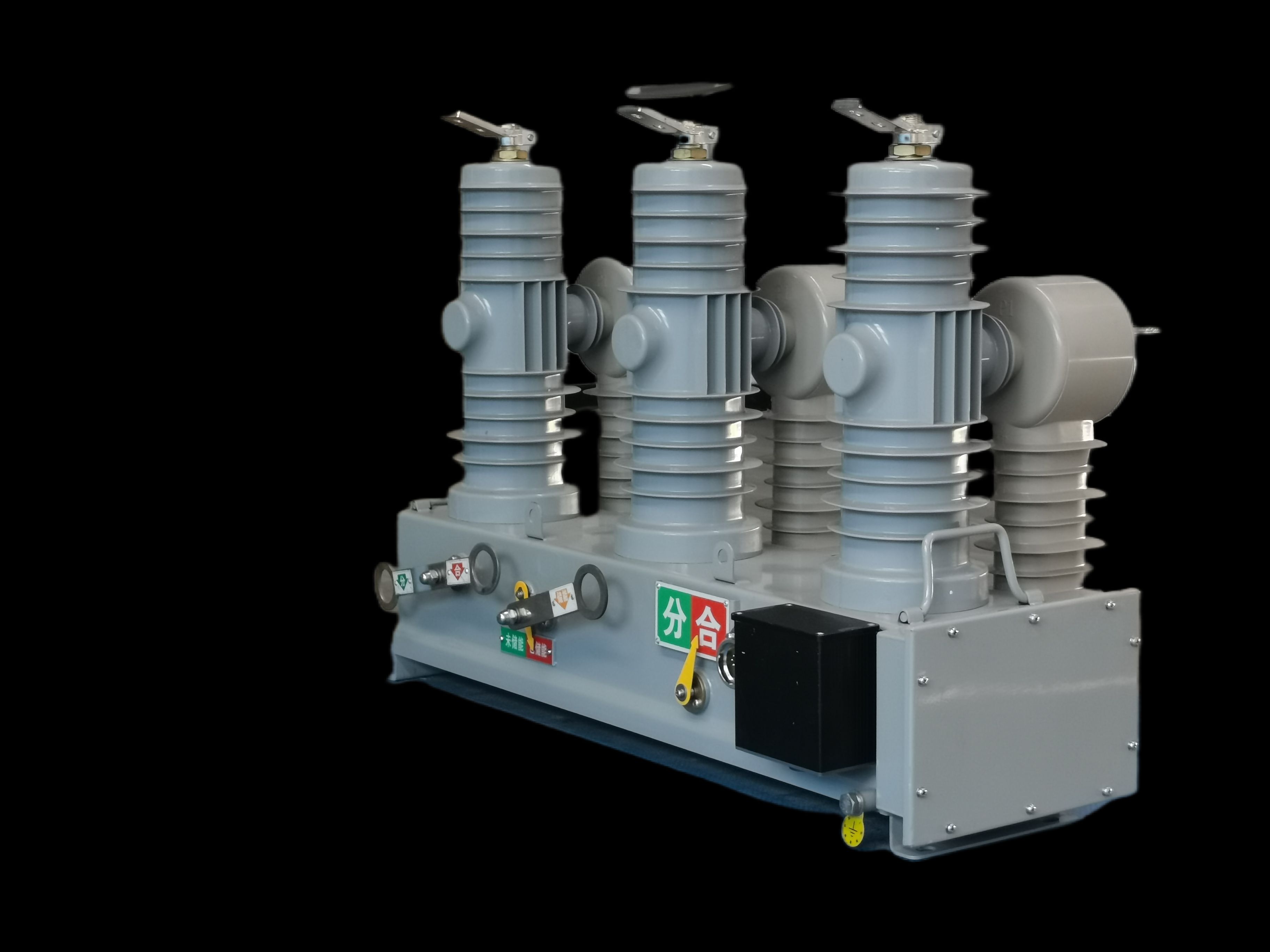
A relay is only as dependable as the tiny physical interface where current actually gets interrupted. The contact surfaces bear the brunt of every switching cycle: each open and close involves a small arc, localized heating, and material transfer from one face to the other. Low-grade contacts made from thin or impure silver alloys will erode faster, develop pits, and eventually weld shut or fail to close with reliable resistance. Meanwhile the coil that drives those contacts lives a quieter life, but it too has a failure story shaped by wire insulation, winding tension, and enamel quality. Cheaper coils run hotter, age their insulation faster, and can short internally long before a nameplate electrical life is reached.
The gap between a ten-dollar relay and a three-dollar relay often hides in details that don't show up on a datasheet. Contact plating thickness, spring temper, outgassing from plastics, even the cleanliness of the assembly room leave fingerprints on lifespan. A contact that isn't flat or aligned will concentrate arc energy on a tiny spot, cratering the surface in weeks while a well-made pair spreads the same load across a broader area. The coil's copper wire may be the same gauge, but impurities or a skipped annealing step create hot spots that slowly carbonize the bobbin. This is why two components with identical ratings can live completely different lives in the field.
Quality reveals itself most clearly under conditions that specs rarely capture: high humidity, frequent inrush, or long idle periods followed by sudden load. Contacts with proper alloying resist oxidation and stay conductive even after months without movement; cheap ones form a hard oxide film that needs an arc just to break through, which shortens every operation. Coils built with Class F or H insulation, proper impregnation, and controlled winding tension survive temperature swings that would crack a budget counterpart. Over years, these small material choices compound into either a relay that quietly keeps doing its job or one that becomes the reason for an unscheduled shutdown.
Built for the Worst Weather: Insulation and Enclosure Decisions
When the forecast calls for sideways sleet and sub-zero gusts, the choice of insulation stops being a spec-sheet afterthought. Closed-cell spray foam, for instance, pulls double duty by sealing air leaks while adding structural rigidity—handy when wind loads start testing every seam. But density matters more than thickness alone: a well-installed two-inch layer can outperform a sloppy six-inch batt, especially around rim joists and corners where thermal bridging quietly steals heat.
Enclosure design has to work as a system, not a collection of parts. A rainscreen gap behind the cladding lets moisture escape before it rots the sheathing, while a continuous exterior insulation layer keeps the dew point out of the wall cavity. In places where temperatures swing fifty degrees in a day, vapor-open membranes give walls a chance to dry in either direction—because trapping moisture is often worse than letting a little cold sneak through.
Details make the difference once the wind starts howling. Taped sheathing seams, gasketed electrical boxes, and sill seal between concrete and framing all matter more than the R-value printed on the label. And don't forget the roof-to-wall transition: a poorly flashed eave can funnel meltwater straight into the insulation, undoing every careful choice made below. For truly nasty weather, redundancy isn't overkill—it's the baseline.
Smart Reclosers, Smarter Grids: Communication Without Complexity
Grid modernization often gets tangled in a web of protocols, gateways, and integration headaches. Smart reclosers flip that narrative. By embedding straightforward, standards-based communication directly into the device, utilities can skip the custom engineering and get real-time fault data, load profiles, and control commands flowing through existing SCADA or IoT platforms without a dedicated communications specialist on speed dial.
The beauty lies in what you don't have to build. No fragile middleware, no proprietary converters, no four-week commissioning cycles just to make one field device talk to the control room. A smart recloser with native DNP3, IEC 61850, or MQTT support acts like any other well-behaved network citizen—plug it in, assign an address, and it starts reporting. That simplicity pays off every time a lineman swaps a unit in the rain or a dispatcher checks a fault flag from a tablet at 2 a.m.
When communication stops being a project and starts being a feature, the grid gets quieter in the best way. Crews spend less time chasing comm issues and more time restoring power. Planners gain confidence that the data they see reflects what's actually happening on the feeder. And utilities can finally scale smart grid benefits without scaling complexity—one recloser, one connection, zero drama.
Standards Aren't Optional: Certification and Testing Red Flags
A polished product page can hide a lot of shortcuts. When claims about compliance feel vague—like “meets industry standards” without naming which ones—that’s a signal to dig deeper. Genuine certification usually comes with specific identifiers: a standard number, a testing lab, or an issuing body. If the seller can’t point to a concrete document or test report, the “certified” label is likely just decoration.
Testing red flags often show up in the fine print. Look for test conditions that don’t match real-world use, such as a fire-resistance rating tested only at room temperature or a water-resistance claim based on a brief splash rather than sustained exposure. Another common issue is when results are cherry-picked: a product might pass one narrow test while failing others in the same category. Manufacturers who avoid sharing full test data usually have a reason.
The most reliable certifications come from independent labs that are accredited to run those specific tests. Ask who paid for the testing and whether the lab has any financial tie to the product maker. A red flag worth acting on is when a product’s certificate can’t be verified on the issuing organization’s public database. If the standard matters for safety, durability, or legal compliance, treat any missing link in the certification chain as a non-negotiable problem.
From First Call to Final Install: The Manufacturer Partnership
The first call rarely starts with a clean list of specs. It usually starts with a bottleneck, a failed retrofit, or a line that has to ship more units by next quarter. We keep that conversation open-ended, asking about current tooling, shift patterns, and what the operators actually hate about the existing setup. That early honesty makes the rest of the project shorter, because the real constraints surface before any drawing is signed.
Once the order moves forward, the partnership shifts to shared testing and adjustments. A prototype may run for two weeks on a customer's floor, with our engineers on video call at odd hours to walk through torque settings and pneumatic timing. We have swapped out bearing specs and re-routed cable trays mid-build simply because the maintenance team flagged a clearance issue during a pre-install walkthrough. Those changes are not scope creep; they are the kind of practical tuning that a pure catalog order never gets.
Final install is not a delivery event. It is the first shift where our team stays alongside the line, watching start-up sequences, listening for air leaks, and adjusting guard interlocks until the hand-off feels uneventful. That is the measure we care about: when your crew stops treating the equipment as new and starts treating it as theirs. From that first call to that uneventful hand-off, the partnership is the actual product.
FAQ
Look beyond the datasheet. A solid manufacturer will demonstrate proven field performance, offer transparent failure-rate data, and have a responsive engineering team that can adapt designs to your network's quirks rather than pushing a one-size-fits-all unit.
It often outweighs a slightly lower bid price. If a recloser trips in the middle of a storm, you want a vendor who can ship replacements fast and walk your crew through diagnostics without timezone delays.
They are no longer optional for utilities dealing with distributed generation. Look for controllers that talk natively to your SCADA system, support remote firmware updates, and give you event logs that actually help you trace a fault instead of flooding you with raw data.
Ask for independent test reports, not just marketing photos. Check for salt-fog, high-temperature, and vibration testing. Also ask about the coating on internal electronics and whether the manufacturer has a track record in coastal or desert regions similar to yours.
Aim for units where routine tasks like battery swaps or contact wear checks can be done without removing the whole assembly. Some vendors now embed self-diagnostics that flag degrading components before they fail, which saves both outage time and truck rolls.
Usually yes, if your network has unusual grounding schemes or legacy protection settings. A manufacturer willing to adjust current transformers, trip curves, and communication protocols will save you from having to build workarounds in the field later.
At minimum check alignment with IEEE C37.60 and IEC 62271-111 for reclosers, plus any local utility commission requirements. More valuable is evidence of type testing from a recognized lab, because that shows the design was stressed beyond normal operating points.
Don't stop at purchase price. Factor in expected service intervals, spare parts availability over 15-20 years, the ease of firmware upgrades, and whether the vendor charges extra for technical support after commissioning. A cheap recloser that sits idle for days waiting on a part is never a bargain.
Conclusion
When evaluating a recloser, the datasheet often hides more than it reveals. Manufacturers love to print impressive interrupting ratings and control features on the front page, but the real story sits in the fine print: how the contact materials are specified, whether the coil assembly is built for continuous duty under repeated fault interruption, and what kind of insulation system backs the whole unit. A cheap contact or undersized coil may pass a bench test yet fail after a few years of actual fault duty. Enclosure choices matter just as much—polyester or epoxy coatings, UV-stabilized housing, breather designs that keep moisture out without inviting condensation. If the insulation can't handle salt fog, rapid temperature swings, or prolonged wet conditions, the recloser becomes a liability rather than an asset.
Smart recloser communication should not require a network engineer to configure. Look for straightforward protocols, self-describing data points, and built-in fallback modes that keep the device operating even when connectivity drops. Equally important is certification: ask for full test reports, not just a logo on a brochure. Third-party verification of interrupting capacity, temperature rise, and environmental performance separates serious manufacturers from resellers. Finally, the relationship matters far more than most buyers expect. A manufacturer that supports you from initial specification through commissioning, stock availability, and long-term firmware updates changes the ownership experience. Those small interactions during installation or a rare fault event reveal whether the manufacturer treats the product as a long-term utility asset or just a transaction.
Contact Us
Contact Person: Julion
Email: [email protected]
Tel/WhatsApp: 8617351370631
Website: https://www.deyunelectric.com