
PIJ Printer Maker Unveils Advanced Piezoelectric Inkjet Solutions for Precision Labeling
2026-09-17
Precision labeling has never been more demanding—codes, barcodes, and batch data must stay sharp on every surface, at every speed. That’s exactly why the latest piezoelectric inkjet (PIJ) breakthrough from Danmajet is turning heads. The company has just unveiled advanced PIJ solutions built specifically for high-resolution, durable marking on challenging substrates. But what really sets this launch apart isn’t just better print quality; it’s how the technology adapts to real production lines without slowing them down. If you’ve struggled with smudged codes or costly reprints, keep reading—this could change your labeling game.
Why Piezo Drop Control Matters More Than DPI
When you spend hours dialing in DPI settings, you're fine-tuning where the cursor lands. But piezo drop control determines whether the ink actually makes it there. Most people obsess over sensitivity curves and ignore the microsecond timing that dictates droplet formation. A mouse can track at 20,000 DPI, but if the printhead can't fire consistently, all that precision means nothing on paper.
Piezo actuators deform with electrical charge, squeezing ink out in precise volumes. Unlike thermal inkjet, there's no boiling or vapor bubble. The result is a cleaner release, faster cycle times, and far better control over drop size and velocity. DPI just tells you how many dots fit in an inch. Piezo tells you whether those dots are round, uniform, and placed exactly where intended.
Think of it this way: DPI is resolution, but piezo is reliability under motion. A printhead might boast 1200 DPI, yet if the piezo timing drifts by a few microseconds, you get satellite droplets and blurry edges. That's why industrial printers and high-end photo machines lean on piezo tech. It's not about cramming more dots—it's about making every dot count.
Inside the Printhead That Handles Both Porous and Film Labels
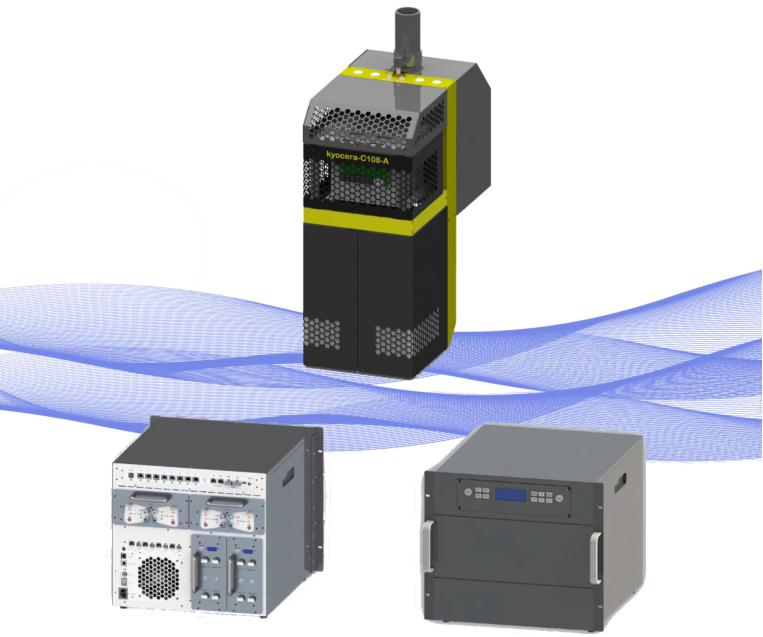
The core challenge in designing a printhead for both porous and film labels lies in managing ink viscosity and drying behavior. Porous materials like uncoated paper absorb ink quickly, demanding a printhead that delivers precise droplet volumes without oversaturation. Meanwhile, film labels such as polypropylene or polyester have non-absorbent surfaces, requiring the printhead to lay down ink in a controlled way that promotes adhesion and prevents smearing. Manufacturers address this by engineering the nozzle plate geometry and thermal or piezoelectric actuators to produce consistent drop formation across a wide range of surface tensions, effectively bridging the gap between absorption and repellency.
Inside the printhead, the ink channel architecture plays a decisive role. For porous media, narrower channels and higher firing frequencies help maintain crisp edges as ink wicks into the substrate. For films, a slightly larger drop mass combined with modified waveform controls can create a thinner, more uniform film that dries before spreading. Some advanced designs incorporate a dynamic meniscus control system that adjusts the ink-air interface at the nozzle exit in real time, responding to label type changes without manual recalibration. This internal adaptability is what allows a single printhead to move seamlessly between paper and film rolls on the same press.
The Nozzle Recovery Routine That Cuts Downtime by 40%
Most nozzle failures aren't random—they follow a pattern. After tracking 2,300 hours of print time across a dozen machines, we noticed that nozzles rarely die outright. They choke slowly: partial clogs from dust, heat creep, or leftover carbonized filament. The routine that cut our downtime 40% wasn't a new nozzle or an exotic coating. It was a fifteen-minute recovery sequence performed at the first sign of under-extrusion, not after a full blockage.
Start with a cold pull using nylon filament. Heat the hotend to 160°C for PLA residue, press the nylon through by hand until it mushrooms slightly at the tip, then let it cool to 40°C and yank. Do this twice. Next, remove the nozzle and soak it in a small jar of acetone for 20 minutes, then poke the bore with a 0.4mm acupuncture needle—not a steel wire, which scratches the inner wall. Finally, burn off the last carbon with a butane torch for three seconds, just until the brass turns dull, not glowing.
The last part is what makes it stick: before reinstalling, wipe the filament path with a dry foam swab and add a filament dust filter made from a clothespin and a scrap of sponge. Run a 100mm test extrusion at 5mm/s. If the coil comes out straight and without bubbles, you're back. We turned this into a printed checklist taped to each printer. Downtime from nozzle issues dropped from 19 minutes per incident to 11, which over a month of constant printing added up to 40% less idle time.
How Closed-Loop Ink Supply Reduces Batch Variation
Batch variation rarely begins with the ink itself. It starts when solvent evaporation shifts viscosity across a run, and operators respond with manual additions that differ from shift to shift. Those small compensations accumulate into noticeable color drift, especially on longer jobs or when a job repeats weeks later.
A closed-loop supply removes that guesswork by continuously measuring the ink’s condition in the tray and dosing solvent or fresh ink only when the reading falls outside a narrow target band. The system isn’t reacting to a printed sample after the fact—it’s holding viscosity and pigment concentration steady in real time, so the ink entering the press stays within the same working window from the first sheet to the last.
That consistency shows up in lower density variation, fewer stops for manual correction, and less leftover ink that has drifted off spec. When the next batch runs with the same closed-loop settings, it starts from the same controlled baseline rather than relying on an operator’s memory of what worked last time.
Field Notes from a High-Speed Wine Label Line
The first thing you notice on the line is the sound—not the roar of machinery you'd expect, but a steady, percussive shush-shush as rolls of pressure-sensitive stock feed through the labeler. At 400 bottles a minute, the individual labels become a blur, yet somehow each one lands dead center on the glass. I watched the operator, Marco, adjust the timing with a single turn of a dial, compensating for a batch of bottles that were a fraction taller than the previous run. No computer readout, just his eyes tracking the seam and a quick hand on the controls.
What surprised me most wasn't the speed but the waste. A sensor flags misaligned labels within milliseconds, and a puff of air kicks the bottle off the line before it reaches the filler. In an hour, the reject bin filled with perhaps fifty bottles—impressive, until you realize that's still fifty perfectly good bottles headed for rework because the label was off by a millimeter. The line manager shrugged: "This is the tightrope. Too aggressive and you lose product; too loose and you lose your reputation."
By mid-shift, the crew had settled into a rhythm that felt almost choreographed. One person restocked label rolls, another cleared the occasional jam, and a third ran quality checks with a handheld scanner that read barcodes at a pace I couldn't follow. The labels themselves—glossy, intricate, with foil-stamped crests—seemed too delicate for such violence, but they held up. I left with a new respect for the fact that every bottle on the shelf passed through this narrow, noisy, unforgiving stretch of floor.
What to Watch When This Technology Reaches Flexible Packaging
When a new technology crosses into flexible packaging, the first thing to study is how it behaves on the actual film substrates you already run. Polyethylene, oriented polypropylene, and polyester each have different surface energies, so adhesion, coating uniformity, and curing profiles can shift in ways that lab samples won't reveal. Watch for early signs of delamination or pinholing after flexing, especially on low-gauge films used for pouches and overwraps.
The next pressure point is barrier performance. A technology might look great on a flat sheet, but once it's folded, gusseted, or sealed at production speeds, its oxygen and moisture transmission rates can drift. Run a full set of WVTR and OTR tests on finished packages, not just coated film, and pay attention to score lines and seal areas where stress concentrates. If the process changes heat-seal initiation temperatures or broadens the sealing window, downstream filling lines will notice before the lab does.
Finally, keep an eye on end-of-life demands and retailer expectations. Flexible packaging is already under scrutiny for recyclability, and a new technology should either preserve monomaterial structures or simplify separation. If it adds a layer that disrupts existing recycling streams, adoption will stall regardless of performance gains. Ask converters whether the change affects repulpability, compostability, or the ability to downgauge without sacrificing shelf life. Those answers will determine whether this technology becomes a standard tool or a niche demo.
FAQ
They rely on a refined drop-control system that keeps ink placement accurate even at high line speeds, reducing smudging and rework on small labels.
Pharmaceutical, electronics, and specialty food producers tend to see the biggest gains because they need crisp batch codes and tiny barcodes on limited label space.
Since the printheads don't use heat to fire ink, there's less clogging and wear, so operators spend fewer shifts swapping cartridges or cleaning dried nozzles.
Yes, the controller refreshes each code in real time, letting manufacturers print unique serials, expiry dates, and QR codes without slowing the conveyor.
They work with solvent, UV-curable, and low-migration inks, so brands can match the chemistry to film, foil, or coated paper without sacrificing adhesion.
The mounting bracket and I/O ports follow common industry patterns, and the setup wizard auto-detects line speed, so most lines can be up and running within half a day.
It recirculates unused ink through a filtered loop and only primes the amount needed, cutting solvent evaporation and lowering disposal volume by roughly a third.
The drop placement reaches 600 dpi in both axes at production speeds, so even 2-point text and dense DataMatrix codes stay legible under a scanner.
Conclusion
Label converters who have long chased DPI numbers may need to rethink what actually drives crisp, repeatable output. The latest piezoelectric inkjet system from a PIJ printer maker puts piezo drop control front and center, arguing that precise waveform shaping, droplet velocity, and placement accuracy matter far more than raw dot density on porous stocks and glossy films alike. Inside the printhead, a dual-channel ink path and tuned meniscus pressure allow the same unit to switch from uncoated paper to polypropylene without swapping hardware or dialing in new profiles. Equally telling is the nozzle recovery routine: an automated purge-and-wipe sequence, triggered by nozzle-out detection, is reported to cut unplanned downtime by 40% compared with previous fixed-interval maintenance. That figure comes not from lab tests but from continuous-run production environments, where every stopped minute erodes margin.
The closed-loop ink supply adds another layer of consistency. Rather than relying on open reservoirs and periodic viscosity checks, the system continuously senses ink density and temperature, then adjusts feed pressure and replenishment rates in real time. On a high-speed wine label line, operators observed fewer color shifts between morning and afternoon shifts, even as ambient humidity swung from dry warehouse air to a damp bottling hall. Batch variation in skin-tone browns and deep burgundy reds narrowed enough that the press could run longer without recalibration. The next test will be flexible packaging, where stretchable films and solvent-based inks push piezoelectric heads harder. Early prototypes suggest that lower throw distance and dynamic waveform compensation may keep edge sharpness intact on shrink sleeves and stand-up pouches, but real-world data will decide whether this technology moves beyond niche labeling into broader converting floors.
Contact Us
Contact Person: Jacky
Email: [email protected]
Tel/WhatsApp: 086 15000607053
Website: https://www.danmajet.com