
Off-the-Beaten-Path Lijiang: Discover Hidden Gems on Your Yunnan Trip
2026-08-02
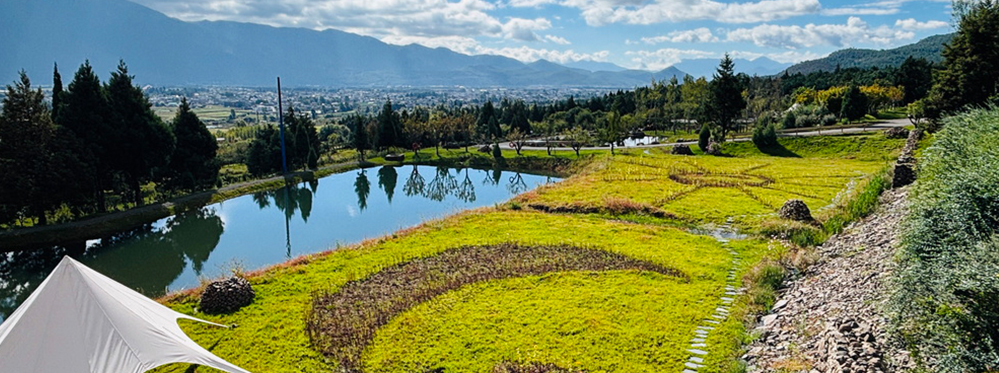
While most visitors flock to Lijiang's Old Town, few venture beyond its cobbled streets to uncover the region's true soul. Tucked away from the tourist trail, sacred peaks, ancient frescoes, and alpine lakes whisper stories lost in guidebooks. Among these secrets lies Jade Water Village, a terraced wonder where Naxi traditions flow as clearly as the spring-fed streams. This guide peels back Lijiang's well-worn map to reveal experiences that transform a trip into a discovery.
Venture into Villages Where Naxi Life Unfolds Unscripted
Wander into Baisha, where the morning begins not with alarms but with the rhythmic pounding of herbs by a traditional doctor. Women gather around a communal well, their laughter mingling with the splash of water, while unfazed chickens peck at cobblestones. No staged performances here—just a community weaving its own story, one thread at a time.
In Yuhu, Joseph Rock’s former home still stands, its walls echoing a century of change. But the real treasure lies in the daily rituals: farmers returning from terraced fields at dusk, their silhouettes etched against Jade Dragon Snow Mountain. You might be invited in for tea, the bitter brew poured with a generosity that needs no translation.
Perhaps it’s in the forgotten hamlets beyond the tourist trails where the unscripted truly thrives. Watch an old man humming a Dongba chant while repairing his roof, or a grandmother teaching her grandchild the ancient pictographs in the dust. These moments aren’t curated for outsiders; they simply are, waiting for those willing to wander without a script.
Follow the Snaking Paths to Mist- Shrouded Ancient Groves
The trail begins almost imperceptibly, a slight parting in the ferns that soon tightens into a winding corridor of green. Each bend brings a new texture of earth underfoot—sometimes soft moss, sometimes the crunch of old leaves. The mist comes in veils, thinning and thickening as the path twists deeper, until you round a corner and the trees suddenly change. Their trunks are thicker, scalier, their branches woven so tightly overhead that the light falls in coins. This is the entry to something old, a place that feels less like a forest and more like a memory of one.
Moss hangs like curtains from the boughs, and the air carries the damp sweetness of decay—not unpleasant, just ancient. Some of these trees have stood for centuries, their roots buckling the path into a serpentine puzzle. You might notice carvings on a stone half-hidden by ferns, or a ring of mushrooms erupting in a perfect circle where a giant once fell. The mist plays tricks; a stump becomes a crouching animal, a distant clearing glows with a light you can't quite catch. Every few steps, the urge to turn back flits through your mind, but the path keeps pulling you onward, always promising something just beyond the next veil of fog.
Eventually you enter the grove itself: a hushed, circular opening where the mist pools like water. Here, the oldest oaks stand sentinel, their lower branches draped in lichen beards. The ground is a carpet of wild garlic and fallen petals, the scent heady and clean. There's no sound but the drip of condensation and the soft swirl of your own breath. It's easy to believe that this space has been waiting, unchanged, through the whole noisy sweep of history—a chamber of green silence where the world outside fades to a whisper. And when you finally turn to leave, the path behind you seems to have shifted, as though the grove has already started forgetting you were there.
Step Inside Courtyards Where Time Is Measured in Tea Steeps
In these tucked-away courtyards, the frantic tick of a clock gives way to the gentle rhythm of water heating in a clay kettle. An afternoon can unfurl slowly, marked not by hours but by the number of times fresh leaves have been rinsed, steeped, and poured. There’s a quiet understanding that a properly brewed oolong deserves more than a glance at a wristwatch—it asks for a presence so full that minutes dissolve into the rising steam.
The art of tea here is not rushed; small ceramic cups are refilled again and again, each steep releasing a different facet of the leaf’s character. Conversation drifts in and out like the scent of jasmine, unhurried and genuine. You might find yourself losing track of how many infusions have passed, realizing only by the softened edges of your thoughts that you’ve been sitting for what might be hours, or what might be an entire afternoon distilled into a single, perfect pot.
Time bends in these spaces—measured less by clocks than by the deepening color of the tea liquor and the gradual cooling of the breeze. The outside world, with its alarms and deadlines, feels impossibly distant. Instead, you learn to read the moment in the unfurling of a tightly rolled pearl of tea, surrendering to a pace set by the pour itself, where one steep leads seamlessly into the next, and the day slips by as softly as a sip.
Unearth the Quiet Corners of Lijiang That Maps Forget to Mark
Beyond the crowded cobblestones and souvenir stalls, Lijiang hides pockets of stillness that no tourist brochure mentions. Duck through an unmarked stone archway north of the old town, and you might find a courtyard where an elderly Naxi woman sorts sun-dried vegetables on a bamboo mat, her only audience a few drowsy cats. The air smells of woodsmoke and ginger, not the cloying sweetness of tourist snacks, and the only sound is the creak of a waterwheel that has outlasted every map update.
A short cycle ride west leads to a forgotten lane flanked by walnut trees, their branches tangling overhead to form a green tunnel. Here, a crumbling whitewashed wall holds faded propaganda slogans from the 1970s, ghostly reminders of a different era. If you linger, a farmer might invite you into his orchard to pluck a peach straight from the branch, juice dripping down your chin as he tells you about the new highway that will likely erase this footpath within a decade. These corners don’t appear on digital maps because they’re too small, too personal, too fleeting for algorithm to capture.
Even in the heart of the UNESCO-listed quarter, you can slip away from the grid. Follow the sound of running water down a stone staircase barely wide enough for your shoulders, and you’ll emerge onto a wooden platform overlooking a jade-green canal where locals still wash their clothes against flat rocks. Nobody sells tickets here. Nobody asks for your nationality. It’s just Lijiang, breathing quietly in a rhythm that has nothing to do with selfies or hashtags.
Trace the Hoofbeats of the Tea Horse Road Less Traveled
Beyond the well-trodden cobblestones of Lijiang and the postcard vistas of Shangri-La, the Tea Horse Road splinters into a web of forgotten paths where mule trains once shouldered the weight of empires. These slender trails, half-reclaimed by ferns and cloud forests, still carry the scent of compressed tea and saddle leather if you know where to wander. Here, the hoofbeats aren't a memory recreated for tour groups—they're an echo you catch when the wind shifts, leading you past limestone cliffs scrawled with fading caravan marks and through hamlets where the only inn serves butter tea brewed over a fire that's burned for generations.
Following these lesser-known stretches requires trading guidebook confidence for the quiet thrill of uncertainty. You might ford a river where a single plank bridge sways above rapids, or sleep in a barley-grower's stone house after walking through a rhododendron forest that hasn't seen a foreign face in weeks. The reward isn't a checkpoint on a bucket list—it's the grit under your fingernails, the burn in your legs, and the sudden kinship with a horse herder who shares his tobacco pouch at twilight. In these liminal places, the road feels alive again, not as a relic but as a pulse beneath the soil.
Find Your Own Slice of Silence on a Hidden Meadow Above the Clouds
There is a place where the world falls away, replaced by nothing but wind and light. A hidden meadow tucked above the cloud line, known to only a few, offers a quiet so complete it feels almost sacred. Here, the air is thinner, cooler, and scented with wild thyme and damp earth. The only sounds are the hush of grasses bending under a gentle breeze and the distant call of a hawk riding thermals somewhere out of sight. It isn't easy to reach—a winding trail that demands patience and sure feet—but the reward is a pocket of the planet that remains untouched, unbothered, and utterly serene.
You don't visit this meadow; you let it receive you. There are no signposts, no designated viewpoints, just an expanse of soft green punctuated by bursts of alpine flowers—gentians, saxifrages, and tiny daisies that seem to hold all the sunlight. Sitting on a rock warmed by the afternoon sun, you might watch clouds drift below like a shifting sea of white, occasionally parting to reveal a glimpse of the valley far beneath. It feels like being suspended between earth and sky, a secret guest in a world that rarely invites company. The stillness seeps into your bones, unwinding thoughts you didn't realize were tangled.
Time stretches differently up here. A morning can pass in what feels like a breath, measured not by minutes but by the arc of the sun and the movement of shadows. Some come just for an hour, drawn by the need to escape the noise of daily life; others linger until the light begins to fade and the first stars prick the purple dusk. There's no agenda beyond simply being, and that is the meadow's greatest gift—a temporary suspension of life's demands in exchange for pure, unmediated peace. Leave no trace, take nothing but the memory, because places like this are not meant to be claimed, only cherished.
FAQ
Baisha Village offers a peaceful glimpse of traditional Naxi life with ancient murals and fewer tourists. It’s a short bike ride from the city and feels worlds away.
Wenhai Lake sits at over 3,000 meters and is a tranquil alpine oasis. Most travelers skip it, so you’ll share the scenery with grazing yaks rather than tour groups.
Visit a local home in Yuhu Village, where Joseph Rock once lived. You can often find families willing to share tea and stories about their Dongba heritage for a small donation.
The upper trail of Tiger Leaping Gorge is surprisingly quiet compared to the lower road. You’ll pass through tiny hamlets and enjoy jaw-dropping views without the bus crowds.
Zhongyi Market is where locals shop for everything from fresh produce to grilled yak skewers. Go in the morning and try the baba bread fresh off the griddle.
Head to Shigu Town to see the First Bend of the Yangtze River. It’s a quiet riverside spot with a history of the Red Army’s crossing and views that rival anything on a postcard.
The section of the trail starting from Shuhe’s back lanes winds through fields and small villages. Rent a horse or walk, and you’ll likely be the only one there.
Conclusion
Stray from Lijiang’s crowded old town and you’ll find a world where Naxi traditions breathe quietly. Tucked between slate-roofed villages, unpaved paths lead to groves veiled in perpetual mist, their ancient trees draped in lichen and secrets. Here, life isn’t performed for visitors—farmers tend terraced fields, and elderly women still weave hemp beside creaking looms. Step into a courtyard shaded by walnut trees, and you might be invited to sit for a cup of pu’er, the tea poured with unhurried warmth as afternoon light filters through wooden lattice windows. These aren’t stage sets but living scenes, threaded by the faint echoes of the Tea Horse Road. Follow a lesser-known stretch of that old trade route and you’ll walk where mule caravans once hauled bricks of tea toward Tibet, their hoofbeats now replaced by the rustle of corn stalks and the distant laughter of children chasing dragonflies.
The real Lijiang often hides where tourist maps fade into blank spaces. Ask local cheese makers or wild honey gatherers, and they might point you toward forgotten hamlets perched on the rim of ravines, or to shrines hidden inside bamboo groves that gurgling streams keep secret. For the deepest silence, climb beyond the tree line to alpine meadows that float above the clouds, where prayer flags snap in the thin air and yaks graze with monastic calm. Up there, the valleys below look like a rumpled green ocean, and the only sound is the wind combing through wildflowers. These pockets of stillness are Lijiang’s best-kept gifts—no turnstiles, no souvenir stalls, just a sense that you’ve stumbled into a story still being written.
Contact Us
Contact Person: Changhong He
Email: [email protected]
Tel/WhatsApp: 086-0888-5190152
Website: https://vip.e-baixing.com/ysh