

OEM Universal Car Seat Covers That Actually Fit: What to Know Before You Buy
2026-11-16
Most 'universal' seat covers are universal in the same way one-size-fits-all socks are—technically true, practically annoying. But there's a middle ground: covers engineered with OEM-inspired contouring, anchored straps, and material that doesn't shift after a week. Knowing what to check before you buy can save you from wrinkles, gaps, and constant readjusting. At Red Rain, we've focused on that fit-first approach, so you get a cover that sits like it came with the car—not like it was thrown over it.
What “Universal” Really Means Once It’s in Your Car
When automakers slap the word “universal” on a part, they’re promising a kind of Swiss Army knife for your vehicle—something that should slot right in regardless of trim level, engine size, or even model year. But the moment that box arrives and you’re crouched under the dashboard, the reality gets messier. Those “universal” brackets often need a little persuasion: a zip tie here, a drilled hole there, a slight bend that wasn’t in any instruction manual. The idea is sound, but true universality usually means “fits most things, eventually, with enough swearing.”
What separates a genuinely universal part from a marketing gimmick is how well it handles the awkward exceptions. A universal phone mount that grips every vent design is rare, and one that survives a rough road without launching your device is even rarer. The same goes for floor mats, seat covers, or even OBD-II scanners that claim to talk to every ECU. In practice, universal means the manufacturer has anticipated the slop—the loose tolerances, the odd plastic ridges, the weirdly placed screws—and built in enough adjustment to swallow that chaos without looking like a hacked-up afterthought.
For the weekend wrencher, that’s both a blessing and a warning. You save time and money by not hunting down a hyper-specific part, but you trade away the crisp, factory fit that makes a car feel whole. The real trick is knowing when universal is good enough and when it’s a shortcut that will rattle, squeak, or fail in six months. If you can wiggle it with one hand and it still stays put, you’ve probably found a winner. If not, well, that’s why duct tape was invented.
How to Tell if a Cover Will Fight Your Seat Shape
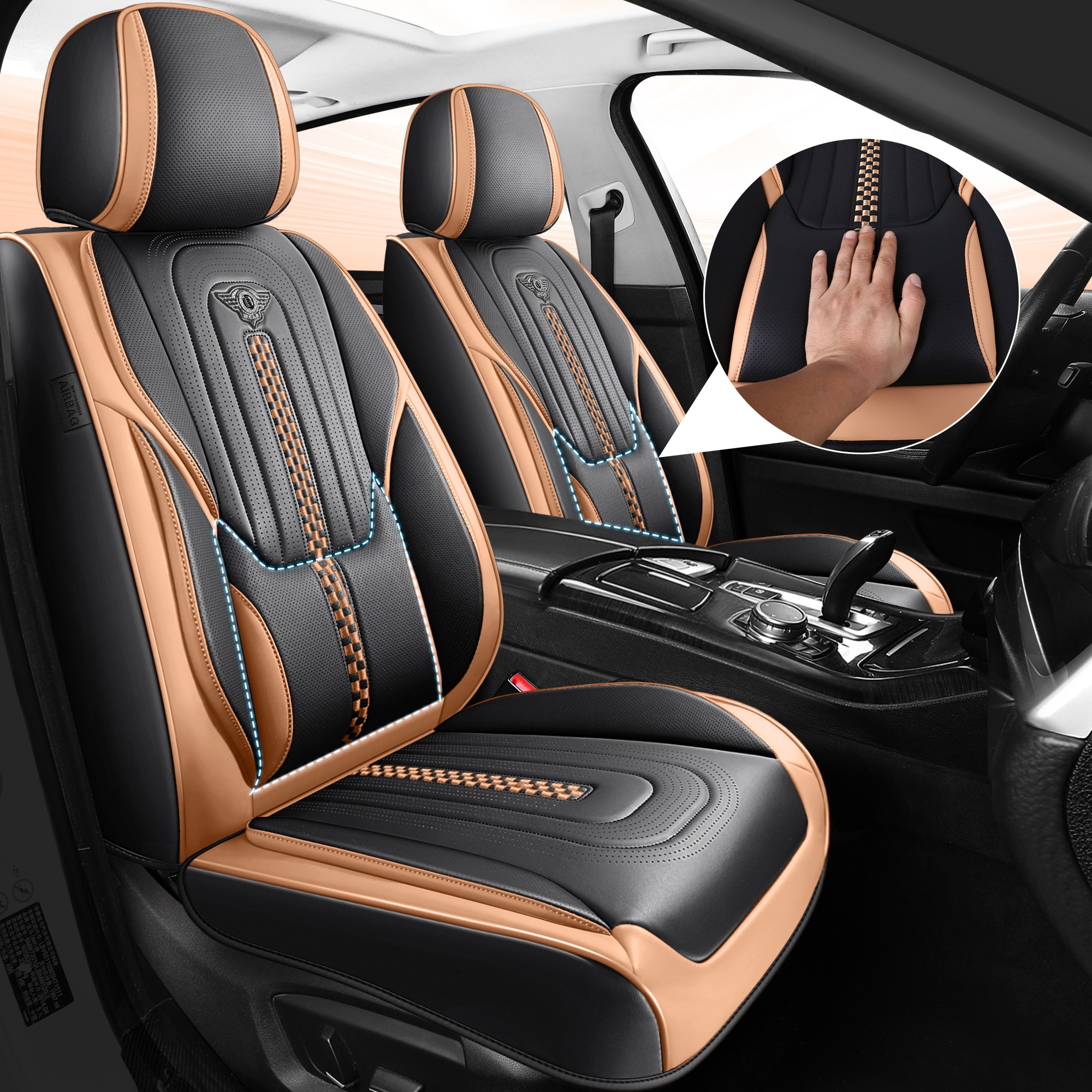
You can usually spot a seat-cover mismatch before it ever touches your car or chair. Lay the cover out and look at the side bolsters and lumbar dip. If the fabric is cut as one flat panel with no darts, elastic gathers, or separate side pieces, it won't know what to do with curves—it'll bridge over them and leave slack in the middle. Stiff materials make this worse. Heavy canvas or vinyl without relief seams simply refuses to sink into hollows, so you end up with a cover that hovers rather than hugs.
The inside tells you a lot too. Run your fingertips along the reverse side and find the seam lines. If they sit right where your shoulder blades or hips press hardest, expect discomfort and premature wear. Better covers route seams away from high-contact zones and add thin foam or spacer mesh to help the fabric relax into the seat's contours. Also, check the bottom edge. Covers that stop short under the seat base or use flimsy perimeter elastic will creep up every time you slide in and out.
Installation is the final giveaway. If you have to grunt, yank, or use a pry tool to get the cover over the headrest or around the bolsters, it's already fighting the shape. A cooperative cover should need only firm but reasonable tension, then after a short sit it should look almost custom. If you see diagonal pull lines across the center panel, hear the fabric creak against the seat, or notice the cover lifting at the front edge after one drive, that's not a break-in issue—it's a design that will keep resisting every time you sit down.
The Fabric Test: What Survives Daily Use
Every fabric promises comfort on day one, but the real story unfolds after months of being tossed into bags, scraped against desks, and washed on heavy rotation. The ones that last aren't always the softest out of the box—they're the ones that shrug off friction, resist pilling, and hold their shape without demanding a trip to the dry cleaner. Start by looking at the weave: a tight, dense construction with visible cross-hatching tends to outlast loose, airy knits that snag at the first rough edge.
Pay attention to the fiber blend too. Pure cotton feels great until it shrinks or loses its crispness after a dozen washes. A small percentage of synthetic—think nylon or polyester—can be the difference between a shirt that looks tired by spring and one that still passes for new in the fall. And don't underestimate the zipper or button test: cheap hardware fails long before the fabric does, turning a perfectly good jacket into a closet orphan.
Finally, trust your hands over the label. Rub the fabric between your fingers, stretch it slightly, and see if it snaps back. Check the seams by pulling gently at the stitching—if you can see daylight through the holes, it won't survive a daily commute. The pieces that make it through the year aren't just well-made; they're chosen with a realistic eye for how life actually scuffs, stretches, and soils the things we wear.
Installation Traps That Ruin the Fit
Most fit problems don't start with the product itself—they begin the moment someone rushes the prep. A floor that's barely out of level, a subfloor with old adhesive ridges, or even a thin layer of dust can throw off how each plank locks. When those small inconsistencies get ignored, the joints never fully seat. You end up with visible gaps or a subtle bounce underfoot that only gets worse after a few weeks of foot traffic.
Another common trap is treating expansion space as a suggestion. Some installers will tuck planks tight to the wall or around door frames, assuming a snug fit looks cleaner. But materials need room to move with changes in humidity and temperature. Without that gap, the floor presses against itself, causing peaking at the seams or end joints that lift. The fix is simple—use spacers and remove them only after the last row is in.
Don't overlook the locking mechanism during install either. Tapping blocks that strike the wrong angle, or using too much force to “persuade” a plank into place, can deform the profile. Once that edge is damaged, the next row inherits the problem. If a plank doesn't drop in with light pressure, stop and check for debris in the groove or a misaligned previous row. Forcing it almost always translates to a floor that looks fine for a day, then starts separating at the worst possible spot.
Airbag Compatibility and Other Non-Negotiables
Airbags are not a one-size-fits-all feature, and mixing components from different model years or trim levels can lead to serious malfunctions. The control module, impact sensors, and even the wiring harness are calibrated together as a system. Replacing only a steering wheel airbag without verifying compatibility with the existing SRS computer may cause delayed deployment, no deployment at all, or an unexpected burst during minor impacts. Before buying any used airbag, cross-check the exact part number, not just the visible cover design. A seemingly identical bag from a higher trim could have different resistance values or connector pinouts, which the vehicle's diagnostic system will immediately flag or, worse, ignore until it's too late.
Beyond the airbag itself, there are non-negotiable safety items that many overlook. The clock spring behind the steering wheel, the seat belt pretensioners, and the occupant classification sensor under the passenger seat all interact with the airbag system. If any of these components were replaced with aftermarket or mismatched parts, the restraint system may enter a fault state without illuminating a warning light. Always inspect the connectors for corrosion or bent pins, and verify that the donor vehicle had not been in a flood. Water damage inside an airbag module can create intermittent short circuits that are impossible to detect with a simple visual check.
For anyone rebuilding a car on a budget, it's tempting to skip the small brackets, clips, and fasteners that hold the airbag in place. Those little plastic guides and metal retainers are not decorative. They control the deployment angle and ensure the bag inflates away from the driver's face rather than into it. A missing clip might allow the airbag to shift during a crash, changing the trajectory enough to cause severe injury. When sourcing used parts, always ask for the complete assembly, including the mounting hardware. If the seller cannot provide the exact airbag module, the matching impact sensor, and the original wiring connectors, walk away. Saving a few dollars on a used airbag is never worth the risk of a restraint system that fails exactly when you need it most.
Getting a Tailored Look Without the Tailored Price
The idea of a custom-fitted shirt or dress often conjures up images of ateliers with steep consultation fees and fabric swatches that cost more than a week's groceries. But what if you could skip the intimidating price tag and still end up with something that looks like it was cut for your body? The trick lies in knowing which off-the-rack pieces are worth a little extra attention, and which alterations deliver the most dramatic payoff for the least money.
Start by shopping for garments that already fit well in the shoulders or waist—those are the hardest and most expensive areas to adjust. A jacket that sits perfectly across your upper back can be nipped at the sides for under thirty dollars, instantly transforming a boxy silhouette into something sharp. Similarly, a dress with the right length but a too-loose bodice can be taken in with a few simple darts, giving you that “made for me” feel without the made-to-measure invoice.
Don't underestimate the power of a good local tailor who works fast and charges fairly. Ask around at dry cleaners or neighborhood apps for someone who specializes in quick turnarounds, not bridal couture. Then, buy one versatile piece—a blazer, a midi skirt, a pair of trousers—on sale, and invest twenty to forty dollars in adjustments. The result is a garment that hangs exactly the way it should, convincing everyone you spent three times as much as you actually did.
FAQ
It usually means the covers are designed to mimic the look and feel of factory upholstery while using a flexible pattern that can stretch or adjust to fit a range of seat shapes. They won't be a one-size-fits-all bag; instead, they use strategic seams, elastic, and straps to get closer to that original equipment fit without being custom-made.
Look for covers that list specific measurements for the seat back, bottom cushion, and headrest. Some brands ask for your vehicle year, make, and model even for their 'universal' line, which means they've done the homework on contouring. Avoid covers that only show photos on bucket seats if you have a bench or integrated headrests.
Only if the cover is explicitly labeled as airbag-compatible. The stitching on the side should be designed to break away or have a deployment flap. Never wrap a seat cover over an airbag seam unless the manufacturer confirms it's been crash-tested or at least engineered for that purpose. If in doubt, skip it.
Neoprene and high-grade polyester blends tend to resist spills and UV fading well. If you want a more premium feel, look for leatherette or genuine leather inserts with reinforced stitching. Avoid thin, shiny fabric that feels like a cheap Halloween costume—it'll stretch out and look worse after a few months.
That depends on the anchoring system. Covers with seat-back straps, under-seat hooks, and anti-slip backing perform far better than those that just drape over the seat. Some also have adjustable side flaps that tuck into the seat crease. Read recent customer reviews that mention highway driving, not just initial installation.
Plan for 30 to 60 minutes for the front seats, longer if you have a rear bench. It's not hard, but you'll need to route straps under plastic trim and sometimes remove the headrests. Watch a video for your specific cover style before you buy—if the install process looks overly complicated, the fit probably isn't as universal as claimed.
Yes, mainly around the edges. Universal covers can bunch up near the seat controls, leave small gaps around the shoulder area, or interfere with fold-down armrests. If your car has unusual features like built-in seatbelt guides or very tall side bolsters, a hybrid 'semi-custom' cover might be a better middle ground.
Confirm the return policy, because fit is subjective. Check whether the covers are machine washable or just wipe-clean. Also look at the headrest coverage—many universal sets skip the headrests or include a separate piece that doesn't match. And if you have heated or ventilated seats, make sure the material won't block those functions.
Conclusion
Most “universal” covers end up looking like droopy sacks because the term only refers to a range of seat widths, not the actual contours, bolsters, or headrest shapes in your vehicle. Before you buy, measure the seat base and backrest, then check whether the cover uses adjustable straps, hook-and-loop panels, or elastic hems that can follow your seat’s side bolsters instead of bridging across them. If your seat has prominent lumbar support or integrated headrests, skip anything that relies on a single elastic skirt—look for split rear seams or separate headrest covers so the fabric can hug the dips and rises rather than floating over them. The difference shows up most in the shoulder and thigh areas, where a poorly mapped cover bunches and shifts every time you enter or exit the car.
Fabric choice matters as much as shape. Daily drivers should lean toward heavy-duty polyester or neoprene blends with reinforced stitching at the edge piping; thin microfiber or faux leather often cracks, fades, or pills within months. Installation is where even good covers fail: pulling the straps too tight warps the cover’s geometry, while leaving slack lets it slide forward under braking. Route the securing straps under the seat, not around the plastic trim, and double-check that side airbag flaps line up with the deployment seams—many universal covers block or redirect airbags, which is a safety non-negotiable. For a near-tailored appearance, choose a cover with separate base and back sections, tuck excess material into the seat crease with a flat plastic trim tool instead of cutting it, and use foam inserts beneath the cover to fill hollows. This approach gives you the fitted silhouette of OEM upholstery without paying for custom reupholstery.
Contact Us
Contact Person: Ms. Zhu
Email: [email protected]
Tel/WhatsApp: 86-15906860931
Website: https://www.redrainseatcovers.com