

Micronized Monopentaerythritol Exporter Company Delivers Consistent Quality for Global Industries
2026-11-02
Sourcing micronized monopentaerythritol shouldn’t feel like a gamble. Yet for global manufacturers, batch-to-batch variation in particle size or purity can quietly derail product performance. That’s why X.X.F.R has built its export model around one uncompromising principle: deliver the same tightly controlled quality on every shipment, to every region. From intumescent coatings to specialized resins, our customers rely on consistent flow, dispersion, and reactivity—without surprises at the dock. In this post, we’ll unpack how a dedicated exporter turns a niche intermediate into a dependable link in your supply chain.
Why Micronized Monopentaerythritol Purity Matters in High-Stakes Production
In coatings and resins where surface finish dictates product acceptance, even trace contamination in micronized monopentaerythritol can seed unwanted crystallization or alter cure kinetics. A purity slip of half a percent may pass routine QC but still leave behind enough reactive impurities to compromise film clarity, adhesion, or long-term weathering. Production managers who chase tighter tolerances know that the extra filtering or recrystallization steps upstream are far cheaper than a batch rejection downstream.
High-stakes applications like specialty lubricants, intumescent fire-retardant systems, or precision casting binders depend on predictable particle behavior. Micronized material with residual ash, sodium, or formaldehyde derivatives can change melt viscosity, accelerate side reactions, or create localized hot spots during processing. Purity here is not a marketing checkbox; it is the difference between a stable end product and one that drifts out of spec once it leaves the plant.
For teams running continuous lines or just-in-time supply chains, variability in raw material purity shows up as unexplained downtime, higher scrap rates, or the need to over-engineer formulations as a buffer. Specifying a micronized monopentaerythritol with tight impurity limits, verified by independent assay rather than supplier declarations alone, reduces that operational noise. It allows formulators to work closer to the performance edge without gambling on batch-to-batch surprises.
Inside Our Multi-Stage Refining and Particle Size Control
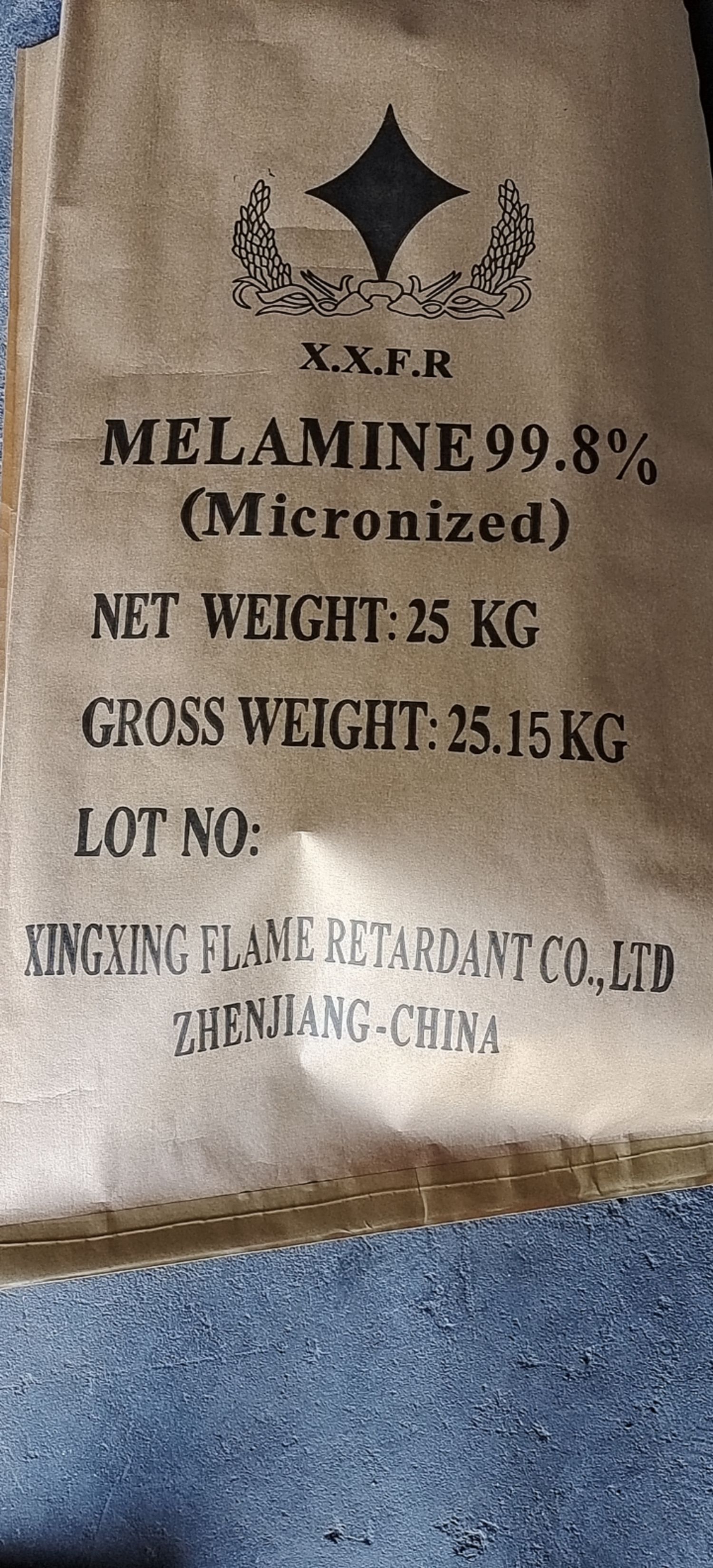
We process every batch through a sequence of dedicated refinement stages rather than relying on a single pass. Each stage removes a specific fraction of oversize or irregular particles, which lets us tighten the distribution without over-milling the finer end. The intermediate checks between stages are what really keep the output stable—small adjustments there prevent larger deviations later.
Particle size control starts with the mill settings, but we also use in-line laser diffraction to monitor the curve every few minutes. Instead of aiming for a single average number, we track the D10, D50, and D90 values together. That way a shift in the coarse tail gets caught before it affects the bulk. When we need a narrower cut, we add an air classification step after the final grind rather than extending milling time, which would just generate more fines.
The real difference shows up in downstream handling. A multi-stage approach with tight size windows means fewer clogged nozzles, more even packing, and predictable rheology from lot to lot. We keep records of every adjustment tied to the lot number, so if a customer pushes a formulation to a new viscosity range, we can trace back which refinement step needs to change—and leave the rest alone.
Consistent Batch-to-Batch Performance for Coatings and Resins
Every production run carries its own fingerprints—slight shifts in raw material purity, ambient humidity, or mixing time can nudge final properties off spec. For coatings and resins, that variability shows up as uneven gloss, unpredictable cure speeds, or adhesion failures weeks after application. The real challenge isn't producing one flawless batch; it's making the hundredth batch behave exactly like the first, even when suppliers change or equipment drifts.
We tackle this by locking critical quality checks into the process rather than relying on end-of-line testing. Viscosity curves, particle size distribution, and reactive group content are monitored at intermediate stages, with automated adjustments keeping each parameter within a narrow band. This mid-stream control catches drift before it becomes a rejected lot, so what leaves the plant meets the same release criteria batch after batch.
The payoff shows up downstream: formulators can dial in pigment loadings and cure schedules once, then trust that incoming resin will perform identically. Coaters avoid costly rework from subtle rheology shifts, and end users see the same film build and durability from the first drum to the last. Consistency here isn't a marketing promise—it's a measurable reduction in lot-to-lot variation that quietly protects every downstream decision.
Logistics That Keep Global Supply Chains Moving Without Surprises
Most supply chain surprises aren't random events—they're gaps in visibility and backup planning. The most dependable logistics teams treat surprise-free movement as an operational discipline, not a lucky streak. They map every handoff from supplier to final mile, identify single points of failure, and build in alternative routes or carriers before those routes are ever needed.
Real-time data sharing matters, but it only works when people act on early warnings. A shipment delayed at a transshipment hub in Rotterdam might trigger an automatic alert, yet the value comes from a team that immediately reroutes inventory through Antwerp or books space on a different vessel. That kind of responsiveness comes from cross-functional routines—not from dashboards alone.
Strong relationships with carriers, customs brokers, and local partners also play a quiet but critical role. When a storm closes a port or a factory audit uncovers a compliance issue, those relationships turn into fast phone calls, adjusted cutoffs, and shared contingency plans. The result isn't a supply chain that never faces problems; it's one that absorbs them without customers ever noticing.
Technical Support That Bridges Lab Specs and Real-World Mixing
Laboratory specifications assume perfect conditions: calibrated glassware, controlled temperatures, and ingredient purity. Real-world mixing rarely offers any of that. Our technical team has spent years in both settings, so we know where the practical gaps hide—from shear-rate differences that alter viscosity to ambient humidity that silently shifts batch consistency. We don't hand you a datasheet and wish you luck. Instead, we ask what your floor actually looks like, then translate those lab numbers into adjustments that work when the mixer is running hot and the room isn't climate-controlled.
Most support lines stop at product selection. Ours starts there and keeps going. Whether you're scaling up a pilot formula or troubleshooting a sudden texture change, we walk through the entire chain: raw material lot variation, mixer speed limits, hold times between stages, even the way ingredients are added by different operators. That last detail often matters more than any spec sheet suggests. The result is support that feels less like a call center and more like having an experienced process engineer on your side—one who understands that real-world mixing is messy, iterative, and full of variables no lab protocol ever anticipated.
How We Help Formulators Avoid Costly Rework and Downtime
We start by mapping your entire formulation workflow—raw material variability, mixing conditions, and scale-up points—so potential failure spots show up before they cost you a batch. Our team runs small-batch trials under conditions that mirror your plant floor, catching incompatibilities and viscosity shifts early enough to adjust the formula, not the production schedule.
Instead of handing you a generic troubleshooting checklist, we sit with your chemists and operators to trace exactly where past batches went sideways. That often reveals a specific measurement gap or a timing issue in the addition sequence. Fixing those details has repeatedly cut rework rates by more than half, because the correction happens at the root cause rather than at the symptom.
When a formula does hit an unexpected snag during scale-up, our response is built around keeping your line moving. We provide on-call support with access to your batch records and raw material lot data, so the first suggestion we offer is already grounded in your specific context. That means fewer hours lost to back-and-forth, and less chance that a minor deviation turns into a full shutdown.
FAQ
Micronized monopentaerythritol is a finely ground form of pentaerythritol, typically reduced to a median particle size of a few microns. The smaller size improves dispersion in resins, coatings, and lubricants, which leads to smoother film formation and more consistent chemical reactions.
Each production lot is checked in-house for particle size distribution and purity before release. Our milling line runs with closed-loop controls, and we keep retained samples from every shipment so any batch can be traced back to its production parameters.
Mainly alkyd resin manufacturers, synthetic lubricant formulators, and intumescent coating producers. It also finds use in certain plasticizer systems and UV-curable inks where fine, even dispersion is critical.
Yes. Our standard grade has a D50 around 10 microns, but we can adjust the milling setup to deliver tighter distributions or smaller median sizes when a customer's process requires a specific range.
We ship in 25 kg multi-wall paper bags, 500 kg supersacks, or bulk options depending on volume. Containers are loaded with desiccant packs, and we prepare all necessary export documents, including certificates of origin, analysis, and customs declarations.
Because micronized powder has a larger surface area, we use moisture-barrier liners inside all bags and recommend customers store the product in dry, ventilated areas. Our containers include humidity indicator cards so conditions can be checked upon arrival.
Yes, it meets REACH registration requirements and contains no substances restricted under RoHS. We provide compliance documentation and lab reports upon request without extra charge.
We focus on repeatable milling curves and real-time particle size feedback during production, rather than just hitting a nominal spec. Customers report fewer formulation adjustments between shipments, which saves them time and reduces waste.
Conclusion
Micronized monopentaerythritol sits at the heart of many high-performance coatings and resin systems, where even slight variation in purity or particle size can trigger batch rejection or line stoppages. Our company addresses this through a tightly controlled, multi-stage refining process that removes residual impurities and narrows the particle size distribution. The result is a product that blends smoothly into formulations and reacts predictably, batch after batch. For formulators, this translates into fewer adjustments on the floor, lower rework rates, and less downtime spent chasing inconsistent raw materials. This level of control is not a luxury; it is a necessity for high-stakes production where every kilogram must meet the same tight specification.
Beyond the chemistry, we focus on the practical side of global supply. Our logistics network is built around clear lead times, proper moisture-protective packaging, and documentation that matches what arrives at the dock, so production schedules stay intact. Our technical team also works directly with customers to bridge the gap between laboratory specifications and real-world mixing behavior, helping them avoid costly surprises during scale-up. Whether a plant is in Europe, Asia, or the Americas, the goal is the same: a dependable supply of micronized monopentaerythritol that performs consistently from the first sample to the last shipment. That dependability is what keeps lines running and budgets predictable, even when market conditions shift.
Contact Us
Contact Person: Guohua Wang
Email: [email protected]
Tel/WhatsApp: 8613003442895
Website: https://www.xxflameretard.com