

Melamine Polyphosphate Exporter Company Perspectives on Flame Retardant Supply
2026-08-14
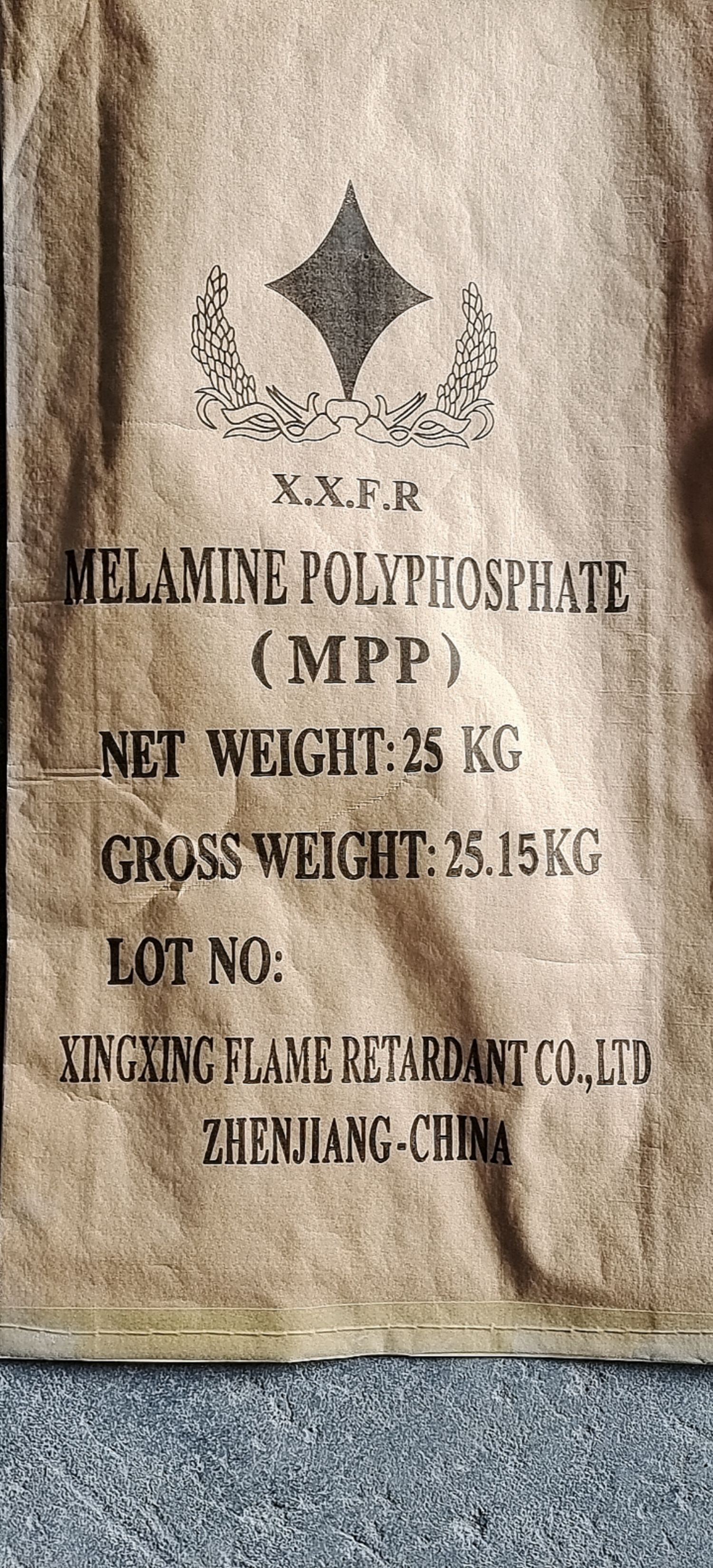
Most buyers only see a data sheet when they source melamine polyphosphate. Exporters see a tangle of logistics, regulatory shifts, and raw material volatility. At X.X.F.R, we've learned that the companies winning long-term supply contracts aren't necessarily the cheapest—they're the ones who treat consistency as a product feature. Here's what that looks like from the exporter's side of the flame retardant market.
Where Melamine Polyphosphate Fits in Modern Flame Retardant Portfolios
Melamine polyphosphate rarely works as a standalone solution, but that is precisely why it has become a quietly essential component in halogen-free systems. Its value shows up most clearly in glass-fiber-reinforced polyamides, where thermal stability during compounding rules out many traditional nitrogen-based synergists. MPP holds up through processing, then releases phosphoric acid species at the right temperature to drive char formation rather than fuel the flame.
In a modern portfolio, MPP often occupies the middle ground between low-cost mineral fillers and high-performance phosphinate packages. It does not deliver extreme UL 94 V-0 ratings alone in thin sections, but it contributes anti-dripping behavior and smoke suppression that other additives miss. Pairing MPP with metal phosphinates, borates, or charring polymers creates a more balanced cost-performance profile, especially for connectors, coil bobbins, and structural nylon parts.
The real differentiator is its ability to function as both an acid source and a blowing agent in intumescent formulations without the moisture sensitivity of ammonium polyphosphate. This makes MPP a reliable choice for epoxy-based electronics and TPU cable jackets where long-term electrical properties and surface quality matter. Rather than chasing a universal flame retardant, formulators use MPP as a targeted tool that reduces total loading and preserves mechanical integrity.
What Exporters Watch Before Committing to a Supply Agreement
Before putting pen to paper, exporters tend to dig into the buyer's payment history and the real enforceability of the agreed terms across borders. A signed contract means little if local courts or banks won't back it up, so many ask for advance payment, irrevocable letters of credit, or credit insurance as a cushion.
Capacity planning is another quiet obsession. An exporter will map the proposed order volumes against current production schedules, raw material lead times, and even seasonal labor availability. Promising too much too quickly can trigger penalties, so they often negotiate flexible delivery windows or volume tolerance bands instead of fixed monthly quotas.
Compliance details rarely make headlines but can kill a deal on the spot. Exporters check product certifications, labeling rules, and import restrictions in the destination market, plus any sanctions or dual-use controls that might block shipment. Some also insist on a clear dispute resolution clause, generally favoring arbitration in a neutral venue over litigation in a foreign court.
Quality Consistency Beyond the Certificate of Analysis
A certificate of analysis reads like a final answer—one lot, one date, a neat row of numbers that all fall inside the spec. But consistency doesn't begin or end there. It starts with how the raw material was stored before sampling, how the line was cleaned between the previous product and this one, and whether the operator on the night shift followed the same written procedure as the one on days. None of that appears on the certificate, yet all of it decides whether the next shipment will behave like the last.
The gap between a clean COA and real-world reliability usually shows up in the places no one bothers to record. A supplier might pass an annual audit but slowly alter their incoming feedstock without telling you. A warehouse might keep the correct temperature on paper while the actual sensor sits in a dead zone near the door. A mixing tank might be rinsed three times on Monday and only once on Friday because the shift is short-staffed. These aren't failures of testing—they're failures of consistency that no certificate can detect.
Mature quality programs treat the certificate as the least interesting part of the file. They chart lot-to-lot assay values over a year and flag any drift, even when every result stays within limits. They keep retention samples and re-test them six months later to see if the material degrades after release. They walk the production floor without scheduling a visit and compare the actual batch record against the signed-off version. That kind of quiet, ongoing attention is what turns a good certificate into a dependable supply.
Logistics Barriers That Reshape Delivery Timelines
Real-world delivery routes rarely match the clean lines on a map. Port congestion, customs hold-ups, and sudden border checks can throw a carefully planned schedule off by days or even weeks. These aren't abstract risks—they are the daily friction points that force logistics teams to constantly redraw their timelines. A single missed connection at a transshipment hub, for example, can ripple outward, delaying downstream distribution and leaving customers waiting without a clear explanation.
Weather adds another layer of unpredictability. Snowstorms shut down mountain passes, typhoons halt air cargo, and extreme heat buckles rail lines. Each event chips away at the assumed flow of goods, pushing delivery windows into uncomfortable territory. Shippers who rely on just-in-time inventory feel this most sharply, as there is little buffer when a truck is stuck behind a closed pass or a vessel waits at anchor for a berth to open.
Infrastructure gaps also play a quiet but persistent role. Roads that fall apart after heavy rain, bridges with weight limits, and outdated warehouse technology all slow the handoffs that keep freight moving. These barriers don't always make headlines, but they shape the realistic promise a carrier can make. Over time, smart operators stop pretending those delays don't exist and instead build them into the baseline—adjusting lead times, reordering routes, and choosing alternative ports that may be slower on paper but more reliable in practice.
Customer Questions That Expose Hidden Specification Gaps
A customer who asks whether a device can hold peak load beyond fifteen minutes isn't making small talk. That question forces the product team to revisit a spec sheet that lists only maximum output, leaving thermal throttling and duty cycle unaddressed. Without the customer's push, the gap stays hidden until returns pile up.
Some of the sharpest gaps surface through questions about test conditions. When someone asks if the quoted battery life was measured with Wi-Fi off or screen brightness at 50%, the phrasing sounds picky, but it reveals the original specification lacked context. A number without a defined measurement setup is little more than a marketing placeholder.
Treating these customer questions as free consulting turns complaint-prone areas into documentation improvements. Each pointed inquiry points to a missing variable, an unstated assumption, or an edge case the internal team never thought to formalize. Recording and clustering those questions leads to spec revisions that preempt most follow-up confusion.
The Next Shift in Halogen-Free Flame Retardant Demand
Market momentum is no longer driven solely by regulatory bans on brominated systems. The next shift comes from a push to match the mechanical and electrical performance of legacy materials while cutting halogen content. In thin-wall connectors and high-temperature engineering plastics, formulators are testing combinations of phosphinates, melamine polyphosphate, and surface-treated metal hydroxides. These blends can preserve stiffness and impact resistance, but moisture uptake and melt viscosity remain the main barriers to broader adoption.
Demand is also fragmenting across new high-voltage applications. Battery enclosures, busbars, and charging connectors in electric vehicles require halogen-free grades that hold up under partial discharge and thermal cycling. Here, the key metric is not just a UL 94 V-0 rating but comparative tracking index and long-term dielectric stability. This is pushing suppliers away from one-size-fits-all additive packages toward reactive phosphorus chemistries and custom synergist blends that bond with the polymer backbone.
Cost and feedstock dynamics are further reshaping the market. Expanded capacity for phosphorus intermediates and precipitated magnesium hydroxide has narrowed the price gap with brominated alternatives. At the same time, concerns over fluorinated additives and PFAS are creating a secondary substitution wave, even in applications not covered by existing halogen bans. The competitive edge is shifting to producers who can offer low-dust, easy-to-dose masterbatches while maintaining color stability and low smoke density at reduced loading levels.
FAQ
We look at three things: existing local demand for halogen-free systems, how strict the fire safety codes are, and whether the region has reliable port infrastructure. It's less about chasing volume and more about finding partners who value consistent technical support.
We keep a buffer stock of key inputs, but we also work with two or three approved suppliers for melamine and phosphoric acid. That way, if one source has a hiccup, we can shift orders without delaying shipments. Long-term contracts with customers also let us lock in pricing for several months.
Our product has a narrower particle size distribution and lower residual acidity, which helps compounders avoid corrosion issues in extrusion. We also run a dedicated line for export batches, so there's less chance of cross-contamination from other products.
The biggest challenge is keeping up with registration requirements like REACH in Europe or K-REACH in Korea. Each update means new testing and documentation. We've hired a regulatory specialist who tracks changes weekly, so we can submit dossiers before deadlines rather than reacting at the last minute.
We don't promise capacity we don't have. When a spike happens, we first check if existing customers can accept slight delays, then we use overtime shifts and air freight for the most urgent orders. It's about communication—being upfront that lead times might stretch from four weeks to six.
The push toward thin-wall flame-retardant polypropylene is driving demand for more thermally stable grades. Also, electric vehicle battery housings are starting to specify halogen-free intumescent systems. We're investing in R&D to improve char formation at lower loadings.
We run compatibility tests in polypropylene, polyamide, and epoxy before shipping. Each batch gets a certificate of analysis, but we also keep retained samples for two years. If a customer reports an issue, we can pull that sample and test it under the same conditions they used.
Many assume it's a drop-in replacement for ammonium polyphosphate, but the processing window is quite different. It has better thermal stability but lower water resistance unless surface-treated. We spend time educating customers on the right synergists to use, otherwise they'll blame the additive when the real problem is formulation.
Conclusion
Melamine polyphosphate has moved from a niche alternative to a core component in halogen-free flame retardant portfolios, especially for polyamides and thermoplastic elastomers where thermal stability and low smoke density matter. Exporters evaluating long-term supply commitments pay close attention to upstream melamine and phosphorus pricing volatility, regional regulatory shifts, and the buyer’s actual processing window—not just the brochure specs. A certificate of analysis alone rarely tells the full story; experienced suppliers track batch-to-batch particle size distribution, residual acidity, and moisture uptake under tropical shipping conditions, because these quietly influence dispersion and end-product surface finish. Without that level of oversight, two shipments with identical CoA values can behave differently on an injection molding line.
Logistics often reshapes delivery timelines more than production capacity does. Port congestion, container shortages, and misclassified dangerous goods paperwork for phosphate-based additives can add weeks to a supposedly fixed lead time, so exporters increasingly build buffer stock at regional hubs or offer split shipments to avoid line-down situations. Customer questions frequently expose hidden specification gaps—such as whether the MPP grade is coated for better flow, whether it withstands a specific polymer’s processing temperature above 320°C, or how it interacts with glass fiber sizing. The next shift in demand points toward tighter phosphorus content consistency, lower dusting variants for automated feeding systems, and grades tailored to recycled engineering resins, because more compounders want halogen-free solutions that do not compromise mechanical properties.
Contact Us
Contact Person: Guohua Wang
Email: [email protected]
Tel/WhatsApp: 8613003442895
Website: https://www.xxflameretard.com