
Large Industrial Fans Manufacturing: Overcoming Critical Challenges for Optimal Performance
2026-07-11
In the world of large industrial fan manufacturing, achieving peak performance isn't just about moving air—it's about overcoming a host of engineering and production hurdles. From balancing colossal blades to ensuring energy efficiency in demanding environments, the journey from design to reliable operation is fraught with critical challenges. At VINDUSFAN, we've turned these obstacles into opportunities for innovation, crafting fans that deliver unmatched durability and airflow optimization. This post dives into the key struggles manufacturers face and the solutions that set high-performance industrial fans apart.
Mastering Material Selection for Unyielding Fan Durability
The quest for a fan that endures years of relentless operation starts long before any blade is cast or motor wound—it begins with the right material choices. Too often, early failures trace back to a misunderstanding of the environment the fan will face. Heat, moisture, chemical exposure, or even sustained vibration can quietly degrade the wrong polymer or alloy until a critical component gives way. Understanding these stress factors is not a one-time checklist item but an ongoing dialogue between design intent and real-world conditions. When we treat material selection as a dynamic process rather than a static specification, we lay the groundwork for a fan that holds up under conditions that would cripple lesser designs.
The typical material palette for industrial and high-performance fans ranges from reinforced thermoplastics like glass-filled nylon to metals such as cast aluminum and stainless steel. Each has its own character: nylon dampens vibration and resists many chemicals but can creep under sustained load; aluminum offers an excellent strength-to-weight ratio and natural corrosion resistance yet may fatigue at welded joints; stainless steel laughs off rust but brings weight and cost considerations that demand justification. The art lies in matching the material's inherent properties—its fatigue limit, thermal expansion coefficient, and notch sensitivity—to the fan's specific duty cycle. A composite hub with metal blades, for instance, can combine vibration absorption with aerodynamic stiffness, an approach that often outperforms monomaterial designs in demanding continuous-run applications.
No amount of data-sheet analysis can replace validation testing tailored to the fan’s life expectancy. Accelerated life tests that simulate thermal cycling, salt spray exposure, and overspeed conditions reveal failure modes that pure engineering calculations might miss. A particular polymer may pass all static checks yet embrittle after a few thousand hours at elevated temperatures; a metal alloy might hold up in salt fog but develop stress-corrosion cracking at a sharp machined radius. By building these insights into the material selection loop—and staying open to adjustments even after initial production—manufacturers achieve a level of durability that goes beyond meeting specifications. It’s the difference between a fan that merely works and one that refuses to quit, year after year.
Aerodynamic Precision: Sculpting Blades for Peak Airflow
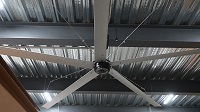
The quest for optimal airflow isn't just a matter of slapping a curved surface onto a hub. It demands a meticulous dance between computational fluid dynamics and hands-on sculpting, where even a millimeter's deviation can choke efficiency. Think of each blade as a wing in a relentless airstream—its contour must manage pressure gradients so smoothly that turbulence becomes a rarity rather than the norm.
What often gets overlooked is the material's behavior under load. A blade that looks perfect on a screen can flex under real-world forces, altering its pitch and robbing you of speed. That's why iterative prototyping, blending 3D-printed test pieces with old-school flow visualization, uncovers subtle dead zones. The result isn't just a fan or a compressor stage—it's a quiet revolution where air slips past with minimal resistance, turning raw power into fluid motion.
Powerful Motors, Cool Operation: Engineering Thermal Resilience
Delivering high torque and rapid acceleration inevitably generates intense heat within a motor’s windings and magnets. Without careful design, that heat buildup degrades performance and shortens component life. The key lies in shaping thermal paths that channel energy away from critical areas right from the start. By treating heat as a core part of the power equation, engineers can push motors harder while maintaining a calm temperature profile under continuous load.
Real thermal resilience comes from a blend of materials and geometry. Stator cores with tightly bonded laminations reduce eddy-current losses, while potting compounds draw heat directly out of copper coils. Some designs integrate liquid-cooled jackets that wrap the stator, pulling warmth into a dedicated coolant loop without adding bulk. Even the rotor benefits from internal air channels that circulate fluid through centrifugal force, balancing hot spots that would otherwise cause premature magnet demagnetization.
The outcome is a drive unit that laughs at stop-and-go climbs and sustained high-speed cruising. Cool operation quietly preserves insulation integrity, keeps magnets at their operating sweet spot, and ensures that peak power doesn’t fade after minutes of hard use. It’s a harmony of electrical and mechanical choices that lets a motor stay fierce yet composed, mile after mile.
Taming the Roar: Cutting Vibration and Noise at the Source
Noise rarely appears out of nowhere—it\u2019s often the audible footprint of wasted energy, a telltale sign that something in a machine or structure is fighting itself. Whether it\u2019s the chattering of a gearbox, the hum of an electric motor, or the rattling of a loose panel, the most effective way to quiet the disturbance is to address the root cause before it ever becomes airborne. This demands a shift in thinking: treat vibration and noise not as inevitable byproducts to be damped, but as design flaws to be engineered out from the start.
At the heart of source-level control is the precise understanding of excitation forces. A rotating imbalance that sets an entire housing quivering, a hydraulic pulsation that turns a quiet fluid line into a noise radiator, or an impact that sends shockwaves through coupled components—each has its own signature. Rather than layering on silencers or isolation mounts after the fact, engineers can reshape those forces directly through better balancing, smoother flow paths, or tuned mass distribution. Sometimes a simple change in tooth profile or a shift in bearing type can slash tonal noise by half, because the excitation itself has been blunted before it reaches the structure.
Material choices and structural topology play equal roles in stopping noise at its inception. Damping alloys, constrained-layer composites, and strategic stiffening ribs can alter vibration paths so that peaks never rise high enough to be heard. Even the way components are joined—welded instead of bolted, or bonded with viscoelastic adhesives—can dramatically change how energy flows through the assembly. The goal is to break the transmission chain so completely that the sound never gets a chance to escape. When these strategies are baked into the early stages of design, what emerges is a machine that doesn\u2019t need to be hushed because it was never loud in the first place.
Banishing Defects: How Rigorous Testing Ensures Flawless Performance
When software glitches slip into production, they don't just annoy users—they erode trust and drain resources. A methodical testing strategy catches these gremlins early, long before they can tarnish the user experience. By layering unit tests, integration checks, and full-system validations, teams create a safety net that identifies inconsistencies in logic, data flow, and interface behavior. This isn't about adding more steps to the process; it's about weaving quality into every commit, so that each release feels solid and predictable.
Stress testing pushes systems beyond their typical limits, revealing hidden fracture points that only surface under extreme conditions. Whether it's a sudden spike in traffic or a prolonged uptime scenario, these experiments expose memory leaks, race conditions, and scaling bottlenecks that conventional checks would miss. The insight gained lets engineers reinforce the architecture proactively, turning potential catastrophes into routine performance tuning. Confidence grows when you've seen your platform handle twice its expected load without breaking a sweat.
Automation amplifies precision by executing thousands of scenarios in minutes, something manual efforts could never match. Yet it's the combination of automated rigor and exploratory testing that truly banishes defects—machines cover the expected, while human curiosity probes the edges. Pairing these approaches catches issues that neither would find alone, from subtle UI misalignments to complex state transitions. The result is software that just works, delivering seamless interactions day after day.
Beyond One-Size-Fits-All: Customizing Fans for Extreme Environments
Standard industrial fans often falter when pushed beyond their design limits—corrosive chemicals eat away at blades, explosive dust demands spark-proof construction, or searing heat warps ordinary motors. Customization starts by dissecting the environment itself: we analyze the chemical makeup of airborne contaminants, the explosive potential of particulates, and the thermal profile of the installation space. This forensic approach reveals that a fan in a pharmaceutical cleanroom requires entirely different DNA than one ventilating a foundry, even if both move 10,000 CFM.
Material selection becomes the linchpin. In environments thick with sulfuric acid mist, we might specify Hastelloy X housings with Teflon-coated impellers—materials that laugh off corrosion that would reduce a standard steel fan to rust in weeks. For cryogenic applications where standard lubricants freeze solid, we engineer mag-drive, bearingless designs that spin effortlessly at -200°F, using specialized alloys that maintain ductility in the deep cold. Each choice is a deliberate deviation from catalog specifications, driven by years of failure analysis and material science.
Beyond materials, customizations extend to every aspect of the fan's operation. We integrate vibration sensors with machine-learning algorithms that detect bearing degradation before it causes downtime, and design modular impellers that can be swapped out in minutes without specialized tools—a critical feature when maintenance windows are measured in hours, not days. In volatile atmospheres, every motor winding is encapsulated, and every fastener is non-sparking brass, making ignition virtually impossible. This holistic customization transforms a generic fan into a purpose-built air-moving solution that thrives where others fail.
FAQ
One of the toughest parts is ensuring structural integrity without adding excessive weight. Using advanced composites and precise welding techniques helps. Another challenge is maintaining aerodynamic efficiency at scale—minor imperfections get magnified, so CNC machining and rigorous testing are critical.
Materials directly affect both durability and how much energy the fan consumes. For instance, aluminum alloys offer corrosion resistance and light weight, which reduces motor load. Composite blades can be optimized for flex patterns that improve efficiency at various speeds. Poor material selection leads to fatigue failure and wasted power.
It's all about blade geometry and motor selection. Curved blades with twisted profiles can move more air with less drag. Pairing them with high-efficiency motors and variable frequency drives allows the fan to adjust speed based on demand, rather than running at full tilt all the time. Computational fluid dynamics plays a huge role in refining these designs.
Noise often stems from turbulent airflow and mechanical resonance. Solutions include serrated trailing edges on blades to break up vortices, dynamic balancing during assembly, and isolating the motor with vibration-dampening mounts. Sometimes adding acoustic enclosures around the motor helps, but the goal is to quiet the fan at its source.
We subject prototypes to thermal cycling, salt spray for corrosion resistance, and continuous run tests under maximum load. For example, in foundries or chemical plants, the fan must resist temperature swings and corrosive fumes. Accelerated life testing helps predict failures before they happen in the field.
Additive manufacturing enables rapid prototyping of complex blade shapes that were once impossible to cast. Real-time monitoring sensors embedded in the fan can predict maintenance needs. And software-driven quality control systems catch minute defects that human inspectors might miss, reducing scrap and rework.
At large diameters, even a 1% improvement in efficiency can slash energy bills significantly. Optimized aerodynamics reduce turbulence, which not only saves power but also cuts down on noise and structural stress. It’s the difference between a fan that merely spins and one that actually does its job quietly and economically.
Inconsistent welding and improper balance are frequent issues. Automated welding systems with real-time feedback eliminate much of the human error. For balance, using precision fixtures and dynamic balancers at multiple stages—not just at the end—prevents vibration problems. Traceability from raw material to final assembly also helps catch defects early.
Conclusion
Developing large industrial fans that perform flawlessly over years of heavy use starts with meticulous material choices. Advanced composites and coated alloys resist corrosion, abrasion, and fatigue, forming the backbone of fan durability. Aerodynamic blade sculpting further refines the design, channeling air with minimal turbulence to maximize airflow while curbing energy demands. This precision engineering not only boosts efficiency but also lays the groundwork for quieter operation, as balanced profiles inherently reduce noise and vibration.
Of course, real-world reliability hinges on more than sturdy materials and smooth blades. Motors must be paired with robust thermal management to shrug off intense heat, preserving torque and longevity. Vibration is hunted down at its source through dynamic balancing and damped mountings, turning what could be a deafening roar into a low, unobtrusive hum. Every fan then undergoes exhaustive testing—fatigue simulations, overload runs, and environmental stress screening—to weed out defects long before installation. Finally, recognizing that a standard solution often falls short, manufacturers tailor blade geometry, coatings, and motor enclosures for specific extremes, whether corrosive salt spray, explosive dust, or scorching temperatures, ensuring peak performance where it matters most.
Contact Us
Contact Person: Michael Danielsson
Email: [email protected]
Tel/WhatsApp: +1 951 565 7769
Website: https://www.vindusfans.com