

High Precision Shunt Resistor: A Substantial Component for Accurate Current Sensing
2026-07-05
Current sensing might seem straightforward, but achieving real precision often hinges on one humble component: the shunt resistor. In applications where every milliamp counts, from battery management to motor control, high precision shunt resistors quietly ensure accuracy and reliability. Yet, not all shunts are created equal—factors like temperature stability and low resistance values demand careful engineering. That’s where Milliohm expertise comes into play, offering solutions that push the boundaries of what’s possible in current measurement. Let’s explore why these substantial components are the backbone of accurate current sensing and how they can elevate your next design.
Dissecting the Shunt Resistor's Role in Precision
When we talk about precision in current measurement, the shunt resistor quietly does the heavy lifting. Its job seems simple—convert current into a voltage drop—but the reality is far more nuanced. Small shifts in resistance due to temperature, parasitic inductance, or even the way leads are attached can introduce errors that magnify in sensitive circuits. Ignoring these subtleties turns a seemingly accurate reading into a guess.
Material choice sits at the heart of a shunt's true performance. Alloys like manganin offer a near-flat temperature coefficient, but they aren't immune to self-heating or thermal EMF at junctions. The physical layout matters just as much: a four-terminal Kelvin connection isn't optional if you need to separate current paths from sense paths. Without it, even trace resistance on a PCB can swamp the signal you're trying to capture.
In practice, selecting a shunt means balancing conflicting demands. Lower resistance reduces power dissipation but shrinks the voltage signal, forcing you to lean on a low-noise amplifier with excellent CMRR. Higher resistance boosts the signal but invites thermal drift and can drop excessive voltage in your circuit. The sweet spot depends on your operating range, bandwidth, and how much error your design can absorb—there's no universal answer, just a careful engineering trade-off etched in metal and layout.
Why Standard Resistors Fall Short
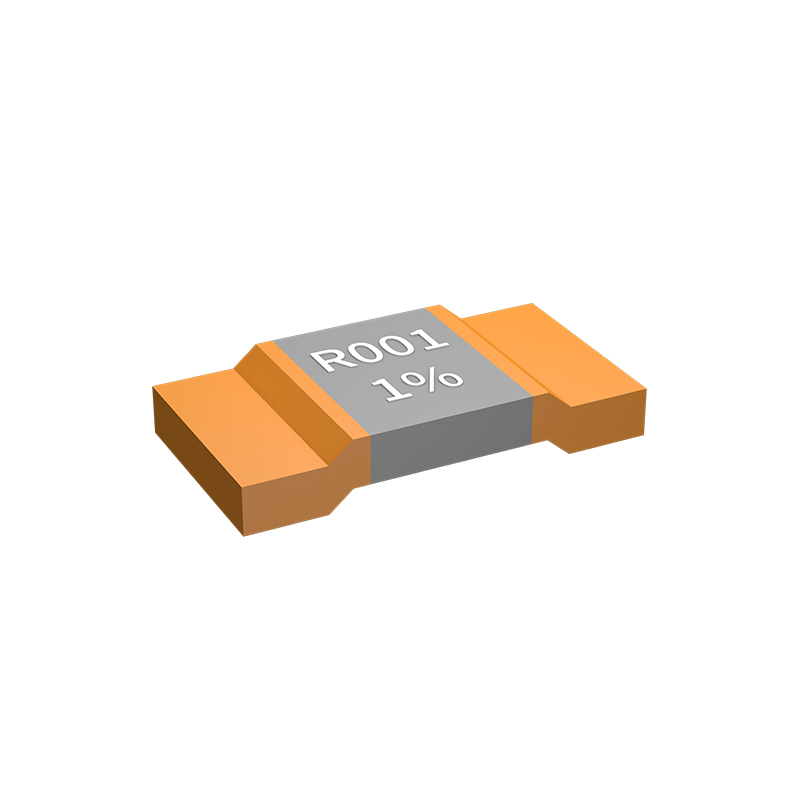
Standard resistors might seem simple—just pick a value and go—but anyone who has spent time in a lab knows that reality is far messier. They drift with temperature, age in unpredictable ways, and introduce noise that can swamp a delicate measurement. A 1% tolerance resistor isn't necessarily off by a fixed amount; it might wander with every thermal cycle or mechanical stress, and that's before we even consider parasitic inductance and capacitance that turn a pristine DC circuit into an accidental oscillator at high frequencies.
The trouble deepens when you need precision across a wide range. A resistor that's stable at milliwatts can become a nonlinear heater at higher power, while the low-value shunts that work for current sensing often have contact resistance issues that dominate their effective value. Even the humble PCB trace and solder joint add their own milliohms, turning a carefully chosen 0.1% part into just another guess. It's not that standard resistors are bad—they're marvels of manufacturing—but they were never meant to be the last word in accuracy, only a starting point.
Perhaps the most insidious failure mode is when everything looks perfect on paper. You can compute the right value, pick a reputable brand, even measure it on a trusted meter, only to find the circuit misbehaving near the end of its operating range. That's when you realize the resistor's tempco was specified only at room temperature, or its specified stability assumes no rapid thermal shocks, or that its thin-film construction starts showing voltage coefficient under high fields. The spec sheet tells a story of controlled conditions; your real board, with its uneven heat and transient loads, tells quite another.
The Engineering Behind Ultra-Low Resistance Values
Achieving ultra‑low resistance values isn't just about selecting a material with high conductivity—it's a careful dance between geometry, contact interfaces, and thermal management. In precision shunts and current‑sensing elements, every micro‑ohm matters. Engineers start by choosing alloys like manganin or constantan, prized for their low temperature coefficient of resistance, then fine‑tune the physical cross‑section to balance resistive loss against mechanical robustness. Even the termination method—whether welded, bolted, or soldered—is scrutinized because parasitic resistances at junctions can easily overshadow the intrinsic value of the sensing element itself.
Beyond material selection, the physical layout introduces a set of secondary effects that must be tamed. Current‑crowding at sharp corners, skin‑depth at higher frequencies, and uneven current distribution across the resistor body all inflate the apparent resistance. To counter this, designers often employ slotted or multiple‑parallel‑element structures that force uniform current flow. At the same time, the voltage‑sensing points are positioned with Kelvin (four‑terminal) geometry in mind, pulling the measurement taps away from the main current path to exclude voltage drops across leads and contacts. This meticulous separation of sense and force paths is what enables a resistor rated at 100 µΩ to be specified with meaningful precision.
Thermal considerations are equally critical: even at modest currents, milliohm‑range resistors can dissipate significant power, and the ensuing temperature rise drifts the resistance value unless actively managed. Many ultra‑low‑resistance assemblies incorporate massive copper terminals that double as heat spreaders, pulling heat outward while also providing low‑resistance connections to the busbar. In more demanding applications, direct liquid cooling or forced‑air paths are integrated into the resistor structure. The ultimate goal is a device that remains electrically invisible—a near‑ideal conductor that faithfully translates current into a measurable voltage without injecting error, drift, or non‑linearity into the measurement chain.
Tackling Temperature Coefficients Head-On
Temperature coefficients can feel like a technical nuisance, but ignoring them often leads to efficiency losses that stack up over time. Instead of treating them as an afterthought, we’ve made it a habit to model performance shifts early in the design phase. That means examining how voltage, current, and power respond under the specific temperature ranges your setup will actually face—not just the standard test conditions printed on a datasheet.
One practical approach we lean on is pairing granular panel-level data with localized weather patterns to predict derating more accurately. By mapping real-world thermal behavior, we can adjust string sizing, module tilt, and even the choice of mounting structures to keep output steady when the heat is on. It’s not about eliminating the coefficient entirely—that’s impossible—but about neutralizing its impact through smarter system architecture.
We’ve also seen cooling strategies that go beyond passive airflow deliver surprising gains, especially in rooftop or ground-mount configurations where convection alone isn’t enough. Simple tweaks like increasing the air gap beneath panels or choosing lighter-colored racking can drop cell temperatures enough to recover a percentage point or two of peak production. It’s these layered adjustments—none revolutionary on their own, but powerful together—that turn temperature coefficients from a design headache into a manageable variable.
Where Precision Current Sensing Becomes Critical
When you’re pushing the limits of battery life in portable medical gear or squeezing every last watt from a solar array, the difference between a good design and a great one often hangs on how accurately you can measure current. It’s not just about getting a number—it’s about catching those tiny, fluctuating signals that tell you what’s really happening inside a circuit before it becomes a problem. In power-sensitive applications like wearables or implantable devices, even a milliamp of error can mean hours less runtime or a device that fails unexpectedly mid-use.
Precision current sensing steps into the spotlight wherever safety margins are razor thin. Think of electric vehicle battery management systems, where monitoring thousands of cells in real time demands both speed and spot-on readings to prevent overcharging or thermal runaway. Or consider industrial motor drives that rely on fast, accurate feedback to maintain torque and protect against stall conditions. In these environments, the sensing front-end isn’t just a supporting actor—it’s a core piece of the control puzzle that can make or break system reliability.
Then there are use cases where the very physics of the measurement gets tricky. High-side sensing in the presence of fast common-mode voltage swings, like you see in motor phase legs or DC-DC converters, can turn an ordinary op-amp circuit into a noise magnet. And when currents swing from near zero to hundreds of amps in microseconds, settling time, drift, and linearity errors compound fast. That’s where shunt-based solutions with ultra-low offset, matched gain, and smart layout techniques earn their keep—delivering clean data even when the electrical environment is anything but friendly.
Future-Proofing Designs with Robust Shunt Solutions
Embedding robust shunt solutions during the initial design phase acts as a strategic safeguard against evolving system demands. Instead of frequent, costly redesigns, a well-calibrated shunt can absorb transient surges and steady-state overloads, ensuring that key performance parameters remain within safe bounds even as surrounding components age or operating conditions shift. This proactive approach not only extends the lifespan of the overall system but also preserves signal integrity and power efficiency in ways that reactive fixes simply cannot match.
The versatility of modern shunt topologies allows engineers to address a broad spectrum of challenges—from thermal runaway in dense circuit boards to ground-loop mitigation in mixed-signal environments—without bloating the bill of materials. By selecting materials and geometries that maintain low parasitic inductance and consistent current distribution, designers can sidestep common failure modes that plague less resilient alternatives. This focus on inherent robustness means the protection mechanism itself doesn’t become a bottleneck, even as load profiles grow more aggressive over the product’s lifecycle.
Planning for longevity also means recognizing that specifications rarely remain static. Robust shunt solutions provide a buffer that accommodates incremental upgrades, unexpected environmental stressors, and tighter tolerance requirements that may arise down the line. Rather than treating protection as an afterthought, integrating it from the start fosters an architecture where resilience is built in, not bolted on—giving design teams the confidence to push performance envelopes while minimizing warranty risks and field failures.
FAQ
A high precision shunt resistor is a low-resistance component placed in series with a load to measure current flow. By monitoring the voltage drop across it with extreme accuracy, engineers can determine current without disrupting the circuit. Its role is substantial because even minor resistance deviations can cause significant measurement errors, making precision essential for applications like battery management and motor control.
It works on Ohm’s law: a known small resistance generates a proportional voltage when current passes through. That voltage is then amplified and measured. The accuracy depends on the resistor’s tolerance and temperature stability—high precision types maintain a stable resistance value regardless of environmental changes, ensuring consistent readings.
Critical parameters include low temperature coefficient of resistance (TCR), tight tolerance (often 0.1% or better), low thermal EMF, and minimal power coefficient. These factors ensure that the resistor’s value doesn’t drift with heat, load, or time, which is vital for repeatable current sensing.
They are indispensable in battery fuel gauging, precision power supplies, electric vehicle current monitoring, and medical devices. In these fields, even a small current error could lead to safety risks or performance degradation, so the resistor’s accuracy directly impacts system reliability.
Measurement errors will increase due to higher tolerance and temperature drift. The voltage drop might not faithfully represent the actual current, leading to incorrect system decisions—like overcharging a battery or misreporting energy consumption. Long-term, it can cause product failures and safety concerns.
Resistance typically changes with temperature; in standard resistors, this can skew measurements. High precision shunt resistors use materials like manganin or specialized alloys that exhibit extremely low TCR, meaning their resistance stays nearly constant across a wide temperature range. Some also incorporate four-terminal Kelvin connections to eliminate lead resistance errors.
Conclusion
At the heart of precise current measurement lies the shunt resistor, a deceptively simple component that converts current into a measurable voltage drop. Standard resistors, however, often fail to deliver the required accuracy due to parasitic inductance, thermal drift, and poor tolerance. High precision shunt resistors overcome these pitfalls through meticulous material selection and refined construction. By employing alloys like manganin or zeranin and leveraging four-terminal Kelvin connections, engineers achieve ultra-low resistance values that minimize power loss while maintaining signal integrity. This deliberate design ensures that even minute currents are detected with remarkable fidelity, making the shunt resistor indispensable in applications ranging from battery fuel gauging to motor control.
Thermal stability presents a formidable challenge, as even slight temperature variations can distort readings. Advanced shunt designs confront this head-on by achieving near-zero temperature coefficients, often below 15 ppm/°C, through the use of specially formulated resistive elements and stress-relieved packaging. Such precision is vital in electric vehicles, renewable energy inverters, and industrial automation, where accurate current sensing directly impacts efficiency, safety, and longevity. Looking ahead, robust shunt solutions continue to evolve, integrating directly with high-speed data converters and embedding diagnostic features. These innovations future-proof designs against the growing demands for higher power density and smarter energy management, cementing the high precision shunt resistor as a cornerstone of modern electronics.
Contact Us
Contact Person: Yuying Gao
Email: [email protected]
Tel/WhatsApp: +86 18926013721
Website: https://en.milliohm.net/