
Hard Chrome Plating Equipment: Choosing the Right Company for Your Needs
2026-11-16
Hard chrome plating equipment can make or break your production line. Yet many buyers focus only on price, overlooking critical details that lead to downtime and rejects. This guide cuts through the noise, showing how Junda approaches equipment design differently.
What Your Current Plating Line Reveals About Future Equipment Needs
Look beyond daily output numbers and your plating line starts telling a clear story. Recurring bottlenecks at the rinse stage, for instance, often point to undersized tanks or poor agitation rather than operator error. When you notice that certain part geometries consistently demand rework, that's a signal your rectifiers may lack the waveform flexibility needed for complex current distribution.
Maintenance logs are another underused forecasting tool. If anode baskets require frequent cleaning or bus bars run hot near specific stations, the existing power delivery isn't just aging—it's already limiting your ability to take on higher-spec work. These patterns suggest a future line should prioritize modular rectification, automated chemical dosing, and rack designs that accommodate mixed-part production without manual adjustments.
Pay attention to how much time your team spends compensating for line quirks. That compensation is a hidden cost that maps directly to the features your next system must include. A plating line that struggles with consistency today won't become more capable through minor repairs; it's showing you precisely where the next capital investment needs to go.
Separating Marketing Claims from Shop-Tested Durability
Walk into any gear shop and the walls are loud with promises: ripstop this, abrasion-resistant that, lifetime guarantees printed in bold. But the gap between a marketing team's confidence and how a jacket actually survives a season of sharp granite and overstuffed packs tends to widen somewhere around the second week of real use. Lab numbers like denier counts and tear-strength ratings give a starting point, yet they rarely predict the zipper that snags on day three or the seam tape that curls after a dozen wet mornings. Shop-tested durability means taking those claims into the field, scuffing them against rock, mud, and repeated washing, then seeing what still holds its shape.
What often separates honest durability from clever phrasing is the failure of overlooked details. A fabric can boast a 200-denier face while the lining shreds under friction from a hip belt. A pack might survive a drag test on concrete but pop a buckle when cinched with cold hands. Our approach strips away the headline specs and focuses on stress points: how the stitching behaves under load, whether coatings flake after folding, if the hardware survives being stepped on. We don't care about the marketing copy's favorite adjective; we care about the moment a piece of gear stops doing its job quietly.
That's why we treat claims as hypotheses rather than conclusions. Every tag that says "bombproof" or "all-conditions" gets tested against real abuse—scraped against tree bark, left damp in a pack for a week, yanked repeatedly by someone who isn't gentle. The result isn't a score that pads someone's catalog. It's a plain accounting of which products earn their adjectives and which ones borrow them. Because durability, like trust, is built in inconvenient places, not on a spec sheet.
The Tanks, Rectifiers, and Hoists That Deserve a Closer Look
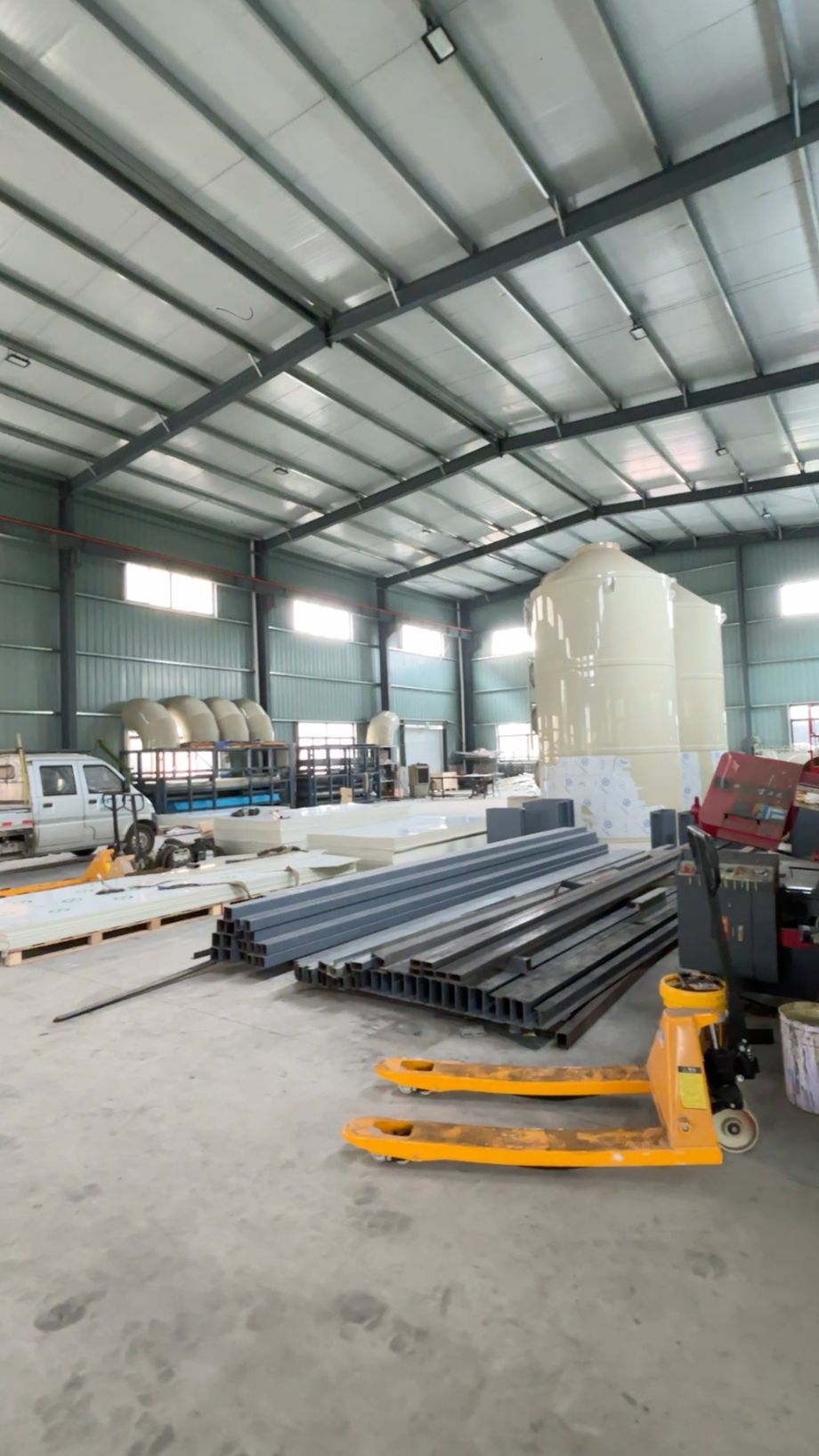
Most plant walkthroughs skip past the tanks, rectifiers, and hoists without a second glance, yet these three pieces of equipment quietly decide whether a production line runs smoothly or stalls. A well-designed storage tank isn't just a steel box; the internal baffle pattern, nozzle placement, and material compatibility with trace chemicals all influence how evenly a batch mixes and how fast it can be drained without cavitation. Rectifiers, especially those feeding electroplating or anodizing lines, deserve scrutiny for their ripple percentage and thermal derating curves—cheap units often claim a full current rating but can't hold it once the cabinet temperature climbs past 40°C. Hoists, too, hide their real limitations in duty cycle and reeving arrangements, not just the maximum hook load printed on the nameplate.
What separates a forgettable rectifier from one that earns a second look is how it behaves under partial load and shifting line voltage. A unit with passive harmonic filtering and a well-laid-out bus bar will keep ripple under 3% without needing active cooling tricks, while a poorly matched transformer can push ripple high enough to cause dull, streaky plating. Similarly, double-wall tanks with a vacuum leak detection port and sloped bottoms for full drainage save hours of cleaning between product changeovers—details that rarely show up in a glossy brochure but matter more than raw capacity. On the lifting side, hoists with inverter-duty motors and true thermal protection can handle frequent starts without tripping, unlike standard motors that overheat when the cycle count climbs.
A closer look also means checking how these components age and what happens when they're pushed slightly beyond their comfort zone. Tanks with reinforced top flanges and properly sized agitator mounting pads resist fatigue cracking from constant vibration; without that, weld seams near the mixer become the first failure point. Rectifiers that use conformal-coated control boards and sealed potentiometers survive humid, corrosive atmospheres far longer than open-frame designs. And hoists fitted with load-sensing variable frequency drives can creep a heavy fixture into place without snapping the chain or shocking the structure—capability that standard contactor-controlled hoists simply don't offer. These aren't exotic upgrades; they're the engineering details that keep downtime off the shift report.
Downtime Arithmetic: Why Spare Parts Strategy Shapes Your Choice
Every minute a machine sits idle carries a price that rarely appears on a standard balance sheet. Production stops, delivery promises slip, and the ripple effect hits customer trust before the repair crew even arrives. This is where spare parts strategy stops being a back-office detail and becomes the quiet architect of your operational resilience.
The arithmetic is brutally simple on the surface: the cost of holding an extra bearing or sensor is visible, while the cost of not having it hides in lost hours and emergency freight. But skimping on inventory often flips the equation. A single unplanned stoppage can erase months of savings from minimized stock levels.
Smart manufacturers treat spare parts as a deliberate trade-off, not an afterthought. They map failure probabilities against lead times, segment parts by criticality, and accept that some redundancy is not waste but insurance. Your choice of equipment should be shaped by how easily you can keep it alive when something breaks at 3 a.m.
Custom Builds vs. Standard Lines: Reading Between the Quotes
A side-by-side quote rarely tells the whole story. Custom builds often look surprisingly close to standard lines on paper, especially when the supplier buries charges for non-recurring engineering, fixture setup, or first-article inspection in a separate line item. Those figures show up later, usually after the purchase order is signed. Standard lines, by contrast, carry amortized tooling and mature assembly routines, so the price you see is closer to the price you pay.
The bigger difference is what happens when something changes. A standard line tolerates small volume swings without re-quoting, because the supply chain already has buffer stock and alternate sources. A custom build locks you into a specific bill of materials, and even a minor revision can trigger a new lead time and a fresh set of drawings. Reading between the quotes means asking not just what gets built, but who owns the leftover inventory, who pays for revalidation, and how long a design freeze actually lasts.
Questions to Ask a Supplier Before Signing Anything
Before you commit, ask the supplier to show actual production data from the last three months — not just a glossy capacity chart. Request order quantities for their top two clients, and ask whether your product would run on the same line or a separate one. If they stall on sharing numbers or won’t let you speak with a current customer, walk away. A supplier who can’t provide references is usually hiding something about quality or delivery.
Payment structure deserves more attention than the unit price. Find out exactly what deposit they expect, when the balance is due, and whether they accept third-party inspection before final payment. Also clarify who owns the molds or tooling if you’re paying for them, and what happens to your deposit if the goods ship more than a week late. Favor terms that tie final payment to a passed inspection rather than to the ship date.
Ask how they define an acceptable defect rate and what their rework or replacement process looks like. Request samples from a recent production run for a similar product, not from their showroom. If they claim a zero-defect record, push harder — every factory has returns, and the ones that admit it usually have a system to handle them.
FAQ
Start by checking whether they actually run their own plating line or just sell parts. A supplier that plates in-house understands the daily headaches—bath chemistry drift, anode shadowing, tank corrosion. Ask how they handle ventilation and mist control, because hard chrome generates nasty fumes. If they can't talk specifics about fume scrubbers and rectifier ripple, walk away.
It's make or break. Hard chrome lines run hot and aggressive chemicals, so something will eventually need adjustment—a pump seal, a bus bar connection, a rectifier board. If the company takes three weeks to answer an email, your downtime eats your profit. Ask about response times, spare parts inventory, and whether they offer remote troubleshooting. A good supplier will have someone who knows your tank dimensions by heart, not a call center.
General suppliers often treat hard chrome as just another plating process, but it isn't. Hard chrome requires higher current densities, tighter temperature control, and special anode materials like lead alloy. A specialist will understand things like etch current reversal, the need for robust bus bars, and why standard PVC tanks might not hold up. They'll also design around the massive hydrogen evolution and misting that come with chrome plating.
Look at the welds and the material thickness, not just the price tag. For hard chrome, tanks often need to handle elevated temperatures and chemical attack, so polypropylene or PVC with proper reinforcement is a must. Check whether they use continuous welding rather than spot welding on liners. Ask about the tank's expected lifespan under continuous use—some cheap tanks will bow or crack within two years because of thermal cycling.
The rectifier is the heart of the process. Hard chrome is very sensitive to ripple—too much ripple gives you dull, cracked deposits. A good supplier will recommend a rectifier with low ripple (under 5% at full load) and explain why air-cooled vs. water-cooled matters for your shop. They should also discuss ramp-up controls, polarity reversal for etching, and whether you need constant current or constant voltage modes for different jobs.
Absolutely, but don't just ask for the polished success stories. Ask for a customer who had a similar setup size and similar plating thickness requirements. Then call them and ask what went wrong during installation and how the supplier handled it. That'll tell you more than any brochure. If a company hesitates to give references or only offers one, that's a red flag.
The biggest mistake is focusing only on the initial equipment price and ignoring energy consumption and maintenance costs. Cheap rectifiers and undersized cooling systems end up costing more in rejected parts and electricity. Another mistake is not planning for future expansion—adding a larger tank or a second rectifier later can force a complete layout redesign. Also, many buyers forget to check local wastewater and air emission compliance before buying, then have to retrofit expensive control systems.
Never compare quotes line by line unless the specifications are identical, which they rarely are. One quote might include automatic bath temperature control and another might leave it out. Make a checklist of must-haves: tank material and thickness, rectifier ripple spec, ventilation CFM, anode placement, and control system features. Then ask each supplier to confirm those items in writing. Cheap quotes often hide missing safety interlocks or thinner bus bars that will burn out under full load.
Conclusion
When upgrading a hard chrome plating line, the equipment you already run tells you more than any glossy brochure. Look at where your current tanks, rectifiers, and hoists struggle—leaks, voltage drift, or hoist jerk—and those weak points map directly onto what the next system must handle. A supplier who asks about your existing line before quoting is already ahead, because durability claims mean little unless they’ve survived the same chemical bath and thermal cycling you’ll put them through. Pay attention to the rectifier’s ripple under load and the tank’s seam construction, not just the listed amp rating. Downtime is where money bleeds, so ask how quickly spare parts can ship and whether the hoist’s gearbox is off-the-shelf or a custom wait. This kind of shop-floor arithmetic shapes whether a standard line or a custom build actually costs less over five years.
Reading between the quotes means comparing more than line-item prices. A custom build might hide engineering fees in a low base price, while a standard line could force you to accept a rectifier that runs hot at your required current density. Before signing anything, ask the supplier to walk you through three recent installations that match your part size and volume—not just one flagship project. Request the maintenance log for a reference customer, not a sales call. Ask what fails first on their equipment and how they handle warranty labor when you’re not near their service center. The right company answers those questions with specifics: bus bar sizing, anode spacing, hoist duty cycle. The wrong one offers reassurance. Your future plating line will inherit every corner cut today, so choose the partner whose answers survive the same acid test as their equipment.
Contact Us
Contact Person: hayyr
Email: [email protected]
Tel/WhatsApp: 8613082110525
Website: https://www.jundaelectroplating.com