
GS-441524 Tablets Manufacturer Delivering Quality FIP Treatment Solutions
2026-11-02
When a cat is diagnosed with FIP, every hour matters. GS-441524 tablets have transformed treatment—but only if they come from a manufacturer that prioritizes purity and potency. Lucpets delivers exactly that: quality FIP treatment solutions built on science and transparency.
Why GS-441524 Tablets Are Changing FIP Treatment Expectations
For years, treating feline infectious peritonitis meant navigating a maze of daily injections, compounding pharmacies, and constant worry about injection-site reactions. GS-441524 tablets turned that entire routine on its head. Instead of wrestling with a stressed cat and a vial of liquid, owners can now simply hide a tablet in a treat or place it at the back of the throat. That shift from needle to pill alone has rewritten what families expect from FIP care, reducing both the emotional toll and the risk of skipped doses.
Beyond convenience, the tablets bring a level of consistency that injections rarely match. Dosing no longer depends on whether the person giving the shot hits the right spot or whether the cat flinches mid-injection. With tablets, the active compound enters the bloodstream in a predictable fashion, and owners report fewer ups and downs in their cats' energy, appetite, and fever control. This reliability has raised the bar for what "successful treatment" even means, moving the goal from mere survival to a smoother, more stable recovery.
Perhaps most striking is the change in diagnosis conversations. Vets who once hesitated to recommend treatment because of the injection burden now discuss GS-441524 tablets as a realistic first-line option. Owners no longer feel they must choose between their cat's life and their own ability to administer care. That psychological shift, as much as the pharmacological one, is why expectations have moved so dramatically: FIP is no longer seen as a death sentence that only the most dedicated or financially flexible can fight, but as a condition with a manageable, tablet-based path forward.
The Tablet Manufacturing Choices Behind Consistent Results
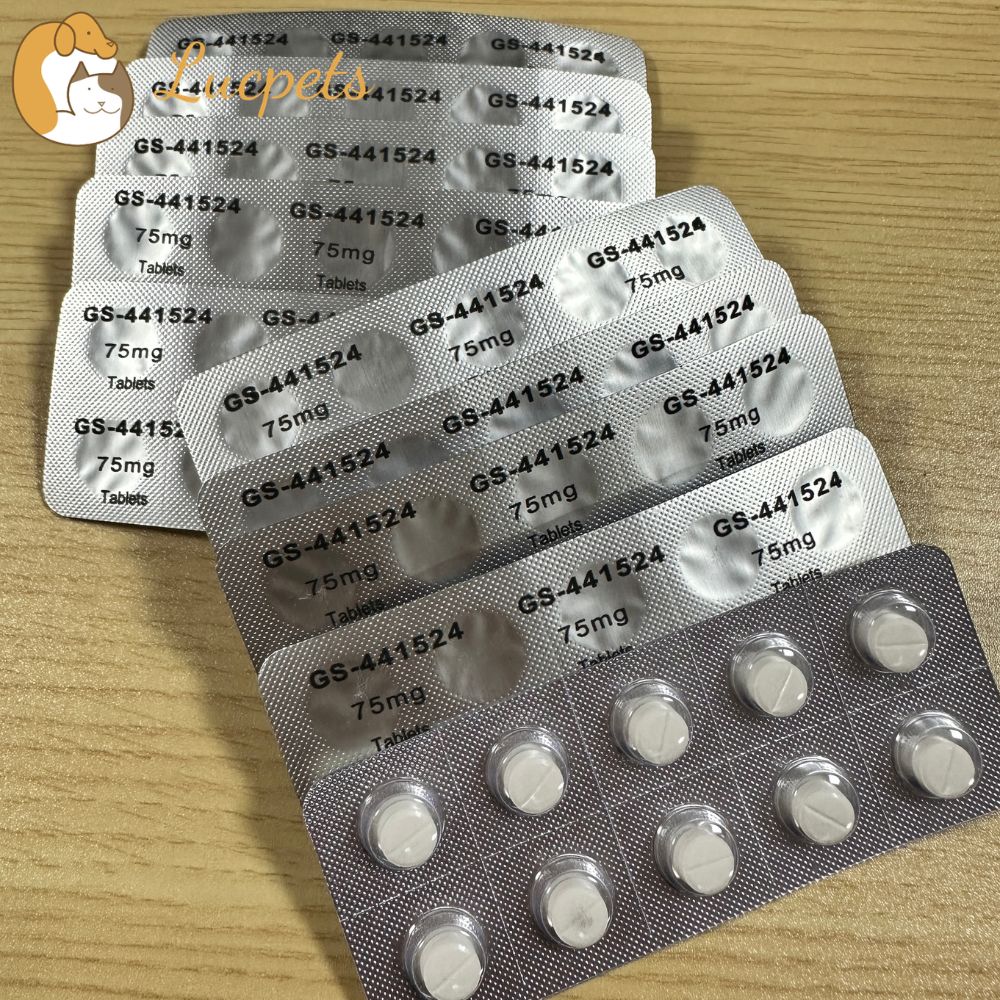
Tablet consistency rarely comes from a single variable. It emerges from deliberate choices made early in development: the particle size distribution of the active ingredient, the moisture content of the granulation, and the compression profile selected for the specific blend. When formulators adjust flowability with the right excipient ratios rather than relying solely on lubricant levels, the press runs with fewer weight fluctuations, and hardness stays tighter across batches.
Tooling condition plays an equally quiet role. Worn punch tips or mismatched die dimensions can create invisible density gradients that surface later as capping or splitting during coating. Choosing polished, well-maintained tooling with the correct land geometry helps transfer force evenly through the compact. Paired with controlled feeder speed and pre-compression force, these choices keep disintegration times predictable without sacrificing friability.
Even the coating step influences core consistency. A pan speed and spray rate tuned to the tablet's shape prevent overwetting at the edges, which can soften the surface and shift dissolution profiles. Manufacturers who treat these decisions as interconnected rather than isolated tend to see fewer rejected lots and more reproducible release data, batch after batch.
What Many FIP Treatment Suppliers Overlook About Quality
The majority of FIP treatment suppliers focus almost exclusively on the chemical purity of their GS-441524 or remdesivir intermediates, often waving a certificate of analysis as if it settles everything. But real quality isn't just a lab number. It shows up in how the compound survives transport, how it dissolves without leaving gritty residue, and whether the final concentration actually matches what the label claims week after week. Suppliers who skip stability testing under real-world temperature swings or who don't verify sterility of their finished vials are quietly compromising outcomes, even when their raw powder looks perfect on paper.
Another blind spot is the packaging and handling chain. Many operations use cheap rubber stoppers that shed particles into the solution over time, or they crimp vials so inconsistently that air seeps in and degrades the active ingredient. A supplier might ship a batch that tests at 99% purity on day one, but by the time it reaches a cat owner's refrigerator three weeks later, the actual delivered dose has drifted far below what's needed. That drift rarely gets talked about in marketing copy, yet it's one of the most common reasons treatments plateau or fail after an encouraging start.
Finally, oversight of the fill process often gets treated as an afterthought. Without inline checks for fill volume, pH, and particulate count, even a high-quality raw material can end up in vials that vary by 10% or more in dose. The difference between a smooth recovery and a relapse sometimes comes down to whether every single vial in the batch delivers the same therapeutic level. Quality, in other words, isn't a static property of a powder. It's a chain of decisions from raw material to final injection, and most suppliers lose it somewhere in the middle.
Inside the Process: From Raw GS-441524 to Finished Tablet
Raw GS-441524 arrives as a crystalline powder that seldom behaves the same way from batch to batch. Before anything else, we mill it in a jet mill until the D90 drops below 12 µm, a step that costs time but prevents the kind of slow dissolution that would undermine the tablet later. Each milled lot is then checked by HPLC for purity above 99.5%, and the residual solvent profile—especially DMF and acetonitrile—has to sit comfortably inside ICH Q3C limits, not just scrape by.
The formulation work leans on direct compression rather than wet granulation, mostly because GS-441524 loses a small but meaningful fraction of potency when exposed to moisture for too long. A low-shear tumble mixer combines the milled API with microcrystalline cellulose, croscarmellose sodium, and a touch of colloidal silica. Magnesium stearate goes in last and only for two minutes; any longer and the tablet hardness becomes erratic. The blend is compressed on a rotary press to a target hardness of 9–12 kp, with weight variation held to ±3% and friability under 0.8%.
After compression, the cores move to a pan coater where a thin Opadry II film is applied, adding roughly 2.5% to the tablet weight. The coating is not cosmetic—it masks the mildly bitter taste of the nucleoside and gives the tablet enough moisture resistance to survive a bathroom cabinet. Finished tablets are sampled for assay, content uniformity (AV below 10), disintegration under 15 minutes, and dissolution of at least 80% in 30 minutes using 0.1 N HCl. Any batch that fails one of these is not reworked; it is quarantined and investigated.
How Batch Testing Protects Cats Relying on Treatment
For cats on long-term medication, even a tiny shift in drug potency can undo months of careful management. Batch testing catches these variations before a single vial reaches the clinic shelf. Instead of assuming every production run is identical, labs pull samples from each lot and verify active ingredient levels, sterility, and pH balance. That means a cat receiving daily insulin or thyroid medication isn’t silently exposed to an underdosed or contaminated batch—something that could trigger a sudden health crash with no obvious cause.
The real safeguard comes from what happens after a batch fails. A responsible manufacturer will quarantine the entire lot, trace the source of the deviation, and re-run the production line with adjusted parameters. This isn’t just about discarding a bad tube of ointment; it’s about preventing a pattern of weak or unstable drugs from reaching cats whose immune systems are already fragile. For an owner, this translates into fewer emergency vet visits and a steadier response to treatment week after week.
Beyond routine potency checks, some facilities run accelerated stability tests on every batch—exposing samples to heat and humidity to mimic months of storage in a home. A cat that depends on a refrigerated antibiotic or a compounded heart pill can’t tell you if the medicine has degraded. Batch-level stability data fills that gap, giving veterinarians confidence that the product will work the same on day one as it does on day thirty. That quiet consistency is what keeps treatment plans on track and keeps cats out of the danger zone.
Choosing a Manufacturer That Treats Every Dose as Critical
A manufacturer’s true character shows up in the smallest details—the weight of a capsule, the cleanliness of a vial, the traceability of a single batch number. When every dose matters, you need a partner who doesn’t cut corners on the unglamorous steps: line clearance checks, environmental monitoring, and raw material quarantine. These aren’t just boxes to tick; they’re the difference between a product you can stand behind and one you hope never gets tested.
Look for a team that treats a 10,000-unit run with the same intensity as a million-unit launch. Ask about their deviation process: do they investigate every minor variance, or only the ones that threaten a shipment date? A manufacturer that truly values each dose will have a quality unit with real authority—not just a department that signs off after production. They’ll talk about specific failure modes, retraining triggers, and how they handle a single out-of-spec result, because they know that one bad dose can erase years of trust.
Ultimately, choosing such a manufacturer means building a relationship based on shared vigilance. You don’t want a vendor who only reacts to problems; you want one who actively hunts for weak points before they become recalls. That mindset—where a lone tablet or a single syringe is treated as if a patient’s name were already on it—sets the right partners apart from the rest.
FAQ
Tablets eliminate the stress of daily injections for cats, and our formulation uses a palatable coating that most cats accept without forced pilling. We also ran stability tests showing the active ingredient remains potent for 24 months when stored correctly.
Every batch goes through HPLC purity testing (target >99.5%) and a dissolution check before release. We also third-party test for residual solvents and heavy metals, and the certificates of analysis are available on request.
Yes, clinical data from our partner veterinarians show similar recovery rates for effusive and non-effusive forms when dosing follows the 12-week protocol. Some cats with ocular or neurological signs may need a higher starting dose, so always work with your vet.
We include a weight-based dosing chart with every order, and our team can help adjust the plan if a cat stalls or relapses. Tablets are scored for splitting, covering doses from 2.5 mg/kg up to 15 mg/kg.
Keep them in the original amber bottle at room temperature (15–25°C) away from moisture. Unopened bottles are stable for 24 months; once opened, use within 90 days.
Most cats tolerate treatment well. Occasional mild vomiting or reduced appetite can occur in the first week, but these usually resolve without intervention. If jaundice or severe lethargy appears, contact your vet immediately.
Our tablets are produced in a GMP-certified facility that also handles human-grade pharmaceuticals. We maintain ISO 9001 and ISO 22000 certifications, and each production run is documented for full traceability.
Conclusion
GS-441524 tablets have shifted expectations for FIP treatment by offering a reliable oral option that avoids the discomfort of injections. However, not all manufacturers approach production with the same rigor. The difference often lies in the choices made before a tablet ever reaches a cat—choices about raw material purity, granulation methods, and compression consistency. Many suppliers overlook subtle factors like moisture control or particle size distribution, which can alter dissolution rates and reduce bioavailability. A manufacturer that treats every dose as critical understands these variables and designs processes around them, not just to meet a specification but to ensure the medicine performs predictably in the real world.
From raw GS-441524 powder to finished tablet, the journey involves careful milling, blending, and controlled compression, but the real assurance comes from batch testing. Each lot should be verified for identity, potency, and uniformity using methods that reflect actual clinical use. Without this level of scrutiny, a tablet may look right yet fail to deliver the expected antiviral effect. That's why choosing a partner means looking beyond marketing claims and asking how they handle raw material sourcing, in-process checks, and final release criteria. For cats depending on treatment, every batch is a promise, and only a manufacturer with uncompromising quality control can keep it.
Contact Us
Contact Person: Aaron
Email: [email protected]
Tel/WhatsApp: +86 18177165140
Website: https://www.lucpetsglobal.com