
Flat Rectangular Wire Solutions: OEM Reduction Mill Benefits and Applications
2026-02-14
In the fast-paced world of manufacturing, efficiency and precision are paramount. Introducing the GRM Reduction Mill, a game-changer for OEMs seeking innovative solutions with flat rectangular wire. This cutting-edge technology not only streamlines production but also unlocks a realm of benefits and applications that can transform your operations. From enhanced material strength to cost-effective processes, discover how our advanced mills are reshaping industry standards. Dive in to explore why leading manufacturers are turning to GRM for their wire-fabrication needs—your journey to optimized performance starts here.
How Flat Rectangular Wire Transforms Manufacturing Efficiency
In the world of manufacturing, flat rectangular wire is quietly reshaping production lines by addressing long-standing inefficiencies. Unlike traditional round wires, its unique geometry allows for tighter winding and more compact designs, reducing material waste and space requirements. This streamlined approach not only cuts costs but also accelerates assembly processes, as components fit together seamlessly with fewer adjustments needed.
Beyond just saving space, this wire's enhanced surface area improves heat dissipation and electrical conductivity, leading to more reliable performance in motors and transformers. Manufacturers report fewer failures and longer lifespans for their equipment, which translates into less downtime and maintenance. Over time, these incremental gains accumulate into significant boosts in overall productivity, making operations leaner and more responsive to demand.
The adaptability of flat rectangular wire opens doors to innovative applications, from high-precision medical devices to robust automotive systems. By enabling custom shapes and configurations, it empowers engineers to design with greater flexibility, pushing the boundaries of what's possible. This forward-thinking material isn't just a minor upgrade—it's a catalyst for smarter, faster, and more sustainable manufacturing practices that keep industries competitive.
Key Advantages of OEM Reduction Mills in Modern Wire Production
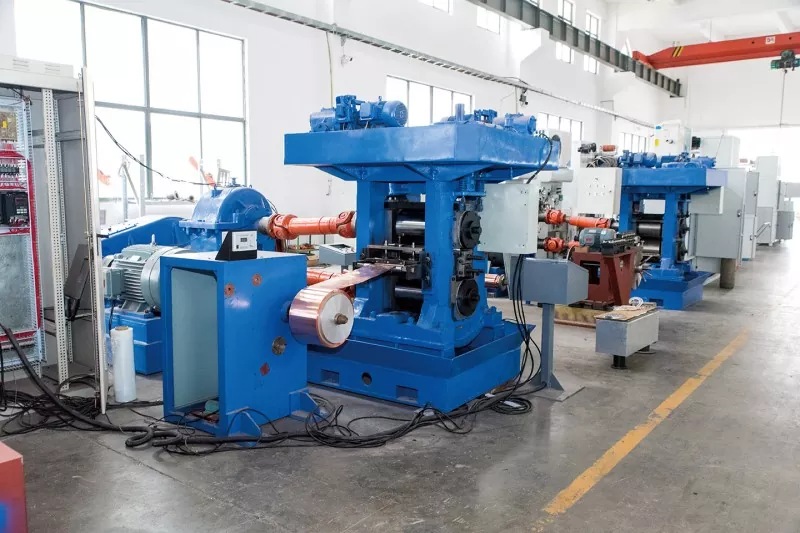
In modern wire manufacturing, OEM reduction mills are prized for their tailored design and robust performance. Unlike generic options, they integrate seamlessly with existing production lines, enhancing operational efficiency by reducing downtime and maintenance needs. These mills often feature advanced cooling systems and precision controls, allowing manufacturers to meet tight tolerances and produce consistent, high-quality wire for applications ranging from automotive to electronics. The custom engineering support from OEM providers ensures mills adapt to specific material challenges, such as handling specialty alloys, which boosts overall productivity and product reliability.
Another standout benefit of OEM reduction mills lies in their cost-effectiveness over the long term. By collaborating directly with OEM suppliers, wire producers can optimize energy consumption and material usage, leading to significant savings. These mills typically incorporate innovations like automated lubrication and real-time monitoring, which minimize waste and extend equipment lifespan. This proactive approach not only lowers operational costs but also supports sustainable manufacturing practices, making OEM mills a strategic investment for companies aiming to stay competitive in a fast-paced market.
OEM reduction mills also drive innovation by enabling flexibility in wire production processes. With custom configurations, manufacturers can quickly switch between different wire diameters and compositions, responding to market demands with agility. This adaptability is enhanced by features such as modular components and user-friendly interfaces, which streamline training and reduce setup times. Ultimately, these advantages position OEM mills as essential tools for achieving high precision and scalability, empowering wire producers to meet evolving industry standards and customer expectations.
Industry-Specific Applications: Where Precision Wire Shines
In industries where the margin for error is razor-thin, precision wire steps into the spotlight as an unsung hero. Its applications are far from generic—whether it's guiding delicate medical instruments through the human body or forming the intricate circuitry in aerospace navigation systems, this specialized material offers unmatched reliability and performance. The durability and exact dimensions of precision wire allow it to thrive in environments where standard alternatives would falter, making it indispensable for tasks that demand both strength and subtlety.
Take the electronics sector, for instance. Here, precision wire isn't just a component; it's the backbone of miniaturized devices that power our daily lives. From high-speed data transmission in servers to the fine connections in wearable tech, its consistency ensures that signals remain clear and devices operate seamlessly. Similarly, in automotive manufacturing, precision wire plays a critical role in safety mechanisms like airbag sensors, where even a slight imperfection could lead to catastrophic failure. It's this blend of toughness and exactitude that sets it apart in fields where compromise isn't an option.
Beyond the obvious high-tech realms, precision wire finds its niche in more traditional settings as well. In jewelry crafting, artisans rely on it to create detailed, long-lasting pieces that withstand wear and tear. Meanwhile, in industrial automation, it enables precise control of robotic arms, enhancing efficiency and reducing downtime. By adapting to diverse needs—from the microscopic to the robust—precision wire proves its versatility, ensuring that every application benefits from its tailored performance and resilience.
Enhancing Product Performance with Customized Flat Wire Solutions
In today's competitive engineering landscape, where every component can tip the scales toward success or failure, opting for customized flat wire solutions offers a direct path to enhancing product performance. Unlike off-the-shelf round wires, which might not fully align with your design's unique demands, flat wires can be meticulously tailored to fit tighter spaces, improve heat dissipation, and reduce electromagnetic interference. This precise customization means your devices can operate more reliably, whether they're part of advanced medical equipment or next-generation automotive systems, ensuring that performance isn't just maintained but optimized for peak efficiency.
What sets these solutions apart is their ability to transform standard applications into high-performance assets through thoughtful design adaptations. For instance, in aerospace or robotics, where weight and space are at a premium, flat wires can be engineered with specific alloys and configurations to boost conductivity while minimizing bulk. By collaborating closely with manufacturers, you gain access to innovations like laminated structures or integrated shielding that address common pain points like signal loss or mechanical stress, creating a seamless integration that elevates the entire product's functionality without compromising on durability.
Ultimately, leveraging customized flat wire solutions isn't just about meeting specifications—it's about driving forward the next wave of product evolution. As industries push boundaries in speed, connectivity, and energy efficiency, these bespoke components provide the flexibility to adapt to emerging challenges, from enhancing power delivery in electric vehicles to ensuring precision in smart devices. By investing in this tailored approach, you're not only solving immediate engineering hurdles but also building a foundation for sustained innovation, where every wire plays a strategic role in outperforming the competition.
Sustainability and Cost Benefits in Reduction Mill Operations
When we discuss reduction mills, it's not just about squeezing out metal from ores anymore—it's about squeezing out value in ways that boost both the bottom line and the planet. These operations are finding clever paths to sustainability that often start with energy efficiency. For instance, by integrating advanced heat recovery systems, mills can recycle waste heat from the smelting process to pre-heat incoming materials, slashing energy consumption by as much as 15-20%. This isn't just a green checkbox; it directly trims operational costs, making the mill leaner and more competitive. Beyond energy, water recycling initiatives are cutting freshwater usage dramatically, which not only conserves a precious resource but also reduces treatment and disposal expenses. It's a win-win where environmental stewardship drives financial gains.
Material efficiency is another frontier where sustainability and cost savings intertwine tightly. Modern reduction mills are adopting precision technologies like automated sorting and real-time analytics to minimize material waste. By optimizing the mix of raw inputs and reducing scrap rates, they achieve higher yields from each ton of ore, which translates to lower raw material costs per unit of output. This careful handling extends the life of equipment too—less abrasive waste means fewer breakdowns and lower maintenance bills. It's a subtle shift from just processing more to processing smarter, where every saved kilogram of material boosts both ecological and economic resilience.
Moreover, the push for sustainability opens doors to innovative revenue streams and risk mitigation. As regulations tighten and consumer preferences tilt toward eco-friendly products, mills that adopt cleaner technologies can access premium markets or carbon credits, adding new income layers. For example, capturing and repurposing by-products like slag for construction materials turns a disposal headache into a profit center. Financially, this diversification buffers against volatile commodity prices, while environmentally, it closes loops in the production cycle. In essence, reducing the mill's footprint isn't just about cutting emissions—it's about building a robust, future-proof operation where cost benefits and sustainability are inseparable partners in growth.
Innovative Trends Shaping the Future of Wire Processing
The wire processing industry is undergoing a significant transformation driven by advances in automation and artificial intelligence. Today, manufacturers are increasingly integrating robotic systems equipped with smart sensors to handle tasks like cutting, stripping, and crimping with unprecedented precision. These innovations not only boost production speeds but also reduce human error, leading to higher quality and more reliable wire harnesses for applications ranging from automotive to aerospace. As AI algorithms become more sophisticated, they enable predictive maintenance and adaptive processing, ensuring that equipment operates efficiently while minimizing downtime.
Another key trend is the adoption of sustainable materials and eco-friendly practices in wire production. With growing environmental concerns, companies are shifting toward biodegradable insulation and recyclable conductors, which help reduce waste and carbon footprints. This shift is complemented by energy-efficient processing methods, such as laser stripping and low-emission crimping, that align with global sustainability goals. By prioritizing green innovations, the industry is not only meeting regulatory demands but also appealing to consumers who value environmentally responsible products, setting a new standard for future developments.
Furthermore, the rise of Industry 4.0 is fostering greater connectivity and customization in wire processing. Through the Internet of Things (IoT), machines can communicate in real-time, allowing for seamless data exchange and remote monitoring across production lines. This connectivity enables manufacturers to offer bespoke wire solutions tailored to specific client needs, from complex configurations in medical devices to high-performance cables in renewable energy systems. As these trends converge, they are reshaping the industry towards a more agile, efficient, and customer-centric future, where innovation continues to drive progress.
FAQ
Flat rectangular wire, often made from copper or aluminum, features a distinct rectangular cross-section that allows for efficient space utilization in windings. In OEM reduction mills, it's primarily used to manufacture compact, high-performance coils for motors and transformers. This wire shape reduces eddy current losses and enhances thermal management, making it ideal for applications demanding high power density and reliability.
Adopting flat rectangular wire can lead to significant improvements in efficiency and cost-effectiveness. Its geometry allows for better slot fill in motor windings, which increases power output while reducing material waste. This translates to lighter, more compact motors with improved thermal performance, ultimately lowering production costs and enhancing product competitiveness in demanding markets like automotive and industrial automation.
Flat rectangular wire excels in high-frequency scenarios due to its reduced skin effect compared to round wire. The wider surface area minimizes resistance at higher frequencies, leading to lower AC losses and improved efficiency. This makes it particularly valuable in applications like fast-switching inverters, high-speed motors, and power electronics, where energy savings and heat reduction are critical.
By optimizing material usage and improving energy efficiency, flat rectangular wire supports greener manufacturing. Its precise geometry reduces scrap during winding, while the enhanced electrical efficiency lowers energy consumption in end-products. This aligns with circular economy goals, helping OEMs meet regulatory standards and appeal to eco-conscious consumers without compromising performance.
These solutions are transformative in industries such as electric vehicles (EVs), renewable energy, and aerospace. For EVs, they enable more efficient traction motors that extend battery range. In wind turbines, they improve generator reliability. Aerospace applications benefit from the weight savings and durability, showcasing the wire's versatility in pushing technological boundaries across sectors.
Initial challenges include higher tooling costs for specialized winding equipment and the need for precise handling to avoid insulation damage. However, these can be mitigated through phased adoption, staff training, and partnering with experienced suppliers. Long-term gains in performance and cost savings often outweigh the upfront investments, making it a strategic upgrade for forward-thinking manufacturers.
Conclusion
Flat rectangular wire solutions, driven by OEM reduction mills, are revolutionizing manufacturing efficiency by enabling high-speed, precision production with minimal waste. By transforming raw materials into uniform shapes, these mills streamline processes across industries. Their customizable nature allows for tailored wire designs that enhance product performance in demanding applications such as automotive systems and advanced electronics. This adaptability not only boosts mechanical properties but also supports sustainable practices through energy-efficient operations and material optimization, reducing costs while minimizing environmental impact.
In modern wire production, key advantages of OEM reduction mills include superior consistency and flexibility, which are critical for industry-specific applications like aerospace and medical devices where precision is paramount. As innovative trends shape the future of wire processing, these mills integrate smart technologies for real-time monitoring, further driving competitiveness. By combining sustainability benefits with advanced applications, flat wire solutions set a new standard, offering robust, cost-effective alternatives that meet the evolving needs of diverse sectors.
Contact Us
Contact Person: Rayna
Email: [email protected]
Tel/WhatsApp: 86 -173 1474 6343
Website: https://www.grmrollingmill.com/