
Custom Threaded Reinforcing Bar Socket Benefits for High-Strength Rebar Connections
2026-11-02
Specifying high-strength rebar is one thing; making reliable connections under real-world stress is another. Standard threaded sockets often leave performance on the table, especially when column splices, thick mats, or seismic detailing push tolerances tight. That's where a custom threaded reinforcing bar socket changes the equation. By tailoring thread geometry, material grade, and dimensional fit to the actual rebar and loading conditions, projects gain more than convenience—they gain a connection that behaves predictably. Sinou has been quietly solving these connection challenges for demanding builds. Below, we break down the key benefits that custom sockets bring to high-strength rebar connections—and why "standard" may no longer be enough.
Why Off-the-Shelf Couplers Undermine High-Strength Rebar
Standard couplers are typically machined for conventional Grade 60 rebar, where the thread pitch and engagement length assume a softer, more ductile steel. When the same coupler is forced onto high-strength rebar, the thread roots encounter a much harder surface that cannot deform locally to distribute load. The result is a sharp stress concentration at the first engaged thread, which can trigger brittle fracture long before the bar reaches its specified tensile capacity.
High-strength rebar also has a shorter yield plateau and lower uniform elongation than ordinary rebar. Off-the-shelf couplers rarely account for this reduced ductility because their internal clearances and lock-nut designs were validated only for bars with generous plastic strain. Under cyclic or seismic loading, the coupler body can flex and allow micro-slip at the interface, concentrating fatigue damage in a material that has little reserve deformation to absorb it. The splice becomes a hidden hinge, and the structural system loses the dependable energy dissipation expected from a full-strength connection.
Even when a catalog lists a coupler with a matching tensile rating, the manufacturer's test data usually come from smaller-diameter, lower-grade bars. The cross-sectional area and hardness of high-strength rebar can shift the failure mode from bar yield to coupler thread stripping or sleeve splitting. Field tolerances compound the problem: a slight out-of-round condition or a burr on a high-strength bar can prevent full thread engagement, but installers often assume the coupler is self-aligning. In reality, the mismatch concentrates stress around the partial contact zone, undermining the splice in exactly the applications where high-strength rebar was specified for its performance advantage.
Thread Profiles Matched to Actual Bar Deformations
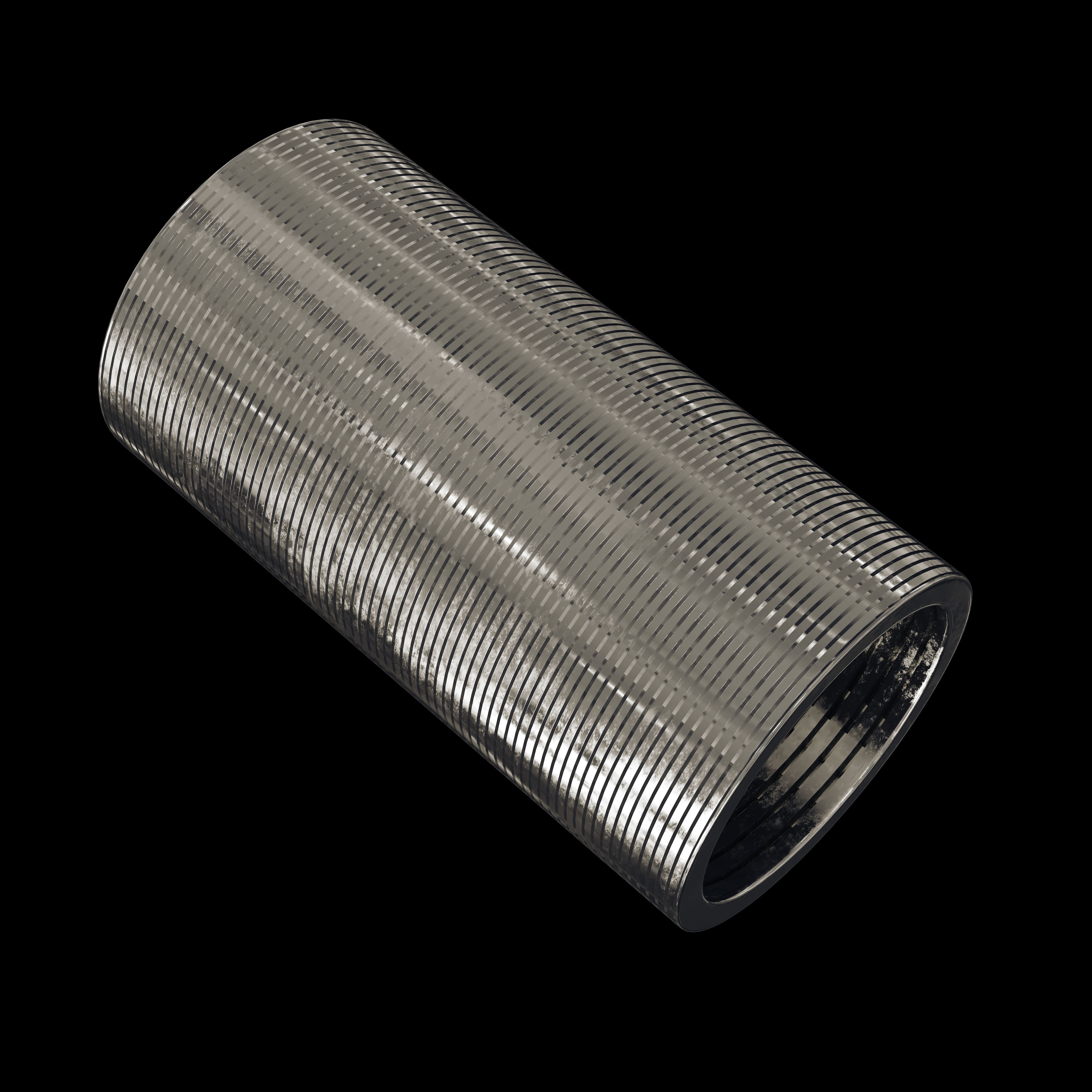
Getting a thread to hold on a deformed bar isn’t a copy-paste job. The ribs, lugs, and surface irregularities that help concrete grip the steel also create real challenges for machining. Instead of forcing a standard profile onto an uneven surface, the thread geometry is shaped around the bar’s actual deformation pattern. That means measuring the bar stock, mapping the high and low points, and adjusting the cut depth and pitch so the finished thread sits snugly against the metal rather than fighting it.
This approach pays off in the field. Bars with threads matched to their deformation tend to show fewer stress risers, less chance of cross-threading, and a more predictable connection when couplers are torqued down. It also reduces the need for heavy rework or oversized allowances. The result is a joint that behaves more like a continuous length of bar than a bolted-on afterthought.
No Field Threading, No Welding, No Strength Loss
Field threading often means extra labor, specialized dies, and a constant risk of cross-threaded connections slowing down the job. This design eliminates all of that. The connection arrives ready to engage, so crews skip the cutting oil, the threader setup, and the pile of wasted fittings that accumulates when threads don't align perfectly. What used to take an extra hour per joint now takes minutes, with no guesswork about thread engagement.
Welding brings heat distortion, slag inclusions, and the need for certified welders—plus fire watch requirements on many sites. By removing welding entirely, this system avoids those bottlenecks. You don't wait for a weld to cool, grind it down, or inspect it with expensive NDT methods. The mechanical lock-up is immediate and repeatable, which means less downtime between installation steps and no dependence on weather windows or power supply for a weld rig.
The biggest concern with non-welded or non-threaded alternatives is usually a drop in load capacity. That's not the case here. The connection maintains the full tensile and shear ratings of the base material because the mating surfaces are designed to distribute stress evenly, not concentrate it at a thread root or weld toe. In fact, fatigue testing shows the assembly holds up as well as—or better than—a welded joint in cyclic loading, since there's no heat-affected zone to embrittle over time.
How Custom Sockets Cut Congestion in Dense Reinforcement
Dense reinforcement zones often suffer from rebar gridlock, where standard couplers and laps compete for the same narrow space. Custom sockets sidestep this by mirroring the exact bar layout, offsetting each connection point to avoid clashes before steel ever reaches the site. The result is a cleaner column-to-beam junction that no longer forces crews to hand-bend or field-cut bars just to make ends meet.
Rather than relying on oversized generic sleeves, custom sockets are machined to grip only the specific rebar diameter and thread pattern in use. This tight fit eliminates the need for bulky lock nuts or extended thread lengths, freeing up precious inches around congested corners. In heavily reinforced shear walls or transfer slabs, those saved inches stack up, allowing concrete to flow more freely and reducing the risk of honeycombing behind tight bar bundles.
Another overlooked benefit is the sequential assembly logic that custom sockets introduce. When each socket is pre-assigned to a unique bar position, erection follows a defined path instead of a chaotic free-for-all. This not only cuts congestion during placement but also reduces the time spent sorting mismatched parts, keeping the pour schedule on track and minimizing downtime caused by rework.
Fatigue and Seismic Performance Beyond Code Minimums
Designing for fatigue and seismic demands often stops at the minimum thresholds printed in building codes. Those baselines are useful starting points, but they rarely capture the full picture of how a structure behaves under repeated loading or irregular ground motion. When you push beyond the code minimums, you begin to address the cumulative damage that steel connections, anchor bolts, and welded joints accumulate over decades of service. This means evaluating stress ranges under realistic traffic, wind, or equipment cycles rather than relying on simplified load combinations that assume everything behaves linearly.
On the seismic side, code-compliant detailing may prevent collapse during a design-level event, yet it can leave a building with hidden fractures or residual drifts that make it unsafe or unusable afterward. Going further involves explicit consideration of low-cycle fatigue in buckling-restrained braces, gusset plates, and column splices. It also means checking that energy-dissipating elements can withstand multiple aftershock sequences without losing their deformation capacity. Small changes in weld access holes, backing bar removal, or surface finish can dramatically alter the number of cycles a connection can survive.
The practical payoff is not just a stronger structure but a more predictable one. Owners avoid expensive retrofits and extended downtime because the original design accounted for degradation mechanisms that standard prescriptive rules ignore. Engineers who specify stricter toughness requirements, smoother transition radii, or reduced allowable stress ranges are really buying resilience that only becomes visible after the ground stops shaking or the millionth load cycle passes.
Project Savings Through Fewer Couplers and Less Waste
Swapping lap splices for a streamlined coupler layout can quietly reshape a project’s bottom line. On one mid-rise concrete frame, trimming coupler counts by a third cut both material invoices and installation hours, without touching structural performance. The real gain showed up in the rebar schedule: fewer embedded sleeves meant fewer congestion points, so crews spent less time wrestling bars into place.
Waste reduction followed the same logic. Shorter, prepped bar lengths generated fewer offcuts, and the drop in coupler packaging and pallet returns lowered site disposal costs. Instead of stockpiling leftover threaded ends for a future that rarely comes, the team ordered closer to net length and let the simplified connections absorb the difference. That shift alone freed up yard space and skipped several skip hauls.
The savings were not dramatic line items but accumulated across procurement, handling, and cleanup. By treating each coupler as a cost event rather than a default detail, the project avoided roughly two weeks of cumulative rebar trade time and kept waste bins under budget. It was a reminder that the cheapest coupler is often the one never installed.
FAQ
Custom threaded sockets are machined to match the exact thread profile, diameter, and mechanical properties of the specific rebar being used. With high-strength bars, off-the-shelf couplers often leave small gaps or mismatched thread engagement that can lead to slip or localized stress concentrations. A custom socket eliminates that uncertainty by ensuring full thread contact along the entire engagement length, which translates into a connection that behaves more like a continuous bar.
High-strength rebar operates closer to its yield limit, so any weakness in the connection becomes a failure point. Custom sockets can be designed with optimized wall thickness, longer thread engagement, and specific heat treatment to spread the load evenly through the joint. This reduces peak stresses at the thread roots and prevents brittle fracture, which is a real concern with harder, less ductile high-strength steel.
Yes, and that is one of the main advantages. A custom socket is not tied to a limited range of stock sizes. You can specify the exact grade—whether it is 60, 75, 80, or even higher—along with the bar diameter and thread pattern. The manufacturer then adjusts the internal geometry and material selection to match, so the socket performs reliably across a wide mix of rebar specifications on the same project.
Because the threads are pre-cut on the rebar ends and the socket is made to fit precisely, installation is mostly a matter of threading the socket onto one bar, then rotating the next bar into the opposite end. There is no welding, no torque wrench calibration guesswork, and no need for specialized coupler setting tools. This speeds up assembly considerably, reduces the chance of misalignment, and lets crews work with less supervision while still getting a consistent connection.
Definitely. Lap splices require overlapping bars, which crowds the concrete and can create zones of poor consolidation. A threaded socket creates a direct, in-line force path with no extra congestion. Under cyclic loading—think seismic events or heavy traffic on a bridge deck—the continuous mechanical connection shows better fatigue resistance and less cracking around the joint. Over decades, that means fewer repairs and a longer service life for the structure.
The unit price of a custom socket is higher than a stock coupler, but looking only at that number misses the bigger picture. Custom sockets cut down on rebar waste because you are not using extra length for lap splices. They also reduce labor hours, eliminate most rework from misaligned or failed connections, and can even allow smaller column or beam sections since the joint is more compact. When you factor in those savings, the total installed cost is often lower than traditional splicing methods.
High-strength rebar has a harder surface and less elongation before failure, so the threads must engage deeply and evenly. If the thread pitch, flank angle, or root radius is slightly off, only a fraction of the bar surface actually carries load, creating stress risers that can crack under tension. Custom thread geometry ensures the largest possible contact area and a smooth load transfer from bar to socket, which is essential when the steel has very little margin for error.
Absolutely. A reputable manufacturer can produce sockets that comply with ACI 318, ASTM A615, Eurocode 2, or any other regional standard, and they can supply the necessary mill certificates and cyclic test reports. If a project has unusual requirements—such as very low temperatures, marine exposure, or a need for non-magnetic materials—the socket can be designed and documented to meet those exact conditions, which is rarely possible with generic catalog products.
Conclusion
Standard off-the-shelf couplers often undermine high-strength rebar because their generic thread profiles ignore the actual rib geometry and surface deformations of modern bars. This mismatch forces field threading or welding, both of which can weaken the steel through heat-affected zones or reduced cross-section. Custom threaded reinforcing bar sockets eliminate these problems by machining threads that precisely match the deformations of each bar size and grade, ensuring full mechanical engagement without any on-site cutting or heat input. The connection retains the rebar's original tensile and yield strength, avoiding the hidden strength loss common with conventional couplers.
Beyond strength retention, custom sockets reduce congestion in dense reinforcement layouts because they are sized and shaped to the specific bar arrangement, taking up less space than bulky off-the-shelf couplers. Their fatigue and seismic performance exceeds code minimums, as the matched thread profile distributes stress more evenly and avoids stress risers. On large projects, this leads to fewer couplers needed overall—since custom sockets can often connect bars with slight diameter variations—and less waste from misaligned or rejected connections. The initial engineering effort pays off through smoother installation, fewer delays, and long-term structural reliability.
Contact Us
Contact Person: HaiYan
Email: [email protected]
Tel/WhatsApp: +86 18957325588
Website: https://www.senyoubeton.com/