

Choosing the Right Heterocyclic Intermediate Manufacturer for Your Pharma Needs
2026-07-26
In the fast-paced world of pharmaceutical development, the backbone of drug synthesis often lies in the quality and reliability of heterocyclic intermediates. Selecting the right manufacturing partner isn’t just about ticking boxes—it’s about ensuring seamless scale-up, regulatory compliance, and ultimately, patient safety. With decades of specialized expertise, DSL Chemicals stands at the forefront of this critical supply chain, delivering custom solutions that bridge the gap between laboratory promise and commercial reality. In this article, we explore what makes a heterocyclic intermediate manufacturer truly dependable, and why your next breakthrough might depend on the partnership you choose.
Why Your Heterocyclic Intermediate Supplier Needs Deep Process Chemistry Roots
When scaling up heterocyclic intermediates, the difference between a smooth campaign and a stalled project often lies in the supplier’s grasp of process chemistry fundamentals. It’s not enough to reproduce a lab-scale route; reaction kinetics, heat management, and work-up procedures must be adapted for plant-scale realities. A team with deep roots in process chemistry can anticipate exothermic events in ring-closing steps or identify when a seemingly minor byproduct will interfere with downstream crystallizations—saving months of troubleshooting.
Beyond safety and efficiency, process chemistry insight directly impacts yield consistency for complex heterocycles. Many of these molecules contain sensitive functional groups that degrade under prolonged heating or trace metal contamination. Suppliers who understand in situ monitoring and design of experiments (DoE) can optimize conditions to suppress dimerization during pyridine or pyrimidine formations, or maintain enantiomeric purity in chiral piperidine derivatives. This level of control is rarely achieved by relying on generic contract manufacturing partners.
Long-term partnership with such a supplier also builds institutional knowledge around your specific scaffold families. Through repeated campaigns, they develop nuanced understanding of impurity profiles and crystallization behaviors—intellectual capital that shortens development timelines for future analogs. This accumulated expertise becomes particularly valuable when regulatory questions arise, as a process-chemistry-driven team can provide detailed justifications for starting materials, genotoxic impurity controls, and batch-to-batch variability without scrambling for data.
The Custom Synthesis Advantage: Tailoring Scaffolds to Your Pipeline
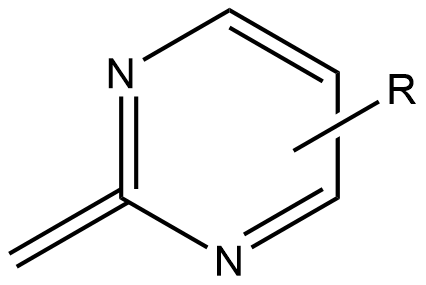
Every pipeline has its own rhythm—some projects move fast, others iterate slowly. Custom synthesis aligns with that pace, building molecular scaffolds that fit precisely into your existing workflow. You’re not locked into a catalog of off-the-shelf building blocks; instead, the chemistry adapts to your design, not the other way around.
When you tailor a scaffold, you’re not just filling a gap—you’re actively shaping the direction of your research. This means functional groups land exactly where you need them, protecting strategies are built around your downstream steps, and the entire sequence becomes more streamlined. The result is fewer compromises and fewer late-stage surprises that derail timelines.
Beyond the immediate convenience, there’s a quieter advantage: intellectual freedom. Because the scaffold is made for you, you retain full control over the synthetic route and the final IP landscape. It’s a way to keep your work distinct in a crowded field, without bending to the constraints of pre-made intermediates.
Quality Beyond the Certificate: Audit Trails That Keep Regulators at Ease
Certificates display a snapshot of compliance, but they rarely reveal the continuous effort behind the scenes. Regulators look for more than just a stamped document; they need to see the living proof of your quality processes. Audit trails become that proof, capturing every change, approval, and check along the production journey. When inspectors arrive, they find a transparent, chronological record that answers questions before they’re even asked, transforming a potentially tense visit into a straightforward review.
Instead of scrambling to assemble missing logs, teams can instantly pull up detailed histories for any batch, showing who did what and when. These trails aren’t just a safety net—they’re a demonstration of diligence that speaks louder than any certificate. Regulators gain confidence when they see you’re not hiding behind a paper shield but actively managing exceptions, deviations, and corrections in real time. This living system of documentation makes it clear that quality isn’t a periodic achievement, but a constant state of readiness.
The unexpected benefit of robust audit trails is their ability to reveal improvement opportunities that even internal teams might overlook. Patterns in near-misses or repeated adjustments surface naturally, allowing organizations to address root causes before they escalate into compliance gaps. When the next regulatory cycle begins, you’re not just presenting evidence; you’re telling a story of ongoing commitment, one that keeps auditors satisfied and your operations resilient in the face of evolving standards.
Scale-Up Without Setbacks: Gauging a Manufacturer’s Technical Range
A successful transition from prototype to full-scale production depends on a manufacturer's ability to handle technical complexity, not just promotional figures. A plant that excels in small batches may reveal hidden issues with material behavior, equipment limits, and process consistency when you need to scale up.
A deep evaluation goes beyond standard equipment lists. Look at whether they've worked with material combinations similar to yours and how they manage cumulative tolerances in multi-step processes. Also, understand their team's capability to handle unexpected problems—when a machine breaks down or supply chains snap, their technical prowess is truly tested.
Finally, direct conversations with the manufacturer's technical leadership, not just the sales team, will reveal their commitment to innovation and flexibility in adapting to your unique specifications. This nuanced scrutiny builds a solid foundation for scaling, ensuring growth doesn't come at the expense of quality.
Supply Chain Fluency: How a Proactive Partner Dodges Disruption
True supply chain fluency means moving beyond reactive firefighting to a state of seamless orchestration. It’s not just about tracking shipments—it’s about anticipating friction points before they become blockages. A proactive partner reads the subtle signals: a supplier’s delayed raw material delivery, a port congestion forecast, or shifting customs regulations. By weaving these insights into dynamic contingency plans, they keep goods flowing while others scramble.
The real advantage surfaces when disruption hits. While conventional providers revise forecasts and re-route shipments, a fluent partner has already actioned a pre-vetted alternate route, adjusted inventory buffers at regional hubs, and communicated changes with zero lag. This instinct for fluid adaptation turns potential bottlenecks into minor adjustments—preserving lead times, cost structures, and customer trust in the process. It’s supply chain management as a living, learning system, not a static plan.
The Real Cost of ‘Cheap’: Linking Intermediate Quality to API Success
When building APIs, the temptation to cut corners on intermediary services—like caching layers, message queues, or API gateways—can seem like a quick win for the budget. Yet, what appears cost-effective often conceals a mounting toll. A third-party rate limiter that struggles under peak load or a makeshift authentication proxy that sporadically fails does more than disrupt requests; it erodes developer trust and tarnishes the reputation of the entire platform. These hidden fractures spiral into expensive firefighting, where teams spend more time patching workarounds than delivering value. The initial savings vanish the moment the first on-call alert wakes someone at 3 a.m.
Success in API ecosystems isn’t merely measured by uptime percentages but by the seamless experience each dependency enables. When a payment processor’s integration stumbles because a message broker drops transactions, or a microservice chain breaks due to an underpowered service mesh, the impact ricochets beyond technical metrics—it reaches end users who simply perceive an unreliable product. Investing in intermediate quality, even if it doesn’t headline the architecture, builds a foundation where reliability isn’t an afterthought. It means choosing battle-tested components, designing for graceful degradation, and understanding that true cost includes the weight of broken promises down the line.
FAQ
Heterocyclic intermediates are organic compounds containing ring structures with at least one atom other than carbon (like nitrogen, oxygen, or sulfur). They serve as building blocks for active pharmaceutical ingredients (APIs) and often define the core pharmacological activity of a drug. Their structural diversity allows medicinal chemists to fine-tune bioavailability, metabolic stability, and target selectivity, making them indispensable in modern drug discovery.
Look beyond basic certifications. Request case studies that show multi-step synthesis in their core competency areas—especially challenging ring closures or functional group transformations. Ask about their yield optimization history, impurity profiling methods, and whether they have in-house catalysis or flow chemistry expertise. A technically mature partner will also offer route scouting and process development support, not just scale-up.
At minimum, they should operate under cGMP guidelines if they supply clinical trial materials, and follow ICH Q7 for APIs. Robust quality management includes full analytical method validation, stability testing per ICH conditions, and a transparent deviation/CAPA system. Additionally, check if they perform in-house genotoxic impurity assessments and can provide comprehensive certificates of analysis with every batch.
This can be a dealbreaker depending on your project. If your intermediate involves controlled precursors, high-energy reactions, or toxic reagents, you want a partner with explicit experience in those areas. Verify their safety record, EHS protocols, and whether they have dedicated facilities for potent compound handling. Clear communication about scheduling and regulatory permits upfront avoids costly delays later.
The biggest risk is underestimating the differences in mixing, heat transfer, and reaction kinetics at larger volumes. A compound that works flawlessly in a round-bottom flask can fail unpredictably in a pilot reactor. Watch for issues like polymorph changes, filtration difficulties, or exothermic runaways. Partner with a manufacturer that uses process analytical technology (PAT) and offers dedicated kilo-lab to pilot-scale optimization before full production.
Diversify your starting material sources and confirm that the manufacturer maintains safety stock of key raw materials. Insist on dual sourcing for critical intermediates whenever possible. Also, assess their geographic risk—a single-site manufacturer in a region prone to natural disasters or political instability may be vulnerable. Regular business continuity planning audits and transparent lead-time estimates are signs of a trustworthy supplier.
It's crucial. Before sharing your compound structure or synthetic route, have a well-drafted confidentiality agreement. Look for a manufacturer with a track record of respecting clients’ IP—some may even co-develop novel pathways that you can jointly patent. Avoid partners that serve your direct competitors without clear firewalls, and always clarify ownership of derivatives or improved processes developed during the collaboration.
Conclusion
Selecting a heterocyclic intermediate manufacturer goes far beyond reviewing a price list or a generic capabilities statement. The most reliable partners are those whose process chemistry foundations run deep—teams that can trace reaction pathways back to first principles, troubleshoot stubborn ring closures, and optimize regioselective steps without leaning on trial and error. When a manufacturer has genuine synthetic roots, early discussions shift from “Can you make this?” to “How can we make it better, cleaner, or more scalable?” That mindset proves indispensable when your pipeline calls for tailored scaffolds. Custom synthesis isn’t just about filling a purchase order; it’s about co-developing routes that respect your downstream API’s sensitivity to residual metals, polymorph control, or chiral purity. A partner who sees the scaffold as part of your final drug—not as an isolated commodity—will suggest modifications that shorten your synthetic sequence or sidestep patent cliffs, all while keeping your timeline on track.
Quality assurance, in turn, must be embedded in every campaign. A certificate of analysis is only as good as the audit trail behind it, and plants that maintain meticulous batch records, deviation logs, and fully traceable raw-material chains give regulators far less to question. Yet technical breadth matters just as much as paper compliance. The right manufacturer demonstrates true scale-up agility, moving from gram-scale medicinal chemistry support to multi-kilo campaigns without drastic changes in impurity profile or yield. Their engineering team understands heat transfer, mixing dynamics, and crystallization kinetics, not just the chemistry on paper. Meanwhile, supply chain fluency has become non-negotiable: strategic stocking of key building blocks, dual sourcing of critical reagents, and logistics networks that absorbed recent global shocks protect your clinical timelines. Ultimately, chasing the lowest unit price often obscures the true cost. An intermediate that barely meets spec, carries unidentified impurities, or varies lot-to-lot can erode API yield, delay milestones, and invite regulatory scrutiny. Investing in a partner who aligns process strength, quality rigor, and supply resilience pays off at every stage, from IND to commercialization.
Contact Us
Contact Person: Wei Zhang
Email: [email protected]
Tel/WhatsApp: 862163529955
Website: https://www.dslchem.com