
China Window Coverings Leading Styles for Modern Homes
2026-08-26
Walk through any modern home in China today and window coverings are no longer an afterthought. Roller shades, sheer curtains, and motorized systems now define how light and privacy shape a room. This post breaks down the styles leading that shift—and why ROLLERGY has become a name to know.
Roller Shades So Sleek They Almost Disappear
The first thing you notice is what isn't there. No dangling cords, no bulky valance, no stack of fabric fighting for attention. These roller shades sit so close to the glass that they read as part of the window itself—just a clean, uninterrupted plane of color or texture. When fully raised, the shade tucks into a cassette barely wider than the mounting bracket, leaving the view completely open.
What makes the disappearing act possible is a combination of slim engineering and quiet details. The tube diameter stays under an inch, the side channels hug the edges of the frame, and the hem bar is weighted to fall straight without swinging. Even the fabric is chosen for its ability to roll flat, so there's no bunching or uneven gaps when you adjust the height.
In a room with other focal points—art, a statement sofa, a view—these shades do their job and get out of the way. They filter light, cut glare, and give privacy, but they never become the thing you have to design around. That's the real beauty: by almost disappearing, they let everything else breathe.
Motorized Blinds That Respond Before You Ask
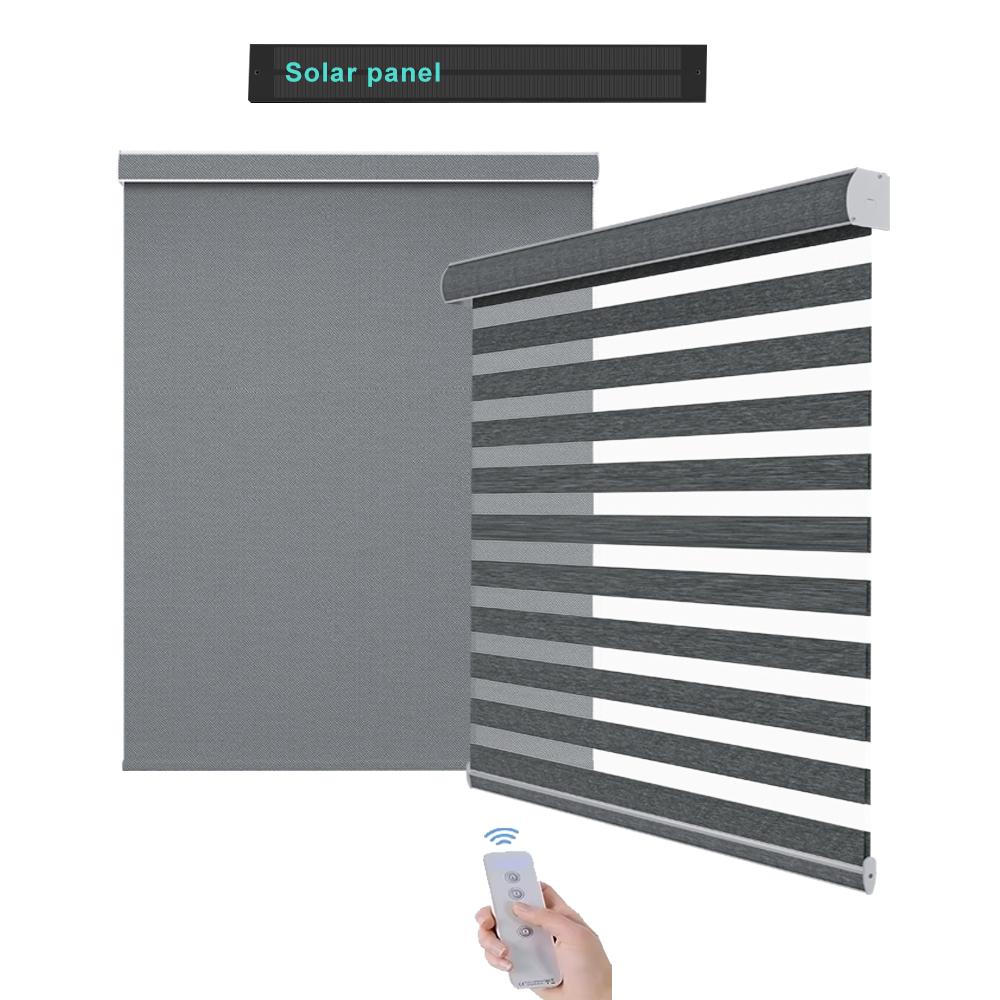
The blinds begin to move a beat before your hand reaches the switch. Not because of a timer, but because the room has learned your patterns: the slow fade of afternoon sun that makes you squint at your screen, the exact moment you usually pause to stretch. Hidden sensors track light angles and subtle shifts in activity, then adjust the slats to soften glare or open the view without a single word or tap.
What makes this feel effortless is the absence of commands. There’s no app to open, no voice prompt to repeat, no routine to program. The system reads the day as it unfolds—clouds passing, the angle of the season, the way you settle into your chair—and responds in quiet increments. By evening, the blinds have already closed halfway to keep warmth in, leaving you with nothing to do but notice the comfort.
Woven Bamboo Shades Bringing a Slice of Nature Inside
There’s a particular kind of warmth that unfolds when sunlight passes through woven bamboo. The texture isn't just visual; it shifts the feel of a room, adding a layer of quiet organic presence that painted walls or synthetic blinds rarely match. Even on overcast afternoons, the slats hold a gentle glow that makes the indoors feel a little less sealed off from the outside.
What I like most about these shades is how they refuse to be purely decorative. Adjust them halfway and the light breaks into soft, repeating lines across the floor. Close them fully and the room gains a cozy, enveloping shadow. They work especially well in spaces with a lot of hard surfaces, breaking up sharp edges without demanding attention the way bold artwork does.
There's also something grounded about the material itself. Bamboo carries the marks of its making—tiny variations in tone, slight irregularities in the weave—so no two panels feel identical. That imperfection is what makes them feel alive. Pair them with linen, clay, or unfinished wood, and the whole room begins to breathe a little more slowly.
Double-Layer Curtains for True Darkness Without the Bulk
Most blackout curtains rely on a single thick fabric coated with foam or rubber, which ends up stiff, heavy, and prone to cracking over time. A double-layer approach works differently: two separate panels are hung together on the same rod, each doing its own job. The front layer adds texture, color, or pattern to match your room, while the back layer — often a tightly woven polyester or cotton twill — blocks light without needing chemical coatings. Because neither layer has to be a bulky all-in-one, the curtains hang more naturally and fold back with less resistance.
The real advantage shows in rooms where you want pitch darkness but hate the look of industrial blackout drapes. With two layers, you can adjust them independently. Keep both closed for total light block during midday naps or night shifts, then pull back just the decorative front layer to let in filtered daylight through the inner liner. This flexibility also helps with temperature control: the air gap between the two fabrics acts as insulation, reducing heat gain in summer and drafts in winter without adding the weight of a single ultra-thick curtain.
Choosing the right pairing matters more than buying expensive brands. An inner layer with a tight weave and dark color does most of the light blocking — even a plain black cotton sheet works if you mount it close to the window frame. For the outer layer, pick something you actually like looking at: linen, velvet, or a printed cotton all drape well over a lightweight liner. Rod pockets or back tabs on both panels make it easy to slide them together, and if you sew a simple channel at the top of the liner, you can use the same curtain rings without extra hardware. The result is true darkness when you want it, with a soft, layered look that never feels like you are sleeping in a bunker.
Sheer Vertical Panels That Soften Harsh Afternoon Light
The late-day sun can turn a west-facing room into a glare-filled box, washing out colors and forcing occupants to squint or retreat. Sheer vertical panels offer a more nuanced intervention than heavy drapes or stark blinds. Their translucent weave scatters incoming light, breaking the harsh afternoon rays into a diffuse glow that shifts gently as the sun moves. Unlike solid curtains that block everything, these panels preserve a sense of openness while taking the edge off the brightest hours.
What makes vertical orientation particularly effective is the way it handles the low, raking angle of afternoon light. Horizontal blinds often create stark stripes that still allow sharp slivers of sun to hit the floor and furniture. A sheer vertical panel, by contrast, filters the entire window height evenly. As the panels sway slightly with air currents, the light pattern on the wall becomes a soft, moving texture—almost like the shadow of leaves, but indoors. This subtle motion adds depth without demanding attention.
Installation and care are refreshingly simple. The panels can be drawn fully for an unobstructed view in the evening, or left partially closed to create a layered backdrop during the day. Because they are lightweight, the hardware is minimal, and dust can be shaken off or the panels can be hand-washed without removing the whole track. For anyone tired of squinting through the golden hour, these panels turn the harshest light into the room's most flattering feature.
Honeycomb Shades Quietly Cutting Energy Costs All Year
Most people don't pay much attention to their window coverings until the utility bill lands in the mailbox. Honeycomb shades, with their signature cellular pockets, quietly trap air and slow down the heat that moves in and out through glass. That one small design detail makes a bigger difference than you'd expect, especially in rooms that get direct afternoon sun or face a chilly draft.
The real appeal is how they work all year without asking for anything in return. In summer they block a noticeable amount of solar heat before it can turn your living room into a greenhouse. In winter those same air pockets act as a soft buffer, keeping warm air from escaping. There's no motor, no thermostat, no app to fuss with. You just pull them down at the right time of day and let the physics do the rest. Over a full year, the reduction in heating and cooling demand shows up as a lower bill, month after month.
FAQ
In compact city apartments, roller shades with clean lines and dual-layer zebra blinds tend to be the go-to choices because they save space and let you adjust light without much fuss.
Most systems from established manufacturers run quietly, sync with apps or voice assistants, and include manual override for power outages. The track quality matters more than the motor itself for long-term smoothness.
They're quite practical. The alternating sheer and solid stripes let you fine-tune privacy and daylight in one gesture, so they work well in living rooms and home offices where you want flexibility without layered window treatments.
Their cellular pockets trap air and help with insulation, which is useful in both hot and cold climates. Many Chinese suppliers also offer blackout versions with a crisp, minimal front profile that suits contemporary interiors.
Yes, most online sellers accept exact measurements and produce made-to-order blinds or curtains. Just double-check how they want you to measure recess versus exact fit, and ask for a sample swatch before placing a full order.
Linen blends, textured weaves, and recycled polyester are popular because they add softness to a room without looking heavy. Neutral tones like oat, clay, and warm gray dominate, with occasional deep green or rust as accents.
Not usually. Many come with pre-assembled tracks, clear brackets, and video guides. You'll need a drill, a level, and possibly a second pair of hands for wide windows, but the wiring is often plug-and-play or battery-powered.
Look for detailed product specs, real customer photos rather than only studio renders, responsive support when you ask about fabric density or motor compatibility, and clear shipping or warranty terms. A small paid sample order can reveal a lot about build quality.
Conclusion
Modern homes in China are moving toward window coverings that feel almost architectural in their simplicity. Roller shades lead this shift—so slim they nearly disappear into the headrail, leaving a clean line that suits both high-rise apartments and renovated lane houses. For the tech-savvy, motorized blinds now react before you finish asking, syncing with schedules or voice assistants to adjust at sunrise or siesta without a touch. And woven bamboo shades answer a different craving: they bring a slice of nature inside, their warm, irregular fibers filtering light into a soft glow that no synthetic fabric can quite mimic. Together, these options reflect a desire for windows that work quietly in the background, never shouting for attention.
Layering and light control are equally important in today's interiors. Double-layer curtains achieve true darkness for sleep or screen time without the bulk of heavy drapes—sheer and blackout panels hang on slim tracks, letting you switch from airy daylight to cocoon-like privacy. In rooms hit by harsh afternoon sun, sheer vertical panels soften the glare while keeping the view and a sense of flow, especially along floor-to-ceiling glazing. Meanwhile, honeycomb shades are quietly cutting energy costs all year—their cellular pockets trap air to insulate against both summer heat and winter chill. These choices show that Chinese homeowners no longer see window coverings as afterthoughts, but as key elements of a modern, efficient, and visually calm home.
Contact Us
Contact Person: Vivien Cheng
Email: [email protected]
Tel/WhatsApp: +86 13751758835
Website: https://www.rollergytech.com/