

China Sampling Valve: Key Considerations for Hygienic Fluid Control
2026-09-10
In hygienic fluid processing, a sampling valve is far more than a simple access point—it's a potential contamination risk if not specified correctly. If you're evaluating China sampling valves, you're likely juggling concerns like surface finish, dead-leg elimination, and material compatibility. This guide cuts through the noise and covers the key considerations that actually matter, from CIP/SIP performance to seal selection. We'll also show you why AVM has become a trusted name in hygienic valve design, helping facilities maintain sterility without overcomplicating their process. Keep reading to make an informed decision the first time.
Why Chinese Sampling Valve Makers Are Rethinking Surface Finish
For years, Chinese sampling valve manufacturers treated surface finish as a secondary concern. The focus was on machining tolerances, seat geometry, and getting the valve to actuate smoothly. Surface roughness was often left at whatever a standard polishing pass produced, and that seemed good enough for domestic buyers. But field returns from overseas pharmaceutical and biotech clients started telling a different story.
Sampling valves sit directly in product contact lines. Even a small dead leg or a rough internal bore can trap media, make cleaning cycles longer, and compromise sterility. Chinese makers began to see that a mirror-like finish wasn't just cosmetic—it directly affected how easily a valve could be validated for clean-in-place systems. The old Ra 0.8 µm target, common in less demanding industries, simply didn't hold up under aseptic scrutiny.
Now more workshops are investing in electro-polishing and multi-step mechanical finishing. The shift isn't just about buying better abrasives; it's about controlling every step from raw casting to final passivation. Some manufacturers have started documenting surface profiles with profilometers and borescopes, not because clients demanded the paperwork, but because the visible difference in product performance became too obvious to ignore.
The Hidden Cost of Non-Certified Materials in Sampling Valves
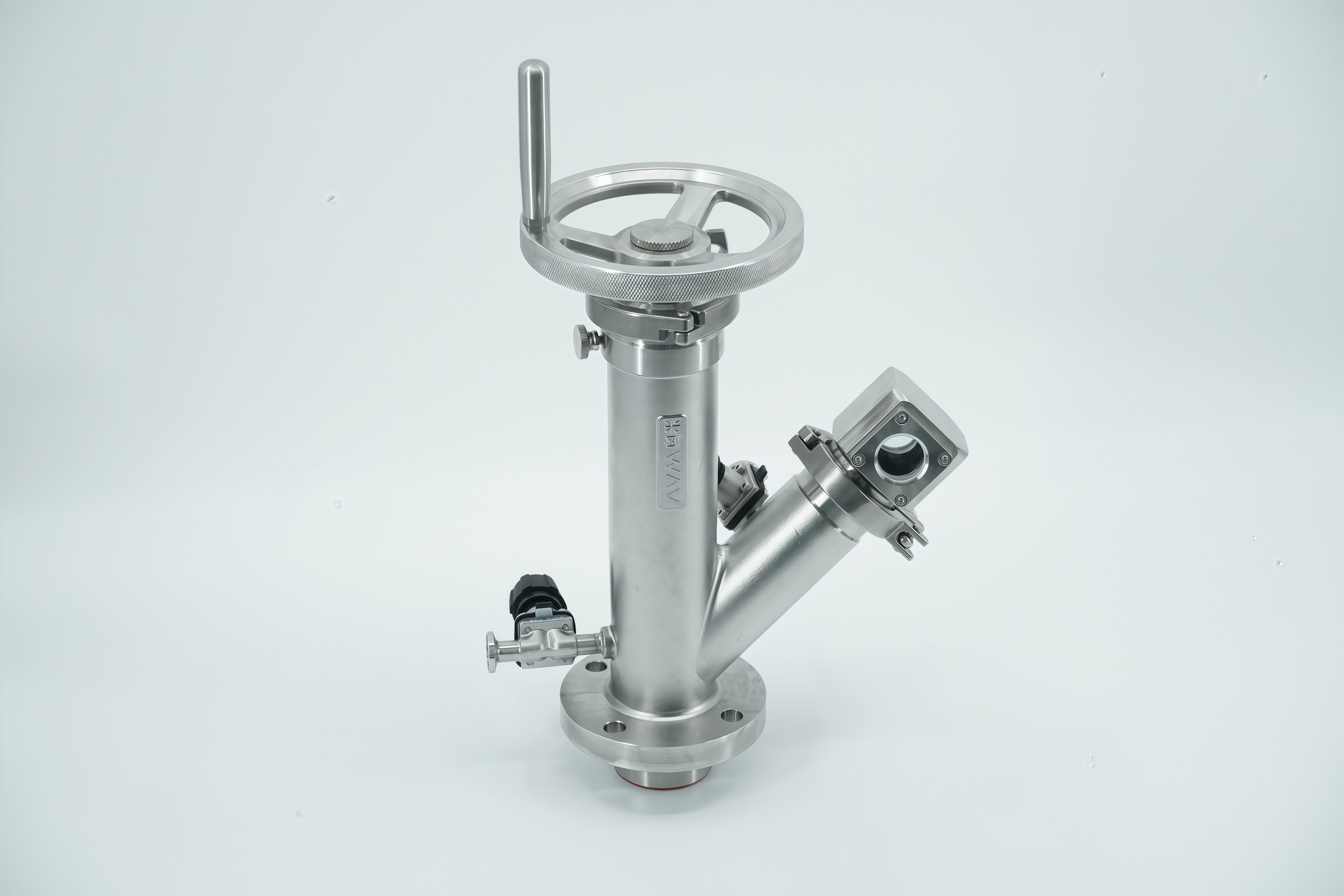
Sampling valves often look identical from the outside, but the materials hidden inside can create expenses that never show up on an invoice. A non-certified elastomer or a lower-grade stainless steel may save a few dollars at purchase, yet it can leach trace contaminants into a batch or degrade prematurely under steam cycles. Those failures surface as unplanned downtime, rejected product, or a contamination investigation that consumes weeks of engineering time.
The cost also extends into regulatory exposure. Certified materials come with documented traceability and performance data that auditors expect to see. Without that paperwork, a facility can face extended audits, supply chain disqualification, or the need to revalidate an entire sampling system. Replacing a valve after the fact is rarely just a swap; it can mean re-cleaning, re-testing, and pausing production while the documentation is rebuilt.
Over the life of a process line, these hidden costs compound. A valve that fails early or behaves unpredictably undermines confidence in every sample drawn through it. The real price of non-certified materials is not the component itself but the uncertainty it introduces into quality decisions, batch release, and long-term maintenance budgets.
How to Spot a Sampling Valve That Will Fail in CIP Cycles
Most sampling valves that give out during CIP share a few visible clues long before the seat actually starts leaking. Look first at the area where the valve body meets the process line — any sharp step, thread, or compressed gasket recess can trap cleaning solution and product residue. That pocket becomes a concentrated chemical bath every cycle, and the resulting corrosion or stress cracking often shows up as pitting or a dull, etched band near the weld line.
The second place to check is the seal stack. If the elastomer has swollen, taken a permanent set, or shows radial cracks after fewer than fifty cycles, the valve geometry is probably forcing the seat to do too much work. A well-designed CIP-tolerant valve lets the seal relax slightly between strokes and keeps it out of the direct spray shadow. Ask to see the seat after an autoclave or hot caustic run — any tackiness, discoloration, or flattened lip means it is already on the failure path.
Finally, pay attention to the actuator and stem seal. A sampling valve that cannot vent or drain its own bonnet area will trap condensate behind the stem, and repeated thermal expansion will pump that liquid through the packing. If you see mineral streaks, rust-colored weep marks, or a polished groove on the stem, the valve is not holding up to CIP dynamics — it is just waiting for the next hot-to-cold swing to fail.
When to Choose a Chinese Valve Over a European One
The choice between a Chinese valve and a European one often narrows down to lead time and budget without sacrificing basic performance. If your project runs on a tight schedule, many Chinese manufacturers can ship standard designs within weeks rather than months. European suppliers sometimes quote delivery windows that clash with installation deadlines, especially for non-customized gate, globe, or check valves. In such cases, a Chinese valve becomes the practical pick not because it is “good enough,” but because waiting for a European alternative would stall the entire pipeline.
Another clear signal is when your application uses common materials and moderate pressure ratings. For carbon steel or stainless steel valves in sizes from half an inch to twelve inches, Chinese foundries and machine shops have years of repetitive production behind them. The tolerances, pressure tests, and seat leakage rates often match what you would get from a mid-tier European brand, but at a fraction of the cost. That cost gap widens if you need dozens or hundreds of identical valves. Buying European in bulk can inflate your budget without visible gains in service life for a standard water, air, or low-pressure steam line.
You should also lean toward a Chinese valve when local support and spare parts matter more than brand prestige. Many Chinese exporters now keep regional warehouses or work with distributors who stock stems, seats, and packing sets. If a European valve fails, you might wait weeks for a replacement part to clear customs. With a Chinese valve from a well-established maker, the same part can arrive in days. That difference shows up long after the purchase order is signed, when a quick repair keeps your operation running instead of idling.
The Role of Sampling Valve Position in Preventing Contamination
The physical location of a sampling valve often determines whether the sample reflects the process stream or a stagnant pocket that has been sitting in the line. Valves placed at the end of a dead leg or in a low-flow bypass allow product residue to collect, which can support microbial growth and lead to false positives or product contamination. Mounting the valve in a section with consistent turbulence, such as a vertical riser or immediately downstream of a pump discharge, keeps the sampling point flushed and reduces the chance of pulling from an isolated volume.
Distance from the main pipe matters just as much as the valve body design. A short, angled connection is preferable because long horizontal stubs create dead space where cleaning fluids cannot reach effectively. In practice, keeping the branch length within one pipe diameter is a common target for high-purity systems, and adding a slight slope toward the main line encourages drainage after use. If a longer run cannot be avoided, steamable or sanitizable valve assemblies can compensate, but they should not be treated as a substitute for proper positioning.
Finally, the valve’s orientation affects how well it drains and how reliably it can be cleaned in place. Sampling valves pointing downward allow gravity to evacuate residual liquid after each use, while upward-facing or horizontal installations may retain droplets that dry and form a biofilm. Routine checks should confirm that the sampling port is fully swept during CIP cycles and that no movement or vibration has shifted the valve away from its intended position over time.
What Your Chinese Supplier Needs to Know About Your Process Fluid
Your Chinese supplier often works from generic spec sheets, but the real behavior of your process fluid under load is what determines whether a pump or valve survives. Send them the full composition, including trace additives like biocides or anti-foaming agents. Even a 0.5% additive can attack certain elastomers or shift viscosity enough to change seal performance.
Don't stop at a single design temperature or pressure. Give them the operating envelope: start-up spikes, steam-out cycles, and pressure drops across filters. If the fluid carries fine abrasive particles, dissolved gases, or can form a vapor phase at the impeller, the supplier needs to know before they quote a standard cast iron unit. Otherwise you'll be replacing wear rings every few months.
Safety data sheets cover transport and basic handling, but not process behavior. Tell them whether viscosity climbs sharply at lower temperatures, if the fluid can polymerize in dead legs, or if solids settle out during weekend shutdowns. That kind of detail determines whether you need a jacketed housing, a flush plan, or a different clearance class.
FAQ
316L stainless steel with controlled ferrite content remains the standard, paired with PTFE or EPDM seals that meet USP Class VI and FDA 21 CFR requirements. Avoid standard 304 bodies in high-chloride service because pitting corrosion can compromise the sampled fluid.
Biotech applications usually call for electro-polished surfaces at 0.4 µm Ra or better to reduce protein adhesion and ease cleaning, while food-grade valves often perform acceptably at 0.8 µm Ra with mechanical polishing. The finer finish matters more when the valve must withstand aggressive CIP chemistry.
Any stagnant volume can host microbial growth and contaminate the next sample. A well-designed installation keeps the branch length to diameter ratio below 2:1, aligning with ASME BPE guidance, so the sampling point stays representative of the circulating product rather than a trapped pocket.
Look for 3-A and EHEDG certification for hygienic design, plus FDA 21 CFR and USP Class VI for product-contact seals. Also request EN 10204 3.1 material certificates and verify the manufacturer has ISO 9001 quality systems in place to support batch traceability.
Yes, most hygienic sampling valves are SIP-capable when built with steam-rated seals and thermal expansion compensation. Key features include minimal internal cavities, self-draining orientation, and a body geometry that allows full condensate removal to prevent cold spots during the steam cycle.
Seal degradation from repeated steam exposure is the leading failure point, followed by pitting at weld seams or crevices, and stem sticking caused by product buildup. These issues typically show up as slow actuation or dripping at the sample port before complete failure.
A straight-through or tangential port lets the sample draw from the flowing stream, while a deep cavity or sharp corner creates a recirculation zone that traps older product. For viscous fluids, this can seriously skew analytical results, so the internal flow path should be as short and smooth as possible.
Under continuous ambient or hot-loop operation, plan on seal replacement every 12 to 18 months and a stem inspection at least quarterly. A quick pressure-hold test after each seal change helps confirm the valve still meets the loop's integrity requirements without hidden leakage.
Conclusion
Surface finish often gets treated as a cosmetic afterthought, but for hygienic sampling valves it determines how aggressively product residue clings to wetted parts. A growing number of Chinese manufacturers are moving beyond simple Ra values to control peaks and valleys micro-topography that can shield bacteria from rinse water. At the same time, buyers who chase the lowest unit price without checking mill certificates often inherit valve bodies or diaphragms made from non-traceable 316L or substandard EPDM. That hidden expense shows up later as premature pitting, seal discoloration, or a failed audit. One practical way to avoid trouble is to study how a valve behaves through repeated steam-in-place and clean-in-place cycles. Look for stress cracks around the body-to-bonnet joint, collapsed diaphragms, or dead-leg marks near the sample outlet. Those failure patterns are far more telling than a glossy brochure photo.
Deciding between a Chinese valve and a European one should hinge on the application rather than stereotype. For standard dairy, beverage, or bioprocess lines where documentation and delivery speed matter, well-audited Chinese suppliers now compete convincingly on engineering and material traceability. Position matters just as much. A sampling valve placed at a low-flow dead leg will hold old product and contaminate the next pull, while a well-drained installation at a turbulent point gives representative samples. Since local teams cannot guess what you are moving, share full fluid chemistry, viscosity, temperature spikes, and CIP media concentration. Chinese engineers often redesign seat geometry or seal compounds once they know the actual process fluid, and that back-and-forth is where the real value lies.
Contact Us
Contact Person: Ananda
Email: [email protected]
Tel/WhatsApp: 8619016718200
Website: https://www.wzaomi.com