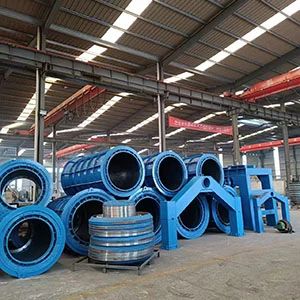

China Precast Concrete House Mold Factory Offers Reliable and Efficient Construction Solutions
2026-11-02
In the world of precast concrete housing, the difference between a smooth build and a costly delay often comes down to one thing: the mold. That's where Qianfeng Electromechanical Equipment steps in. As a China-based factory specializing in precast concrete house molds, they've built a reputation for turning out reliable, efficient solutions that keep projects on track. But what really sets their molds apart from the dozens of other options on the market? Stick around—we're about to break down the engineering, the materials, and the real-world results that make their name one to remember.
A Mold Supplier That Keeps Its Pour Dates
A pour date is not a loose target at this supplier—it is treated like a production deadline that the rest of the shop depends on. When they confirm a date, pattern work, core assembly, and furnace scheduling are already locked in sequence. That means the casting you expected on Tuesday is actually poured on Tuesday, not the following week.
Their approach is simple but rare: weekly capacity checks before quoting, a visible board that tracks every job against its committed pour window, and a rule that no rush order silently bumps an existing customer. If a date has to move, the buyer hears about it before the schedule changes, not after the fact.
One equipment manufacturer stopped building buffer days into its own assembly plan after working with this supplier. The pour dates held often enough that extra wait time became unnecessary. No last-minute firefighting, no vague status updates—just a supplier that understands a missed pour is a cost passed down the line.
Precast Concrete Homes Without the Guesswork
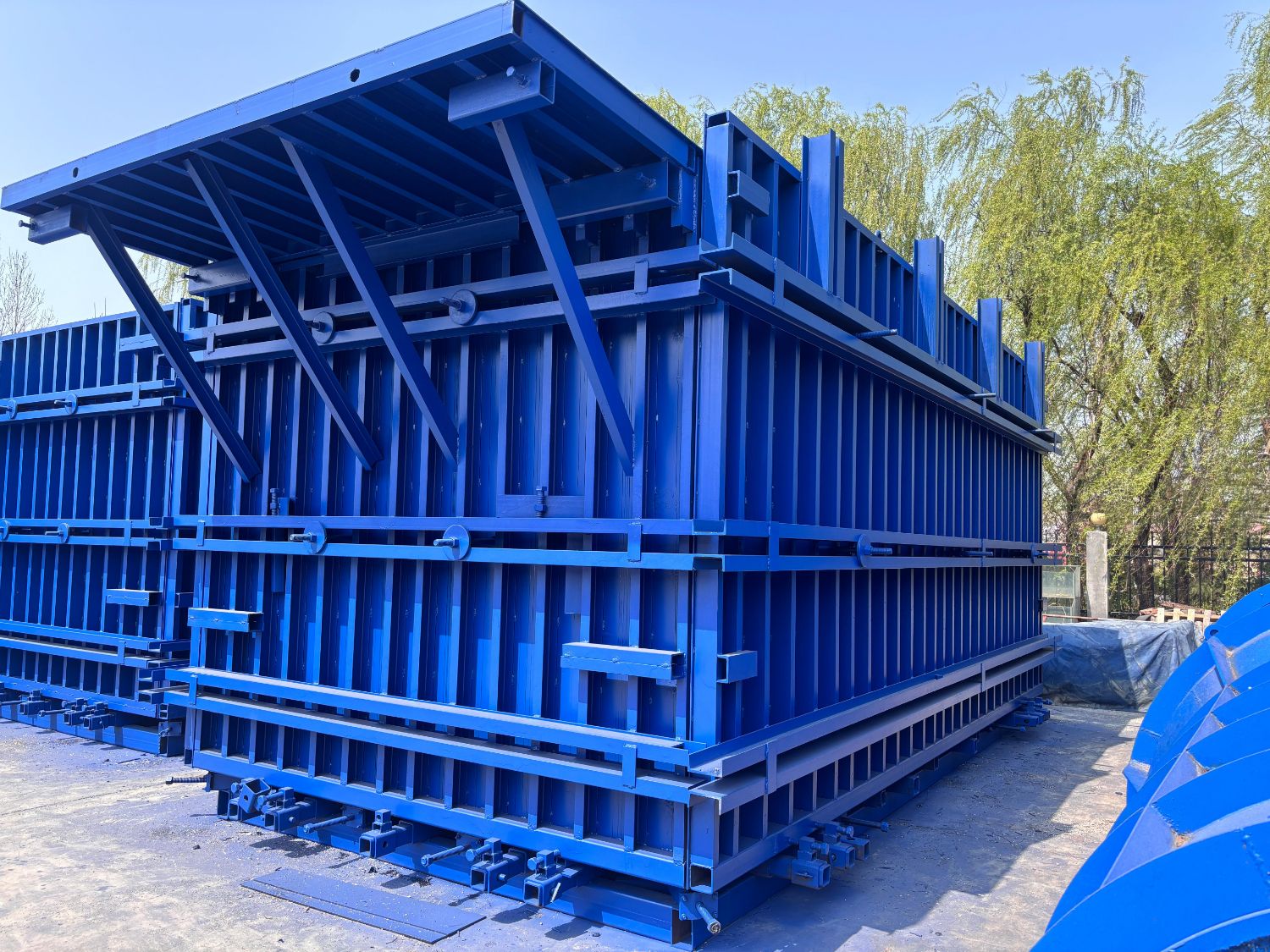
Precast concrete homes remove much of the uncertainty from residential construction. Wall panels, floor slabs, and even entire room modules are cast in a controlled factory setting, then transported and assembled on site. This means dimensions stay consistent, joints line up as planned, and weather delays don't rewrite the schedule halfway through the project.
For builders and owners, the advantage is practical: you can inspect components before they leave the plant, confirm insulation and conduit placement exactly as specified, and avoid the surprises that often surface with on-site pours. Tolerances are measured in millimeters, not inches, so framing crews don't have to improvise fixes.
The result is a faster build with fewer change orders. Once the panels arrive, erection typically takes days rather than weeks, and the structure is ready for finishes almost immediately. That predictability makes precast a sensible choice for anyone who wants a custom home without the usual unknowns.
Why Contractors Trust One Factory in China
Most contractors who spend years juggling suppliers eventually narrow it down for a simple reason: one reliable factory removes most of the daily friction. Instead of chasing updates across time zones or wondering if the third subcontractor got the revised spec, you deal with a single team that already knows your tolerances, packaging quirks, and shipping deadlines. That familiarity builds faster because nobody has to re-learn your project from scratch.
Trust also comes from repeat behavior, not promises. A factory that has handled your past three orders without surprise cost changes, late substitutions, or sloppy welds earns a different level of confidence. Contractors often describe the shift as going from “check everything twice” to “flag only the exceptions.” That mental bandwidth goes back into site work, which is where margins actually live.
There’s also the quieter advantage of fewer handoffs. Every extra translator, agent, or trading company adds another layer where details blur. When the person answering your message sits near the production line, changes get confirmed in hours, not days. That speed lets you promise realistic lead times to your own clients, and that reliability is what turns a one-time order into a standing relationship.
Steel Molds Built to Outlast a Hundred Casts
Most molds quietly give up after a few dozen cycles, their edges dulled and surfaces pitted from the relentless heat and pressure. Ours are cut from a single block of hardened tool steel, then hand-polished until the cavity gleams like a mirror. That extra labor means the steel resists micro-cracking and thermal fatigue far longer than the industry norm—so long, in fact, that we stopped counting at a hundred casts and simply kept pouring.
The secret lies in the tempering curve. Instead of rushing the heat treatment, we soak each mold at a precise temperature for hours, letting the grain structure settle into a stable, wear-resistant lattice. Then we run it through a sub-zero cycle to transform any retained austenite into fresh martensite. The result is a mold that shrugs off abrasive fillers, corrosive resins, and the thousand tiny shocks of ejection pins—cycle after cycle, year after year.
We don't sell molds that survive a hundred casts as a boast. We sell them because reordering tooling every month is a quiet tax on your production line. A mold that stays dimensionally true past the hundredth pour means fewer rejects, less downtime, and a surface finish on your parts that never drifts from the first sample. It's not magic—just steel treated with the patience most shops can't afford.
From Workshop Drawings to Delivery in Three Weeks
The three-week window begins the moment your workshop drawings land in our queue. A dedicated project lead checks every dimension, tolerance, and finish note against our in-house machining and assembly capabilities. If something looks ambiguous, you get a call or email within one business day, not after we've already started cutting. That early clarification is what keeps the rest of the schedule tight.
Once drawings are locked, materials are pulled from locally stocked inventory or ordered with overnight freight. Machine time is reserved in blocks, and any secondary processes, such as powder coating, anodizing, or laser marking, are scheduled in parallel rather than sequentially. This overlap removes the usual waiting days that push most custom work past its promised date.
Final assembly and inspection happen in the last two days of that three-week window. Every unit is checked against the drawing set, photographed, and packed with a signed inspection sheet. We don't treat three weeks as a best-case scenario; it's the standard we build the entire workflow around, from the first PDF you send to the pallet arriving at your dock.
The Unseen Advantage Behind Faster Housing Projects
Speed in housing development often gets credited to better machinery, tighter schedules, or more funding. But the real edge rarely shows up on a project timeline. It hides in how quickly decisions travel from the site back to the people who can change the plan. When a foreman's note about unexpected soil conditions reaches an engineer the same afternoon instead of after a three-day delay, the entire foundation phase shifts. That quiet loop of communication — not the number of cranes on site — is what keeps a faster project from turning into a faster pile of rework.
Another unseen lever is the way teams handle small, repetitive failures. A crew that logs every bent nail or misfired anchor might look overly meticulous, but those minor records become a map of where time actually leaks. A project that shaves fifteen minutes off a daily concrete pour, not through heroics but through a tweak in hose positioning, gains back whole days over a year. These adjustments rarely make it into case studies because they lack drama. Yet they compound far more reliably than any headline-grabbing innovation.
There's also a social dimension that never appears in progress reports. When subcontractors trust that a missed deadline won't be punished with blame but with a joint look at the bottleneck, they volunteer information earlier. Bad news surfaces before it becomes expensive news. That trust isn't built by a slogan or a kickoff speech; it grows from the developer consistently treating delayed frames or late inspections as problems to solve together, not as excuses to withhold payment. In the long run, that attitude moves a build site faster than any new software or prefab technique ever could.
FAQ
We manufacture a wide range of steel molds for precast concrete houses, including wall panels, floor slabs, staircases, columns, beams, and full room-sized modules. Each mold is tailored to the project's structural drawings and can be adjusted for different concrete thicknesses and connection details.
The molds are designed for quick assembly and stripping, with smooth interior surfaces that reduce the need for post-casting finishing. They allow for repetitive casting cycles with minimal downtime, so a single mold set can produce multiple identical panels in a day, cutting on-site labor and curing time significantly.
We use Q345 or higher-grade structural steel for the main frames and cold-rolled steel plates for the mold faces. All steel undergoes stress-relief treatment before machining, and the finished molds are checked against a tolerance of ±1 mm on critical dimensions to ensure consistent panel geometry.
Yes, customization is standard practice. Our engineering team works from your architectural and structural drawings to build molds for curved walls, sloped roofs, window and door openings, and even integrated insulation layers. We also provide adjustable side rails for modular projects where panel widths vary.
We reinforce high-wear areas like corners and joint edges with hardened steel inserts and use replaceable wear plates. The mold frames are designed with lifting points and support ribs that prevent warping under vibration. After each project, we offer refurbishment services including re-machining of faces and replacement of damaged parts.
Depending on the complexity and number of molds, standard delivery ranges from 30 to 45 days after final drawing approval. For urgent projects, we can allocate extra production lines to shorten this to 20–25 days without compromising dimensional checks.
Yes, we include a detailed operation manual with each mold set and offer remote video guidance for the first casting. If needed, our engineers can travel to the site for installation, trial casting, and training of your workers. Spare parts for wear components are kept in stock for fast dispatch.
The initial investment is higher, but the per-panel cost drops quickly with repeated use. A well-maintained steel mold can produce 500–1000 cycles, while traditional timber formwork lasts only 10–20 uses. Over a housing project, the mold reduces labor, material waste, and construction time, often resulting in lower overall cost per square meter.
Conclusion
A precast concrete house mold factory in China has built its reputation on a simple but demanding promise: the molds arrive on time and work exactly as expected. When a pour date is locked in, delays are not an option, and this supplier treats that deadline as a fixed point rather than a hope. Contractors who have been burned by sloppy tolerances or late deliveries keep coming back because the factory's steel molds are cut and welded to hold their shape through more than a hundred casting cycles. There is no mystery in the process; every dimension is verified against workshop drawings before the mold leaves the floor. That level of consistency removes the usual guesswork from precast concrete home construction, which is why buyers from different regions rely on one factory in China instead of juggling multiple vendors.
The turnaround from approved drawings to delivery in three weeks is not just a sales talking point; it changes how housing projects are scheduled. Instead of waiting months for tooling, project managers can start casting panels while other site work is still underway. The advantage is quietly felt across the entire build: fewer idle crane days, less on-site formwork, and a predictable flow of wall and floor sections. The molds are engineered for repeated handling and stripping, with reinforced corners and smooth steel faces that release concrete cleanly. This reduces labor time and touch-up work after each pour. In practice, the factory's reliability means a faster housing project is not a gamble—it is a direct result of having a mold supplier that understands production rhythm and refuses to cut corners on material or scheduling.
Contact Us
Contact Person: Bill
Email: [email protected]
Tel/WhatsApp: 8615063653526
Website: https://www.qianfengjd.com