

China Outdoor Wall Stones Transform Facades With Natural Texture and Durability
2026-11-16
Stone has long been a symbol of permanence, but when incorporated into modern exteriors, it takes on a new role—blurring the line between architecture and the landscapes that surround it. As China’s outdoor wall stones gain traction, their raw textures and exceptional durability are reshaping how we think about building envelopes, turning facades into living surfaces that age with grace. At the heart of this movement is Beata Ceramics, whose curated collections offer a fresh, unexpected approach to natural stone cladding—where every surface tells a story, and no two installations are ever quite the same.
Why Chinese Stone Defines Lasting Facade Character
Walk through any historic district in China and the facades tell a story older than the buildings themselves. Unlike modern cladding that fades or peels within a decade, traditional Chinese stonework absorbs time rather than resisting it. Rain streaks darken the surface into rich charcoal and moss green, while hand-chiseled textures catch light differently as the sun moves. This is not the sterile permanence of stainless steel; it’s a living durability, where each crack and patina adds to the character rather than diminishes it.
The secret lies partly in material choice. Many iconic structures use locally quarried bluestone, granite, or sandstone prized for their thermal mass and resistance to moisture. But it’s also about treatment. For centuries, craftsmen have applied a technique of “aging the stone before it ages” — controlled weathering, natural oil finishes, and careful placement so water drains along predetermined paths. Mortar mixes often include sticky rice soup, which creates a flexible, breathable bond that moves with freeze-thaw cycles. The result is a facade that doesn’t just endure; it settles into its environment with a quiet authority.
Modern architects are rediscovering this approach, looking beyond Western curtain-wall systems to reinterpret Chinese stone sensibilities. They understand that a lasting facade isn’t about fighting nature but collaborating with it. A stone wall that holds the warmth of afternoon sun and releases it slowly at dusk, or one that develops a subtle map of micro-cracks over fifty years, becomes a witness to time. It turns a building from an object into a place — one that rarely shouts, but is never ignored.
Natural Texture Meets Modern Architecture in Surprising Ways
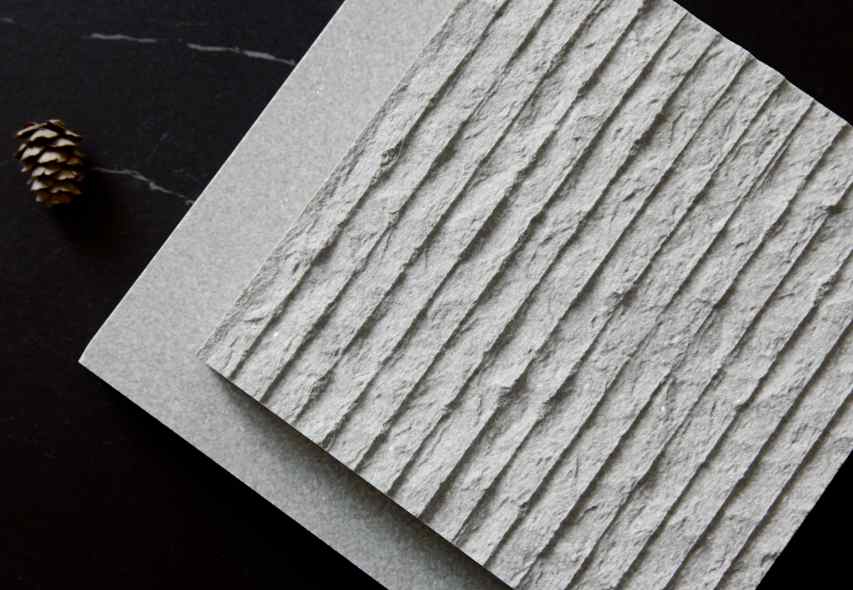
There’s a quiet rebellion happening in architecture right now, one that trades slick, impersonal surfaces for materials that carry the memory of their origins. Instead of polished concrete and seamless glass, architects are carving spaces from rammed earth, weaving living moss into vertical walls, or leaving wooden beams raw with saw marks and knots. These choices don’t just soften a building’s edges—they make it feel as though the structure grew from the site itself, rather than being imposed upon it. The rough grain of limestone or the uneven patina of weathered steel adds a tactile dimension that invites touch, pulling passersby into a more instinctive relationship with the built world.
What makes these combinations surprising isn’t the use of natural materials alone, but the deliberate friction they create when set against crisp, contemporary forms. Picture a monolithic black volume punctuated by a single undulating wall of locally quarried slate, its fissured surface catching light in a way no machine finish ever could. Or a floating glass pavilion anchored by a massive, uncut boulder that serves as both structural support and sculptural centerpiece. These pairings refuse to let either element dominate completely; the wildness of stone or bark tempers the precision, while the geometry prevents the organic from becoming chaotic. It’s a visual conversation between control and spontaneity, and it resonates because it mirrors how people actually experience nature—not in tidy parcels, but in encounters full of contrast.
Beyond aesthetics, this approach rewrites the sensory experience of a space. A board-formed concrete wall still holds the ghostly imprint of wood grain, turning a cold material into something that feels almost warm. Thick cork cladding absorbs sound and yields under fingertips, changing the entire mood of a room. Even the faint scent of cedar inside a minimalist box becomes an architectural element. These details remind us that buildings are not just objects to observe from a distance—they are environments we inhabit with our entire bodies, and the most memorable ones engage senses that overly refined surfaces often ignore.
Hidden Strengths of Outdoor Cladding Materials From China
What sets Chinese outdoor cladding apart isn’t just competitive pricing, but a quiet mastery of material science that often goes unnoticed. In many provinces, manufacturers have refined the art of blending volcanic ash, recycled stone powder, and low-carbon cement alternatives into ultra-thin panels that mimic natural textures—slate, corten steel, even weathered wood—without the weight or upkeep. The hidden advantage lies in their micro-pores: structures deliberately engineered at the kiln stage to self-regulate humidity, dampening the constant expansion and contraction that cracks milder facades over time.
Another overlooked strength is the adaptive layering technique used in fibre cement and porcelain boards, originally developed for high-rise typhoon zones along the coast. Instead of uniform thickness, these panels feature a graded core that slightly flexes under lateral pressure then rebounds, making them unusually resistant to both hail impact and vibration fatigue. European and Australian architects who’ve tested these materials often remark on the lack of micro-fractures after a decade of service—a durability rooted not in brute density but in a carefully tuned composite matrix that stress-cracks rarely propagate across.
Finally, the colour-stability engineering in these claddings rewrites expectations. Chinese manufacturers often use a multi-phase pigment encapsulation borrowed from ceramic glaze traditions, where mineral oxides are vitrified into the surface layer rather than painted on. The result is a sun-shielding finish that resists fading even under intense UV radiation, yet retains a subtle tonal depth that industrial coatings lose. Combined with proprietary clip systems that leave zero visible fasteners, the final installation feels less like applied skin and more like an inevitable part of the building’s language—quiet evidence of design intelligence often hidden in plain sight.
How Raw Stone Transforms Ordinary Exteriors Instantly
There’s a quiet kind of weight that raw stone brings to a facade—something you feel before you even name it. A plain stucco wall, a forgettable entryway, suddenly holds a sense of permanence when clad in irregular ledgestone or rough-hewn quartzite. It isn't just texture; it’s a shift in how light settles on the surface, how shadows pool in the crevices, turning a flat, unremarkable face into something with mood and memory. The transformation feels less like decoration and more like the building finally claiming its own voice.
What’s surprising is how little it takes. A single accent column wrapped in stacked slate, or a low garden wall dry-stacked from local fieldstone, can reset the entire rhythm of a home’s exterior. Suddenly the front door feels grounded, the roofline more intentional, because the stone breaks up the monotony of paint and siding with something unequivocally real. It’s a material that doesn’t try to convince you—it simply is, and that honesty changes the way we experience the whole structure.
Even the approach to a building shifts when raw stone enters the picture. A gravel path bordered by mossy boulders, a porch paved in unpolished bluestone—these choices invite a slower pace. There’s an earthy conversation between the rough, cool surface and the planted things around it, a kind of grounding that manufactured materials can’t replicate. The result is an exterior that feels simultaneously ancient and freshly discovered, as if the house has always belonged to its site, even if you know it went up last summer.
Weathering Gracefully: The Aging Secret of Facade Stones
Facade stones don't just sit there enduring the elements—they engage in a slow, open-air dialogue with wind, rain, and light. Over decades, mineral skins deepen into complex patinas that no studio can replicate. Soft greys bloom from iron deposits, and once-sharp edges mellow into organic curves, as though the building is breathing out. It's not decay; it’s a kind of architectural ripening, recorded in every tiny fissure and grain.
What lies beneath this gentle transformation is often overlooked: the stone’s inherent porosity dictates how gracefully it weathers. A tightly packed granite may barely flinch through a century of storms, while a more open limestone might crumble at the corners but develop a honey-toned skin that architects treasure. The secret isn’t in fighting nature, but in selecting and detailing the stone so erosion works as a slow-blooming design feature. When water trails carve faint vertical tracks, they’re not stains; they’re the handwritten notes of a long-autumn rain.
In the hands of a mason who understands this, surface ageing is an invitation rather than a flaw. Think of the blush on a marble colonnade after years of sun, or the velvety darkening of sandstone in the shade. These shifts don’t announce themselves loudly; they accumulate like trust, layer by invisible layer. So the next time you pass an old facade, look closer. The stone does not resist time—it absorbs it, and in doing so, wears its years with quiet dignity.
Matching Regional Stone Varieties to Your Local Climate
In dry, sun-drenched regions, the stone underfoot matters more than most people realize. Limestone and travertine, with their lighter tones and porous nature, reflect heat rather than absorbing it — a quiet strength when afternoon temperatures climb. They stay cooler to the touch, making patios and pool surrounds bearable in bare feet. Equally important, these stones age well in arid climates; they don't trap moisture that can lead to cracking during rare desert downpours. The subtle patina they develop over time only adds to their understated appeal.
Coastal homes write a different story. Here, salt spray and constant humidity test every material. Granite, with its dense crystalline structure, resists the corrosive tug of sea air without sacrificing style. It won't stain from windblown minerals or fade under harsh waterfront light. For a softer look that still holds its own, quartzite offers a compelling alternative — it has the visual warmth of marble but with a hardness that laughs off the elements. In these environments, choosing local stone isn't just about aesthetics; it's about finding a surface that quietly endures.
Cold-weather climates demand a different kind of toughness. The freeze-thaw cycle is relentless, turning tiny cracks into major fractures over a single winter. Slate and bluestone excel here thanks to their low absorption rates and natural cleavage planes that shed water rather than soak it in. They also hold heat from weak winter sun, helping to melt light snow on walkways without chemical assistance. What looks like a simple flagstone path is actually a carefully matched alliance between geology and local weather — a choice that rewards you with decades of silent, steady service.
FAQ
It’s about striking that balance between raw, organic beauty and engineered resilience. The natural grain and subtle color shifts in the stone bring a tactile richness that manufactured materials simply can’t replicate, while its density withstands harsh weather without losing character.
They handle it remarkably well. The porosity is low enough to resist water absorption and frost damage, yet the material still breathes. Over decades, you’ll see a graceful patina rather than cracking or spalling, which is exactly what you want in a long-term facade investment.
Absolutely. Split-faced granite and slate offer clean, sharp lines favored in minimalist projects, while rugged limestone or cultured bluestone with a chiseled edge suit rustic or classical aesthetics. The versatility lies in the finish—honed, flamed, or natural cleft—and the mounting technique.
It usually involves a rain-screen system or direct adhered method, depending on the stone’s weight and the building’s structure. While any experienced mason can handle it, the key is knowing how to lay out the stone to honor its natural veining. A skilled team will spend time dry-laying before fixing anything, ensuring the facade tells a cohesive visual story.
Upfront, it’s generally higher than fiber cement but comparable to high-end terracotta or metal panels. However, the lifecycle value shifts the equation: nearly zero maintenance, no repainting, and a timeless look that doesn’t date. In the long run, the investment often pays back through reduced upkeep and sustained property appeal.
They truly shine as accents. A feature wall at the entrance, stone spandrels between windows, or a textured soffit can transform a simple building. The natural irregularity of the stone contrasts beautifully with smooth concrete, glass, or wood, creating a dynamic interplay of light and shadow.
Conclusion
There’s an unmistakable depth to a facade clad in Chinese outdoor wall stone that manufactured materials simply cannot replicate. Each slab carries the fingerprint of its origin—rippling schist from the mountains, dense grey granites with a salt‑and‑pepper sparkle, or the warm, stratified layers of sedimentary stone—giving a building an immediate sense of permanence and character. Rather than fighting modern lines, these raw textures cut through the sterility of contemporary glass and steel, grounding a structure in something tactile. The peculiarity lies in how a split‑faced quartzite can appear stoic and crisp on a minimalist volume, yet exude centuries‑old warmth on a hillside retreat; the stone adapts without pretense. This capacity to shift from rugged to refined is what turns an ordinary exterior into something quietly memorable, and it does so the moment the first panel is hung, not after decades of waiting.
Beyond surface appeal, the real value emerges over time, shaped by a combination of material density and intelligent climate matching. Many Chinese stones possess an almost hidden strength—low porosity that shrugs off freeze‑thaw cycles and a compressive heft that laughs at coastal gales. You see this durability not as a sterile preservation but as a graceful ageing process: a limestone that mellows from sharp white to silvery patina, a slate that deepens its charcoal hue under rain. The secret is choosing a regional variety attuned to your local environment, ignoring generic solutions. A porous, breathable sandstone can regulate moisture in a humid suburb, while a dense basalt deflects harsh sun and gritty wind in arid zones. When the stone is allowed to weather on its own terms, facades do not just endure—they mature into something richer, carrying the marks of seasons without ever looking weary.
Contact Us
Contact Person: Emma
Email: [email protected]
Tel/WhatsApp: 8618064423698
Website: https://www.beataceramics.com/