

China NPT Ball Valve Guide: How to Choose a Reliable Option for Your Piping System
2026-11-19
If you have ever specified or replaced a ball valve in a piping system, you already know the subtle difference between a component that lasts and one that becomes a maintenance headache. NPT ball valves are everywhere in industrial and commercial piping, yet not all of them are built to handle the pressure, temperature, and wear they claim to. This guide walks through what actually matters when choosing a China-made NPT ball valve. We will look at materials, seat design, pressure ratings, and the manufacturing details that separate a dependable shutoff from a gamble. Along the way, UPTAI offers practical examples of how a dedicated valve manufacturer approaches these choices, so you can specify with confidence instead of crossing your fingers.
Where Most NPT Ball Valves Start to Leak
Most NPT ball valves don’t fail suddenly—they start weeping at the threaded joints long before the seat or stem ever gives out. The taper on NPT threads is meant to create a mechanical seal, but that seal depends almost entirely on how the threads were cut and how much torque was applied during assembly. In the field, installers often overtighten stainless steel fittings out of fear of a leak, which stretches the female threads and deforms the mating surfaces. Once that happens, no amount of pipe dope or Teflon tape will restore the original interference fit, and you end up with a slow drip that only gets worse with thermal cycling.
Another common starting point is the joint right behind the valve body, especially on valves that are disassembled and reassembled during maintenance. Each time the valve is removed from the line, the threads experience a bit of galling or cross-threading, particularly with softer materials like brass or 316 stainless. The thread crests flatten, the helix angle shifts slightly, and that tiny gap opens up just enough for the system pressure to find its way out. Once a thread has been compromised in this way, applying more sealant often pushes the leak further around the fitting rather than stopping it.
Temperature swings also play a bigger role than most people expect. NPT connections on a ball valve expand and contract at different rates than the pipe they’re attached to, especially when the valve body is a different alloy than the piping. Over hundreds of cycles, the repeated expansion breaks down whatever sealant was originally packed into the thread roots, leaving a clear path for media to escape. The leak almost never starts at the ball or the stem packing first—it starts right where the threads meet, which is why checking those joints with a torque wrench and replacing them at the first sign of weeping can save you from a much larger failure down the line.
Choosing a Body Material That Matches Your Media
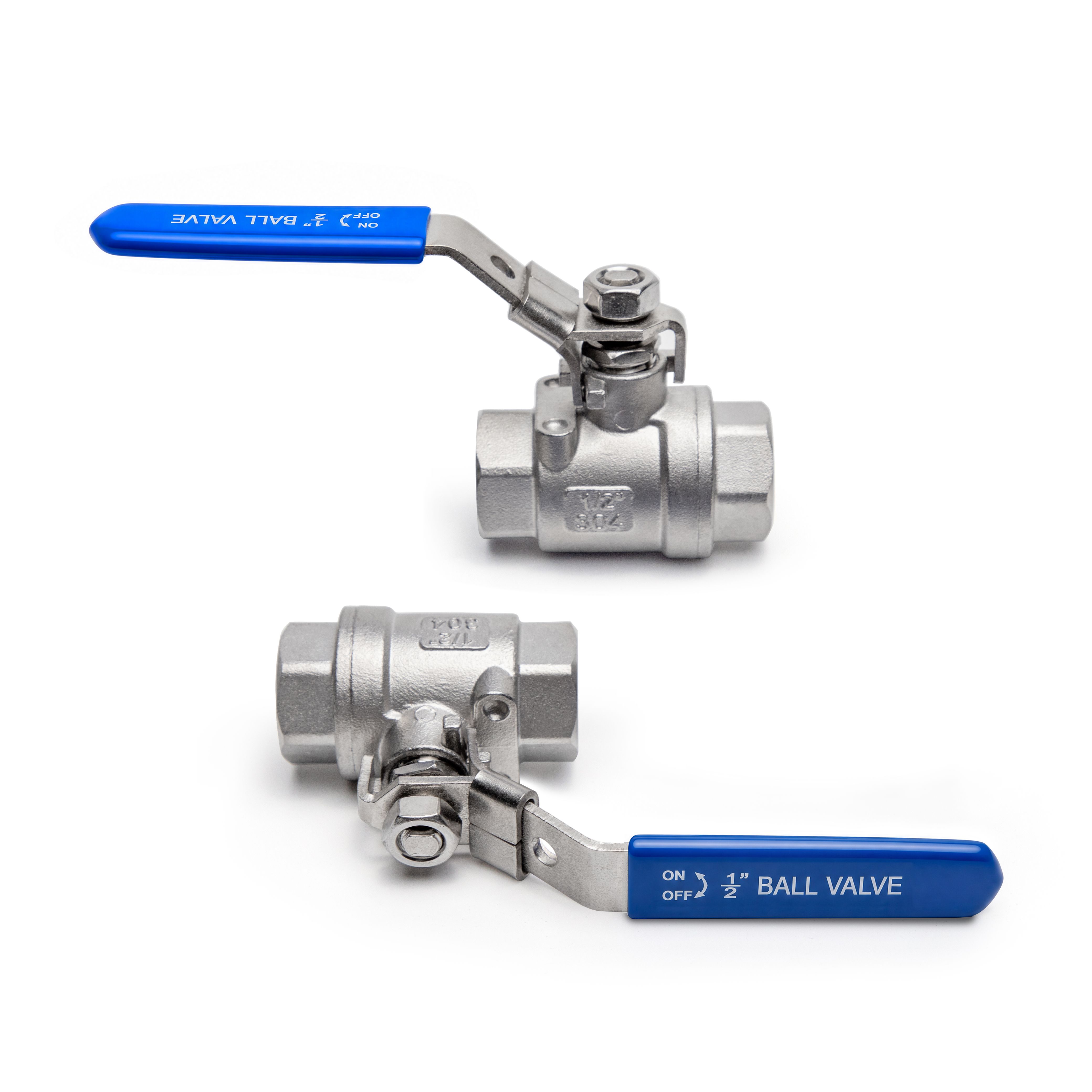
Matching the body material to the media is less about picking the strongest option and more about understanding how the two will interact over time. A chemically aggressive fluid can quietly attack a metal that looks perfectly stable on a data sheet, while a mild solution may allow a less expensive polymer to run for years without trouble. Temperature, concentration, and even trace impurities shift the equation, so the same media can be safe with one grade of stainless steel and destructive to another.
Start with the full chemical makeup of the stream, not just the main component. Small amounts of chlorides, acids, or abrasive solids often cause more damage than the primary fluid. If the media carries solids, erosion resistance matters as much as corrosion resistance, and a hard liner or a tougher alloy may be worth the extra cost. When the process runs at elevated temperatures, check the material's limits under load, because heat can weaken plastics and accelerate corrosion in metals.
A practical approach is to shortlist materials that have already proven themselves in similar service, then test the final candidates under your actual operating conditions. Avoid relying on general compatibility charts alone; they give a starting point, but real-world factors like flow velocity, aeration, and cleaning cycles can change the outcome. The goal is a body material that keeps its integrity long enough to make maintenance predictable rather than reactive.
Decoding Pressure and Temperature Numbers
A gauge set will hand you a pressure reading in psi or bar, but that number only starts to make sense when you line it up against the right PT chart for the refrigerant in the system. R-410A and R-22 can sit at the same manifold pressure and still point to very different saturation temperatures, so treating pressure as a direct stand-in for temperature is the fastest way to misread a charge.
It also helps to know whether the reading is gauge pressure or absolute pressure, especially on the low side or anywhere a system pulls into vacuum. Even small errors from sensor drift, a kinked hose, or altitude shift the picture enough to change superheat and subcooling calculations, which means two technicians can look at the same system and walk away with different conclusions.
The useful habit is to convert the numbers first, then compare them to what the pipes and air temperatures are actually doing. A steady evaporator temperature that sits a few degrees below the return air tells you more than a single high or low pressure reading ever will, and watching those relationships over time catches restrictions, airflow issues, and slow leaks before the compressor does.
Finding Chinese Manufacturers That Test What They Sell
Plenty of suppliers will show you a certificate and call it a day. The real question is whether the goods sitting in their warehouse match what was actually tested. Look for factories that can walk you through their sampling process, show recent batch-level reports tied to specific production dates, and explain how they handle failed results. If they dodge questions about internal quality checks or only offer a glossy PDF from three years ago, that tells you more than any sales pitch.
A practical approach is to ask for a product teardown during a video call. Have them open a current unit, point to the components, and cross-reference them against the test report. Some manufacturers will also share photos or short clips from their in-house lab, even if the equipment looks modest. That level of openness usually means they have nothing to hide. It also helps to request the name of the third-party lab they use and then contact that lab directly to confirm the report is genuine.
Don’t settle for vague promises about “strict quality control.” Push for specifics: how many units per batch get pulled for testing, what happens to rejected stock, and whether they retest after any design tweak. A factory that actually tests what it sells will have concrete answers, not marketing filler.
Thread Fit and the Cost of a Sloppy NPT Connection
A loose NPT thread rarely announces itself until the joint is already assembled. The wrench might feel acceptable, the sealant may squeeze into the gaps, and the fitting can even pass a quick pressure check. But the real problem shows up later, under thermal cycling or vibration, when the tapered threads have too little contact area to hold the load. At that point the cost shifts from a simple fitting to a callback, a torn-down assembly, or a warranty claim that eats whatever margin the cheaper part promised.
Tightening a poorly formed thread does not recover the lost geometry. If the crest and root are undersized or the taper angle wanders, more torque simply bottoms out the high spots and leaves the flanks barely engaged. That can produce a joint that feels solid on the wrench but relies heavily on thread sealant to do the sealing. Over time, the sealant washes out or relaxes, and the leak path returns. The expense is not only the replacement fitting; it is the labor to find the seep, drain the line, re-cut or clean the threads, and test the system again.
There is also a less obvious cost in mixed inventories. When some fittings thread in too easily and others bind halfway, assembly crews compensate by varying torque, adding extra wraps of tape, or using a cheater bar. Those workarounds hide the inconsistency for a while, but they make service harder later. A well-formed NPT thread engages predictably, seals with reasonable torque, and comes apart without destroying the mating part. That predictability is not a cosmetic detail; it is what keeps a routine pipe connection from becoming a recurring maintenance expense.
Questions to Ask Before You Trust a Spec Sheet
A single number rarely tells the whole story. When a datasheet claims a sensor reads within 0.1 percent accuracy, find out whether that figure applies only at room temperature, at a specific supply voltage, or after a lengthy warm-up. Many vendors cherry-pick the most flattering conditions, leaving you to discover the real behavior once the part sits on your bench.
Dig into how the headline specification was measured. Was the device tested in a shielded enclosure, with a precision reference, and averaged over several minutes? If so, that quiet lab setup may have little in common with a crowded enclosure or a switching power supply nearby. Ask for the test circuit, the number of units sampled, and the spread between typical and worst-case values.
Finally, compare the claimed performance with the conditions you actually care about. A power stage might deliver impressive efficiency at exactly fifty percent load, but droop badly at light loads or peak currents. Request curves, not just single-point numbers, and be suspicious of any sheet that omits temperature drift, aging, or board-layout dependencies.
FAQ
NPT threads are tapered, so they seal by interference along the thread flanks rather than relying solely on a gasket or O-ring. The male and female threads tighten progressively, and thread sealant or tape becomes part of the sealing system. With straight-thread or metric connections, the joint often needs a washer or bonded seal, which changes installation habits and the type of spare fittings you keep on site.
Ask the supplier for the material test report, pressure test certificate, and a photo or drawing of the internal ball and seat. Reputable manufacturers will also state whether the valve body is forged or cast, what grade of stainless or carbon steel is used, and whether the seats are PTFE, RPTFE, or PEEK. If they cannot provide traceable paperwork for a batch, treat the low price as a warning.
Both matter, but for everyday water or air service the seat and seal materials usually determine how long the valve stays drip-free. A brass or 316 stainless body is common, while PTFE seats handle most temperatures and pressures. If the line runs hot or has abrasive particles, upgrade the seats first, then reconsider the body grade and end connections.
Look at the pressure-temperature curve for the seat material, not just the body rating. PTFE seats often start to soften above roughly 180-200 degrees Celsius, so a valve may be rated for 1000 psi cold but far less at elevated temperature. Also check whether the rating applies to the NPT threaded ends or only to the body shell, because threaded joints can be the limiting factor.
Full-bore is usually preferred when the valve must not restrict flow, when the line needs pigging or draining, or when pressure drop matters. Reduced-bore saves money and space in many branch lines, but it introduces a smaller opening than the nominal pipe size. For general isolation duty, full-bore often avoids confusion during maintenance and gives more margin against clogging.
The main ones are using too much or too little thread sealant, overtightening the valve into a female fitting, and letting the pipe weight hang on the valve body. Tapered threads can crack female ports or distort the valve seat if forced. Support the pipe, wind tape or apply paste in the correct direction, and tighten gradually until the joint is snug and leak-tested, not until the threads bottom out.
Compare the full data package: material certificates, pressure test reports, seat material, blowout-proof stem design, and surface finish. Request a sample batch before committing to volume, then inspect thread quality and internal bore finish. Also ask about the locking device, handle material, and whether the valve is assembled and tested in-house. The goal is to identify suppliers that treat NPT ball valves as engineered components rather than commodity hardware.
Conclusion
A surprising number of NPT ball valves from any region start to fail where buyers rarely look: the stem packing and the threaded ends. The ball and seats usually get the attention, but a loose NPT thread or a single cheap stem O-ring is enough to create a slow weep that shows up after installation, not during a quick visual check. If you are sourcing from China, push for thread gauge reports and ask whether the factory keeps go/no-go fixtures on the line. That detail separates suppliers who understand sealing from suppliers who only assemble parts. Material selection matters just as much. Brass works for plain air or clean water, but a mildly acidic or chloride-heavy stream can turn the wrong body material into a maintenance problem within months; 316 stainless or an appropriate lined body is often the safer default.
Pressure and temperature figures on a spec sheet are only useful when the standard and seat material are named. The same valve may carry a strong cold working pressure but fall off quickly as temperature climbs, especially with standard PTFE seats. Instead of accepting the boldest number, ask for shell and seat test records from production batches, not just type-test samples. Also check whether the supplier is willing to explain its NPT tolerance class, packing design, and seat replacement approach. A manufacturer that hesitates on those points is often protecting a lower-cost design that will cost more later through callbacks, drips, or early replacement.
Contact Us
Contact Person: Adonis
Email: [email protected]
Tel/WhatsApp: 8615858822657
Website: https://www.uptaivalve.com