
China FRPSkin Lite Dry Truck Body Exporters What Global Buyers Need to Know
2026-11-02
The global market for dry truck bodies is evolving fast, and China’s FRPSkin Lite technology is quietly leading the shift. But with so many exporters claiming the same specs, how do buyers cut through the noise? From panel strength to thermal performance, the details that matter are often buried in cut sheets and sales talk. That’s where Whole Chain Tech steps in—not as just another supplier, but as a partner who understands what global buyers actually need to verify before signing. This guide unpacks the key factors you should weigh, the questions worth asking, and the pitfalls that catch even seasoned importers off guard.
Why Not All FRP Panels Survive the Same Trip
Two panels can share the same thickness, the same datasheet, and even the same truck bed, yet one comes out of the run looking new while the other has stress cracks. The gap usually starts in the resin system. Cheaper FRP often swaps a portion of the resin for calcium carbonate or other fillers, which makes the panel stiffer on paper but much more brittle under vibration. Cure time matters too; panels pulled from the mold before the polymer chains fully cross-link will hold their shape at rest but start to craze once they flex through a few thousand miles of rough pavement.
Mounting details are just as unforgiving as the laminate itself. A panel that's screwed or riveted too tightly against an uneven frame develops point loads that concentrate every bump and twist into a small area. Without a proper expansion gap, thermal movement from a desert morning to a cold mountain pass can peel the skin away from the core. Even small breaches in the edge seal allow moisture to migrate into the fiberglass, and once that trapped water freezes, the resulting expansion can delaminate layers that would have otherwise survived the trip.
The journey itself is not a controlled test. Panels on a trailer that runs gravel roads and coastal salt spray will age years in a single week compared to a panel that only sees smooth interstate miles. Operators who rinse salt off the lower edges and touch up chips before they spread tend to get dramatically longer life from the same panel stock. In the field, survival is less about the brand name stamped on the sheet and more about how the panel was made, how it was fastened, and what it was asked to endure.
What Chinese Exporters Won't Volunteer About Thickness
When you see a thickness specification on a Chinese supplier's quotation, it's rarely the whole story. Many factories operate on the lower limit of acceptable tolerance, and they won't point that out unless you push for a detailed material certificate. A sheet listed as 1.0mm might consistently measure 0.92mm with a caliper, yet still technically pass the stated standard because the tolerance band allows it. Buyers who assume they're getting full nominal thickness often end up with products that feel flimsier than expected, only realizing the issue after the goods have already shipped.
Another thing exporters stay quiet about is thickness consistency within a single batch. You might measure one corner of a panel and get 2.0mm, then find the opposite edge at 1.7mm. Rolled materials, especially cold-rolled steel or aluminum, can vary noticeably across the width or length due to worn mill rollers or aggressive cost-cutting during production. A factory won't volunteer that their equipment produces a crown or edge drop unless you ask for a full-sheet thickness mapping, which most buyers never think to request.
Coatings add another layer of silence. A galvanized or painted product's total thickness includes the base metal plus the coating, but exporters often report only the total and leave you guessing how much is actual steel. In some cases, a thinner base metal is compensated with a thicker, cheaper coating to hit the same overall number. This trick is especially common with wire, tubing, and roofing sheets, where a micrometer reading alone won't reveal the truth. Without destructive testing or a clear split in the specification, you'd never know the difference.
The Hidden Weight Factor That Changes Your Payload
Most people fixate on the big number printed in the brochure, but payload ratings rarely tell the whole story. The real limiter is often the load's distribution, not its total mass. A few inches of shift toward the rear axle can unload the front tires enough to make steering vague, and that subtle change in balance is what turns a safe run into a white-knuckle drive.
Another overlooked factor is the weight you can't see: fluids, brackets, and aftermarket accessories that quietly eat into the margin. That toolbox bolted behind the cab or the full auxiliary tank adds up faster than most owners realize. By the time you factor in a passenger or two, the "official" payload number is already a distant memory.
The fix isn't more math—it's paying attention to how the vehicle sits and responds. A slight squat at the rear or a wandering feel at highway speed usually means the center of gravity has drifted beyond what the suspension was designed to handle. Once you start treating payload as a living, shifting variable instead of a fixed label, you'll understand why some loads feel effortless and others feel like a fight.
How Custom Orders Actually Work From a Distance
When you can't walk into a workshop or showroom, custom orders rely on a different kind of clarity. It starts with a conversation, usually over email or a video call, where you describe not just what you want, but how you'll use it, the space it will live in, and the details that matter most to you. From there, the maker translates your words into sketches, material samples, and sometimes rough prototypes that get shipped or photographed for your review. The back-and-forth may feel slower than an in-person visit, but it often leads to a more precise result because every choice has to be explained and confirmed rather than assumed.
The real trick is in the documentation. Makers who handle distance orders well don't rely on memory; they create a shared reference point—a numbered list of decisions, a marked-up drawing, or a short video walkthrough of the piece in progress. You might receive close-up photos of wood grain or fabric texture under different lighting, or a test finish on a small offcut mailed to your door. This isn't just reassurance; it's how a custom piece becomes truly yours. Without seeing it in person, you learn to read the details more carefully, and the maker learns to anticipate what you'll notice or question next.
Packaging and delivery are where distance custom orders can either shine or fall apart. It's not enough to build something well; it has to arrive with the same care it was made with. That means custom crating for awkward shapes, thoughtful assembly instructions that assume you're not a professional, and a clear unpacking sequence. Some makers include a small kit with touch-up wax or extra hardware, plus a note on how the piece will settle into your environment over the first few weeks. When done right, the distance stops being a barrier and becomes just another part of the story—one where you and the maker collaborated without ever standing in the same room.
The Packaging Question That Decides If It Arrives Intact
Ask any warehouse veteran what keeps them up at night and it’s rarely the product itself—it’s whether the box can survive the conveyor belt’s sharp turns and a delivery driver’s occasional overconfidence. The real question isn’t “does it fit?” but “will it hold when dropped from waist height onto concrete?” That single decision—how much void fill, how thick the cardboard, whether to double-wall the corners—separates a five-star unboxing from a refund request.
Most damage happens in the first and last ten feet of transit: the sorting hub’s drop chute and the customer’s front step. So the smartest packaging doesn’t just wrap the item; it plans for the journey’s worst moment. Try the shake test before sealing—if anything rattles, it needs more restraint. And if the box flexes when you press the center, it’s already telling you it won’t arrive intact.
After the Invoice: What Support Looks Like Six Months Later
Six months down the road, the real test of a working relationship isn’t the handshake or the final delivery—it’s whether anyone still picks up the phone when something small goes sideways. That quiet stretch after payment clears is where most vendors disappear. Not here. We treat that silence as part of the job, not a sign to move on.
A quick message to check if the integration is holding up under daily use, a standing invite to flag anything that feels off, and a no-drama fix when it does. The invoice was never the finish line; it was the point where the actual support began. People forget that software, like any craft, settles into its environment over time. Our role is to make sure it settles well.
So six months later, the inbox still gets answered, the odd glitch still gets patched, and the advice still comes without a new bill attached. That’s the kind of aftercare that turns a one-off project into a long-term safety net.
FAQ
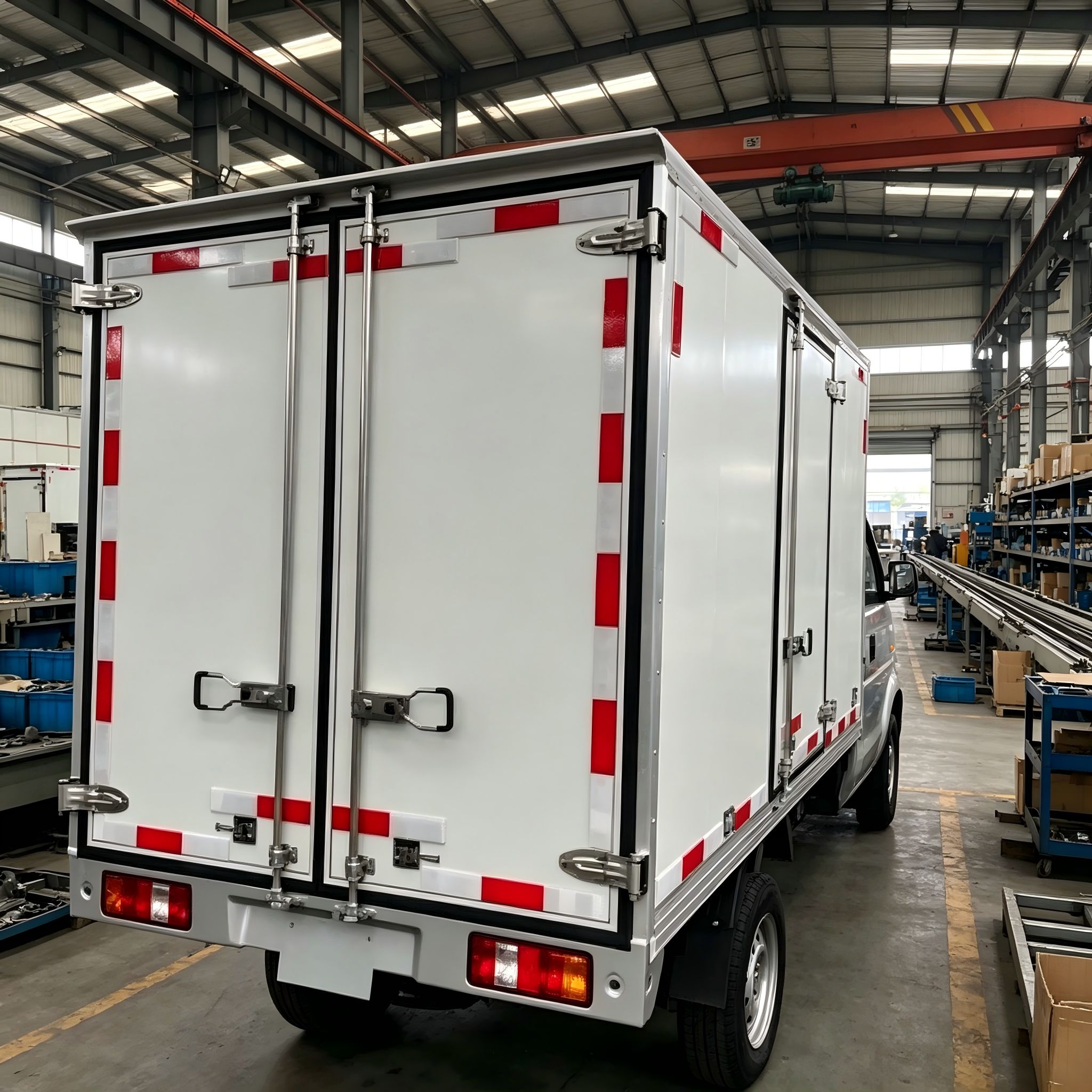
The main difference comes down to weight and how the walls behave. The FRP skin is a composite panel that’s bonded to a structural frame, so you skip many of the heavy steel cross-members and interior posts. That cuts tare weight by roughly 25–35% compared to an equivalent all-steel body, which means more legal payload or lower fuel burn. The surface also resists dents and corrosion better than thin steel, though it can crack under sharp impact and may need different repair techniques than welding.
Ask for a live video walkthrough of the lamination area, panel bonding jigs, and any pull-out or roof load test footage. Serious manufacturers will have dedicated panel presses or vacuum bonding tables, not just general steel fabrication shops. Also request the factory’s export packing list from a recent order with destination marks. A trading company can send catalogs, but they usually cannot show an active production line with FRP skins being laminated in-house.
They can handle palletized loads if the floor is specified correctly. The concern is not the side panels—they are semi-structural—but the subframe and floor cross-members. Buyers should specify the load rating for forklift wheels and the point load at the rear during loading. For regular 24-ton or 33-ton GVW trucks, a properly reinforced floor with checkered aluminum or phenolic-coated plywood over steel cross-members works fine. The body is lighter than steel but not fragile.
Start with ISO 9001 for the factory, then ask for a body strength calculation or test report based on EN 12642 XL if the body will run in Europe, or the equivalent national standard for the destination market. If the truck carries food, request the FDA or EU food-contact statement for the interior liner. For North America, ask about roof load and front wall strength per FMVSS or DOT expectations. Don’t accept a generic 'export quality' claim without a dated test certificate from a recognized third party.
Most exporters ship fully assembled bodies on flat racks or as knock-down kits in open-top containers, depending on size and destination. Fully assembled units need internal bracing, edge protectors under lashing straps, and a weatherproof wrap that still allows air circulation. Common problems include chafing where the straps touch the FRP skin, water trapped under plastic wrap, and roof panels dented by stacked cargo. Specify that no cargo be stacked on the roof and ask for photos of the lashing points before the container is sealed.
Most factories are flexible on door positions, side door width, interior translucent roof panels, scuff liner height, and tie rail spacing. Things that add cost quickly are custom molds for curved roofs, nonstandard overall widths, and mixed refrigeration/heating insulation packages. If you stay within the factory’s existing panel sizes and door frame dies, lead time can stay around 25–40 days. Any request that requires a new mold or a different floor frame jig usually adds 2–3 weeks and a tooling charge.
A practical warranty should list the structural frame, panel bonding, and roof seams separately. For example, 36 months on the bonded joints and frame, 12–24 months on hinges, locks, and rubber seals. Exclude paint fade and normal wear. The key clause is how warranty claims are handled—will the supplier ship replacement panels, pay a local repair allowance, or require the buyer to return the body? Get that in writing before production starts, because verbal promises mean little once the containers have sailed.
Conclusion
Not every FRP panel rated for the same truck body will shake out the same way after a thousand kilometers of corrugated roads. Some Chinese exporters tout identical specs, but resin-to-fiber ratios and curing shortcuts shift with each production batch, and that changes how panels flex, crack, or delaminate under load. Thickness is the next quiet variable. A 2.5 mm sheet might measure 2.3 mm at the edges if you put calipers on it, and no one volunteers that detail. Weight matters just as much. Buyers fixate on payload, but an overly light panel can mean less glass content and more brittle resin, cutting lifespan. Asking for a certificate of composition is smarter than trusting a glossy photo.
Custom orders from half a world away live or die on documentation. A drawing with a missed tolerance can turn into a container of panels that don't match the subframe. Smart buyers request a pre-production sample, confirm edge sealing and drilling patterns in writing, and agree on acceptance criteria before the deposit clears. Packaging is where many shipments go wrong. Panels stacked on bare wood with no edge guards often arrive with crushed corners or moisture wicking into the laminate. Ask for plastic-wrapped bundles, vertical crating, and desiccant packs. After the invoice, support varies wildly. Some exporters vanish; others keep replacement panel stock and answer dimensional questions six months later. The difference usually isn't in the initial quote—it's in whether they reply after the payment lands.
Contact Us
Contact Person: Ethan
Email: [email protected]
Tel/WhatsApp: +86 13963964935
Website: https://www.wholechaintech.com/