

China All-steel Antistatic Floor for Reliable Static Control in Tech Facilities
2026-09-01
In tech facilities, even a small electrostatic discharge can bring down servers or corrupt sensitive data. Relying on standard flooring in such environments is a gamble no operations team should take. That's why China all-steel antistatic floor systems have become the backbone of reliable static control. At the forefront is Lipin Floor, a manufacturer whose all-steel panels combine robust load-bearing performance with consistent, low-resistance grounding. But not all antistatic floors are built equal. In this post, we’ll break down what separates a dependable system from a costly mistake, and why your facility’s uptime may depend on the steel underfoot.
The Real Reason Tech Floors Need More Than a Coating
A thin coating looks fine on day one, but tech floors face constant movement from rolling equipment, heavy server racks, and precise vibration from HVAC and power systems. Within months, that surface begins to develop micro-cracks you can't see from standing height. Moisture, dust, and conductive particles find their way into those tiny fractures, slowly eating away at the substrate and creating a hidden conductive layer that can short out sensitive gear. Coatings simply don't bond well enough to handle the dynamic load and thermal cycling typical in data centers and labs.
Static dissipation is another reason a coating fails. A coated concrete slab often has inconsistent resistance, meaning some spots hold a charge while others don't. People walking across the floor generate thousands of volts, and without a reliable path to ground, that energy discharges into circuit boards, memory modules, or optical transceivers. A proper tech floor needs a conductive underlayment and copper grounding grid, not just a shiny top layer that promises anti-static properties but delivers nothing after routine wear.
Then there's the cleaning problem. Strong disinfectants, deionized water, and aggressive floor scrubbers are common in high-tech environments, but they break down ordinary coatings quickly. Edges peel, seams open up, and suddenly you have trip hazards plus contamination traps. The real reason tech floors need more than a coating is that the floor is an active part of the operational infrastructure—it must manage static, support heavy loads, and survive chemical exposure for years, not just look good for one inspection.
Inside the Steel Core That Handles Daily Static Loads
Most people never think about the steel core inside a structural bearing, yet it quietly carries the weight of buildings and bridges every single day. This core is not just a chunk of metal; it is shaped and treated to resist slow, constant pressure without creeping or cracking. In many designs, the steel is layered or machined with fine tolerances so that even under a fixed load for years, the deformation remains so small it is almost impossible to measure with standard tools.
The daily static load is deceptively simple: it is the steady, unchanging force from dead weight, furniture, or equipment that never moves. But that simplicity hides a challenge. A steel core must not only hold the load but also keep doing so through temperature swings, micro-vibrations, and occasional overloads without losing its original geometry. That is why the material selection often favors low-alloy steels with a high yield point, and the heat treatment is tuned to leave a fine-grained structure that resists long-term settlement.
When you look at a cross-section, you might see a core that is not perfectly round or square. Sometimes it has slight tapers or grooves, not for decoration but to direct stress along predictable paths. These details are born from decades of testing and field observation. They make the difference between a support that needs re-leveling every few years and one that can be forgotten until the structure reaches the end of its design life.
Keeping Server Rooms Calm When Foot Traffic Peaks
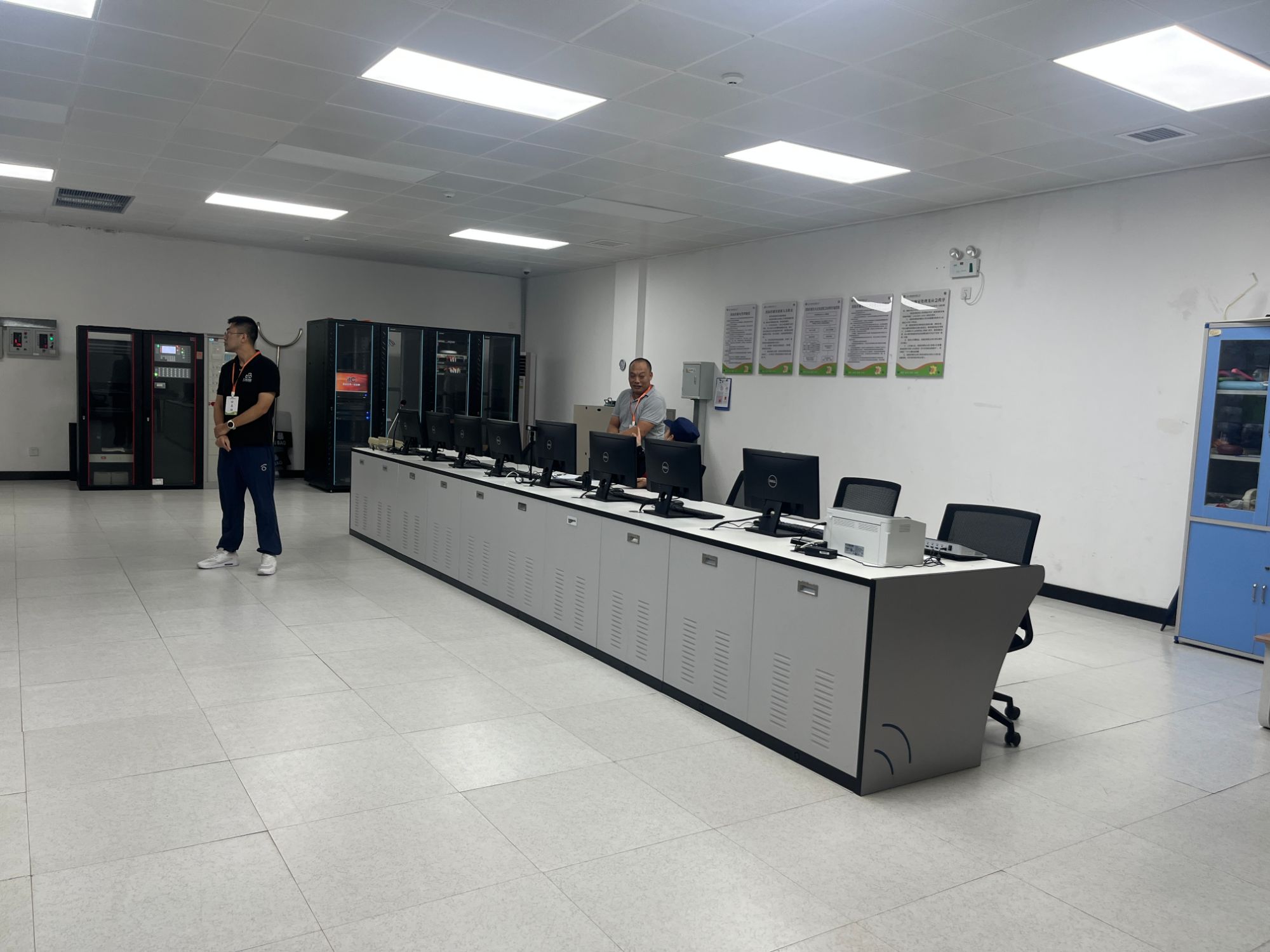
Foot traffic brings more than just noise to a server room. Every door swing lets in warmer air from adjacent hallways, and a group of people standing near a rack can raise the local temperature enough to make cooling fans spin harder. Dust and debris ride in on shoes and clothing, settling into equipment that was never designed to act as an air filter. Even a slight bump from a passing cart or a careless elbow can loosen a cable or shift a floor tile, disrupting airflow patterns that took weeks to balance.
The simplest defense is to reduce how often and how many people enter during peak periods. If access is unavoidable, create a small buffer zone just inside the door with sticky mats and a place to leave coats or bags. Use floor tape or low barriers to keep foot traffic away from hot aisles and vulnerable cabling. Brief visitors on where they can stand and what not to touch before they step past the first rack. This keeps the room's thermal profile stable without turning every entry into a formal inspection.
Monitoring helps catch problems before they become equipment failures. Place temperature sensors near doorways and in areas where people tend to gather, not just at the center of the room. If a spike appears, you can adjust cooling or temporarily restrict access. Over time, access logs and sensor data will show which high-traffic periods cause the most drift, allowing you to schedule essential maintenance during quieter windows and keep the room calm without constant manual intervention.
A Closer Look at Conductivity Without Compromise
Most materials force a choice: you either get excellent electrical flow or you keep mechanical strength, thermal stability, and cost under control. The rare exceptions come from rethinking the structure at a microscopic level, not simply adding more copper or silver. By aligning conductive pathways and removing micro-voids that scatter electrons, it becomes possible to push current density higher without turning the material brittle or driving up resistance over time.
The real test appears under sustained load. Heat, expansion, and oxidation usually degrade performance quietly. Here, the design uses grain boundary engineering and impurity control to hold resistivity steady even after thousands of thermal cycles. That means a connector or busbar does not need extra cooling fins or oversized cross-sections to compensate for drift. Conductivity stays predictable because the failure modes that typically creep in are designed out from the start.
For engineers, this shifts the conversation from “how much do we lose?” to “what can we now simplify?” A thinner profile no longer means a hotter joint. A lighter alloy no longer means a shorter service life. The absence of compromise is not a marketing phrase—it is a measurable outcome in milliohm stability and thermal imaging, visible in every load test where the curve stays flat long after standard materials begin to sag.
Installation Details That Prevent Future Headaches
Measure twice before you drill, and map out every opening against a stud finder and a level. Wire paths that look fine on paper turn messy once cabinets and trim go up, so run a test line or pull string through each chase before closing walls. Label both ends of every cable with room and function, not vague tags like "wire 3" — future you will be pulling a replacement and wondering which breaker to kill.
Use deep electrical boxes, even where code allows shallow ones, and leave a service loop of at least ten inches behind switch and outlet locations. That extra slack makes swapping a cracked faceplate or a failed dimmer a ten-minute job instead of an afternoon with drywall patching compound. Mount transformers, drivers, and other heat-producing gear on standoffs or perforated panels so they breathe instead of baking inside insulation.
Finally, snap photos of every wall before insulation and drywall go up, with a tape measure visible in the frame. Store those images in a folder that isn't tied to a phone you'll trade in next year. When someone needs to hang a shelf or trace a drip, those photos beat memory every time.
Why Facility Managers Rely on All-Steel Systems
Facility managers deal with a long list of daily pressures, and building materials that quietly hold up under those pressures matter more than most people outside the job realize. All-steel systems earn their keep because they do not warp, crack, or sag the way wood or composite alternatives often do after years of humidity swings, heavy use, and occasional abuse. That kind of dimensional stability means fewer surprise repairs and less time spent chasing down creaks, sticking doors, or uneven floors.
Another reason the steel approach endures is fire performance. In many commercial and institutional settings, non-combustible framing and panels can simplify code compliance and give safety teams one less variable to worry about during inspections. Steel does not add fuel to a fire, and when paired with the right coatings and assemblies, it helps contain damage long enough for occupants to get out and for responders to do their work.
There is also a practical, budget-driven side. All-steel systems often arrive as prefabricated components that install faster than traditional stick-built methods, which can shorten construction schedules and reduce on-site waste. For facility managers who inherit a building, the payoff continues: steel framing and enclosures tend to have predictable life cycles, require little beyond occasional cleaning or touch-up, and can be reconfigured more easily when interior layouts need to change.
FAQ
The core difference lies in the fully welded steel construction, which gives the panel a rigid, durable body and supports a conductive laminate or coating. Instead of relying on loose grounding accessories, the steel shell itself becomes part of the controlled path for electrostatic discharge.
It is most common in data centers, server rooms, control rooms, laboratories, and electronics manufacturing areas. Any environment where sensitive components, test instruments, or continuous operations depend on stable static dissipation can benefit from it.
Static charges move through the surface and the steel body into the pedestal system, then into a dedicated grounding network. That prevents charges from building up on people or equipment and keeps discharge events below levels that could damage electronics.
The conductive path runs through the entire panel, not just a surface coating. Even if the top layer is scratched or worn, the steel core and bonded edges continue to provide a reliable route to ground.
Yes. The all-steel structure is designed for high load ratings, including rolling loads and concentrated point loads from server cabinets. The panels stay flat under pressure and resist edge crushing during routine moves and equipment replacement.
A grid of adjustable pedestals is fixed to the subfloor, and stringers are added where extra lateral stability is needed. Grounding wires connect the pedestal heads or panel edges to the building's grounding system. Existing rooms can be retrofitted as long as there is enough clearance and access for leveling.
Common finishes include high-pressure laminate, conductive PVC, ceramic tile, and sometimes powder-coated steel for heavy-duty areas. The choice depends on the required resistance range, traffic type, and whether the space needs anti-slip or chemical-resistant properties.
Focus on the panel's load rating, the resistance-to-ground measurement, the quality of the welded seams, and the corrosion resistance of the steel. Also confirm that the supplier provides complete installation instructions, grounding accessories, and test reports for the assembled system.
Conclusion
A thin conductive coating looks like an easy fix until the first heavy equipment rollout peels it away. That's why serious tech facilities in China turn to all-steel antistatic flooring, where the entire panel is the discharge path. Beneath the surface, a high-density steel core handles rolling loads, dropped tools, and years of foot traffic without fracturing or losing its conductive properties. Unlike hybrid boards that rely on a fragile top layer, this construction keeps resistance levels stable across the whole floor, so a server cabinet can sit for months without creating a static hotspot. Even during peak traffic, when multiple technicians move racks or swap hardware, the floor quietly shunts charges to ground instead of letting them arc through sensitive components.
Installation is where many floors go wrong, but all-steel systems are built to sidestep that. Stringers lock into pre-formed tabs, pedestals self-level on uneven slabs, and cut panels snap into place without leaving raw edges that could corrode or catch cables. Once the grid is set, there is no need for periodic re-coating or conductivity testing every few weeks. Facility managers keep choosing these floors because they do not have to think about static control after commissioning. The steel top layer shrugs off chair casters, floor boxes stay flush, and grounding points remain accessible under a corner panel. It is a quiet, low-maintenance answer to a problem that can otherwise cost a data center thousands in fried drives and unexplained reboots.
Contact Us
Contact Person: yuki
Email: [email protected]
Tel/WhatsApp: +86 18664390732
Website: https://www.lipinfloor.com/